10 Best Unblocked Proxy Providers in 2026
Websites use rate limits, CAPTCHAs, IP reputation checks, browser fingerprinting, and behavioral analysis to restrict suspicious traffic. According to Radware’s threat analysis, bad bot transactions increased by 91.8% in 2025, making stable access more difficult.
The best unblocked proxy providers combine reputable residential, mobile, ISP, and datacenter IPs with flexible rotation, stable sessions, geo-targeting, and automatic replacement. This guide compares 10 providers by network quality, block handling, coverage, and suitability for scraping, monitoring, SEO, and ad verification.
What Are Unblocked Proxies?
An unblocked proxy is an IP address that can access a website without being immediately rejected or challenged. Residential, mobile, ISP, and datacenter proxies can all remain unblocked when they have a good reputation and follow realistic traffic patterns.
Websites also evaluate request frequency, cookies, headers, TLS fingerprints, location, and session behavior. Clean IPs, controlled rotation, sticky sessions, accurate targeting, and automatic replacement help reduce blocks, while managed unblockers may also handle retries, JavaScript, fingerprints, and CAPTCHAs.
Why Do Proxy Requests Get Blocked?
Blocking usually results from several risk signals appearing together rather than one obvious problem. Replacing the IP may help only temporarily if the scraper continues sending unrealistic traffic, changing locations unexpectedly, or using an inconsistent browser identity. Websites assess the full request pattern, including speed, session continuity, headers, cookies, and network behavior.
Poor IP Reputation
An IP may already be associated with spam, abusive automation, or excessive scraping. Shared pools increase this risk because one customer’s behavior can affect others using the same exit. Residential and mobile IPs generally carry stronger consumer-network credibility, but repeated use against the same targets can still damage their reputation.
Excessive Request Frequency
Websites may restrict an IP, account, or browser profile that sends too many requests within a short period. Sudden bursts, fixed intervals, and excessive concurrency are easier to identify as automation. Lower request rates and domain-specific limits make traffic appear more consistent with ordinary browsing.
Session and Location Changes
Connected workflows become suspicious when the IP changes between login, search, pagination, cart, or account actions. Switching between distant locations or networks creates the same problem. Sticky sessions help keep the IP, location, cookies, and browser data consistent throughout related requests.
Browser and Network Mismatches
Anti-bot systems inspect user agents, headers, JavaScript execution, TLS fingerprints, and browser behavior. A new IP will not fix a browser identity that conflicts with the connection. The browser language, timezone, operating system, and IP location should describe one credible user environment.
What Makes a Proxy Hard to Block?
The strongest proxy setup combines trusted IP origin with controlled allocation, realistic rotation, stable sessions, and fast recovery. Advertised pool size alone says little about how many addresses will work on a particular website.
- Trusted IP Origin: Residential and mobile IPs resemble ordinary household or carrier traffic.
- Controlled Allocation: Private or restricted pools reduce interference from unrelated customers.
- Flexible Rotation: Per-request, timed, sticky, and manual modes support different workflows.
- Stable Sessions: One IP remains active throughout connected pages and account actions.
- Accurate Targeting: Country, city, ZIP, ISP, ASN, and carrier data match the intended visitor.
- Block Recovery: Failed addresses trigger replacement, retries, rendering, or another recovery process.
A hard-to-block proxy is not necessarily one that rotates most frequently. Independent pages benefit from fresh addresses, while stateful tasks often perform better when one credible identity remains stable.
Which Proxy Type Avoids Blocks Best?
No proxy category works best on every website or workflow. The right choice depends on the target’s protection level, required session length, traffic volume, geographic requirements, and need for a trusted consumer-network identity. Teams must also balance block resistance against speed, scalability, and cost.
Residential Proxies
Residential proxies use IPs associated with household internet connections. They are a strong general-purpose choice for ecommerce, search, travel, and other consumer-facing websites. Per-request rotation suits independent pages, while sticky sessions maintain continuity through pagination and multi-step workflows.
Mobile Proxies
Mobile proxies use carrier-issued 3G, 4G, or 5G addresses. Shared carrier routing gives these IPs strong legitimacy on mobile-first platforms. They are useful for mobile applications, social platforms, advertising, and carrier-sensitive content, but usually cost more than residential proxies.
ISP Proxies
ISP proxies combine consumer ISP registration with server-hosted infrastructure. They provide stable identities and stronger credibility than standard datacenter addresses. This makes them suitable for browser profiles, login sessions, account workflows, and recurring monitoring.
Datacenter Proxies
Datacenter proxies provide high speed, predictable availability, and affordable parallel capacity. Dedicated options also prevent unrelated customers from using the same IP. They work best on open or moderately protected websites but face greater block risk on strict consumer platforms.
How Do the Best Unblocked Providers Compare?
The table compares standard proxy networks, browser-profile infrastructure, and managed unblocking products. Block recovery describes the tools available after an IP or request fails rather than guaranteeing access to every target.
| Provider | Best For | IP Trust Level | Block Recovery | Session Stability | Anti-Block Tools | Starting Price (Proxy / Enterprise) |
|---|---|---|---|---|---|---|
| 1. Live Proxies | Recurring protected targets | Private residential and mobile allocation | IP rotation and failed-exit replacement | Sticky sessions up to 24 hours | Private target-based allocation | Proxy:$70/month for 4GB rotating residential; Enterprise: Custom plans from $2,000/month |
| 2. FlashID Proxies | Browser-profile automation | Residential, mobile, static ISP, datacenter | Rotation and profile-level reassignment | Static ISP or profile-bound sessions | Antidetect profile integration | Proxy: Starter from$5+/monthEnterprise: From $100+/month during the current offer |
| 3. Decodo | Managed unblocking | Residential, mobile, ISP, datacenter | Automatic rotation, retries, and pool management | Rotating or sticky sessions | CAPTCHA handling, rendering, fingerprinting | Proxy:$3.75/GB for the 3GB residential planEnterprise: From $2.00/GB |
| 4. SOAX | Precise geo-targeting | Residential, mobile, ISP, datacenter | Per-request rotation and session replacement | Configurable sticky sessions | Web Data API and session controls | Proxy: Builder plan from$200/month + VATEnterprise: $3,000/month + VAT |
| 5. Webshare | Self-service management | Residential, static residential, private and dedicated datacenter | Manual, recurring, and automatic replacement | Rotating or static identity | Auto-Replace and pool customization | Proxy: Rotating residential from$3.50/GB under the current monthly offerEnterprise: Custom quote |
| 6. IPRoyal | Smaller scraping projects | Residential, mobile, ISP, datacenter | Per-request rotation and session renewal | Sticky sessions up to seven days | Long sessions and non-expiring traffic | Proxy: Residential from$7/GB PAYGEnterprise: From $1.75/GB for 10,000GB+ |
| 7. Rayobyte | Mixed proxy infrastructure | Residential, mobile, ISP, dedicated datacenter | Soft-session replacement or hard-session failure | Sticky sessions up to 60 minutes | Soft and hard sticky controls | Proxy: Residential from$3.50/GBEnterprise: As low as $0.50/GB for 5,000GB+ |
| 8. DataImpulse | Developer-controlled workflows | Residential, mobile, datacenter | Gateway rotation and new session IDs | Rotating or sticky sessions | API-level session control | Proxy: Residential from$1/GB with a $5 entry packageEnterprise: Custom plans from $4,000 for 5TB+ |
| 9. ProxyEmpire | Flexible traffic usage | Residential, mobile, datacenter | Per-request, timed, or sticky rotation | Configurable sticky sessions | Flexible endpoints and API management | Proxy: Residential PAYG from$3.50/GB at the currently listed rateEnterprise: $1.50/GB for 1TB, custom from $0.75/GB for 5TB+ |
| 10. Infatica | Distributed business scraping | Residential, mobile, ISP, datacenter | Early replacement of unavailable exits | Per-request, timed, or sticky | Rotation and scraper APIs | Proxy: Residential PAYG from$4/GBEnterprise: Custom pricing for projects starting at 1TB |
1. Live Proxies
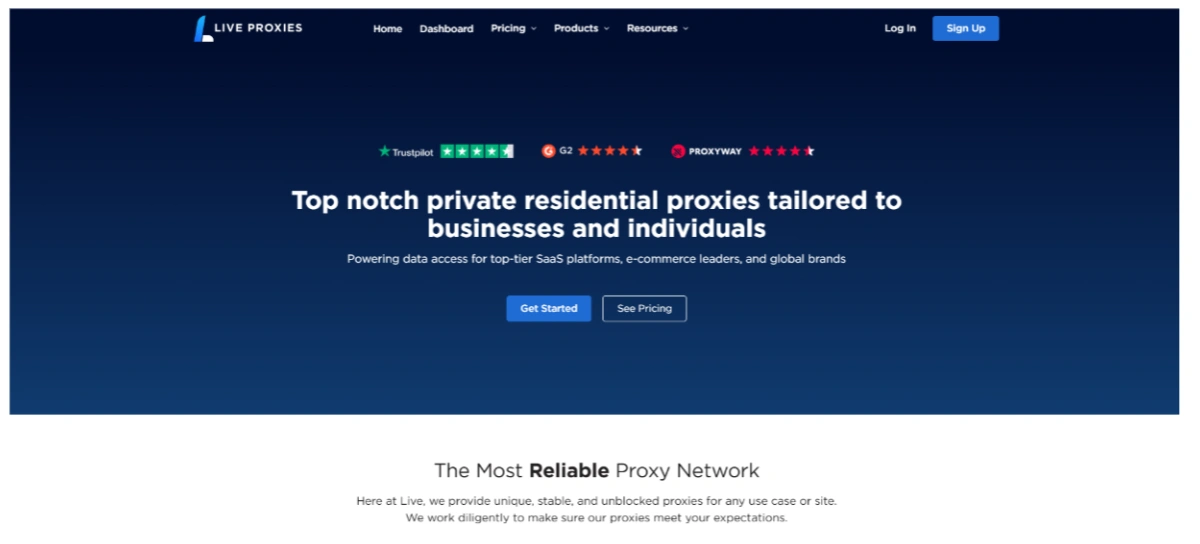
Live Proxies ranks first among unblocked proxies for recurring protected targets because its private target-based IP allocation reduces uncontrolled pool overlap. IPs assigned to a website are not reused by other customers on identical or similar destinations, helping preserve a stronger reputation and more consistent access.
The service offers millions of rotating residential and mobile IPs, automatic rotation, sticky sessions up to 24 hours, unlimited threads, country-, city-, and ASN-level targeting, HTTP and SOCKS5 support, API integration, automatic replacement of unavailable exits, and dedicated support. These controls make it a strong choice for teams comparing unlimited rotating proxies for sustained, high-volume workflows.
- Best Fit: Recurring protected targets that require stable access, precise targeting, and long-running scraping.
- Main Proxy Types: Rotating residential proxies for household-network credibility and rotating mobile proxies for carrier-based or mobile-sensitive targets.
- Anti-Block Advantage: Private allocation reduces overlap, while rotation, sticky sessions, and failed-exit replacement support stable access. An online proxy checker confirms availability, but real targets still require testing.
2. FlashID
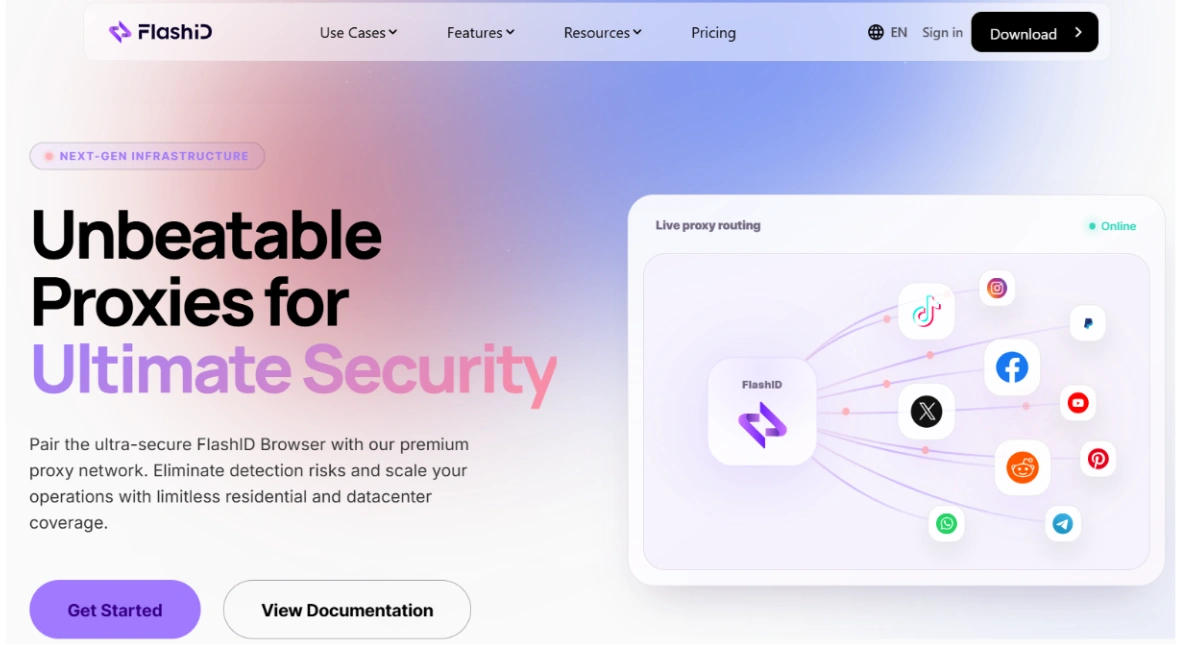
FlashID proxies combine proxy access with antidetect browser profiles and cloud phone environments. Users can assign an independent proxy endpoint to each profile or cloud phone, supporting separate network identities across parallel workflows.
The service offers residential, mobile 4G and 5G, static ISP, and datacenter proxies. Its residential network covers more than 190 countries and supports city-level targeting and non-expiring traffic, while mobile proxies provide custom rotation. FlashID also supports HTTP and SOCKS5 proxy configuration and REST API integration.
- Best Fit: Browser-profile, cloud phone, and multi-account workflows that require a separate proxy endpoint for each environment.
- Main Proxy Types: Residential, mobile 4G and 5G, static ISP, and datacenter proxies.
- Anti-Block Advantage: Independent proxy assignment helps maintain a consistent network identity within each browser profile or cloud phone environment.
3. Decodo
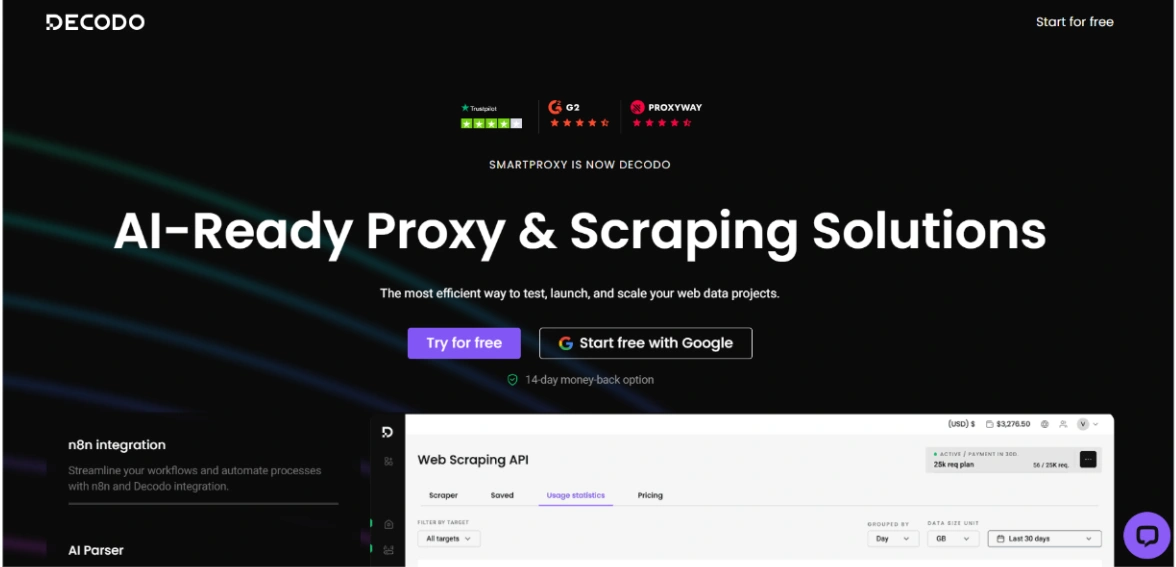
Decodo combines residential, mobile, ISP, and datacenter proxies with Site Unblocker, a managed proxy-like solution for accessing protected websites. Standard proxy users can choose rotating or sticky sessions, while Site Unblocker automates more of the unblocking process through one endpoint.
The service handles proxy selection and rotation, browser fingerprinting, JavaScript rendering, cookies, headers, CAPTCHA challenges, and automatic retries. Users can also preserve the same proxy connection across related requests through a managed session.
- Best Fit: JavaScript-heavy or CAPTCHA-protected websites where building and maintaining custom browser, fingerprinting, and retry infrastructure would require substantial development work.
- Main Proxy Types: Residential, mobile, ISP, and datacenter proxies, supported by Site Unblocker.
- Anti-Block Advantage: Site Unblocker combines proxy rotation, fingerprinting, rendering,CAPTCHA handling, and retry management within one service.
4. SOAX
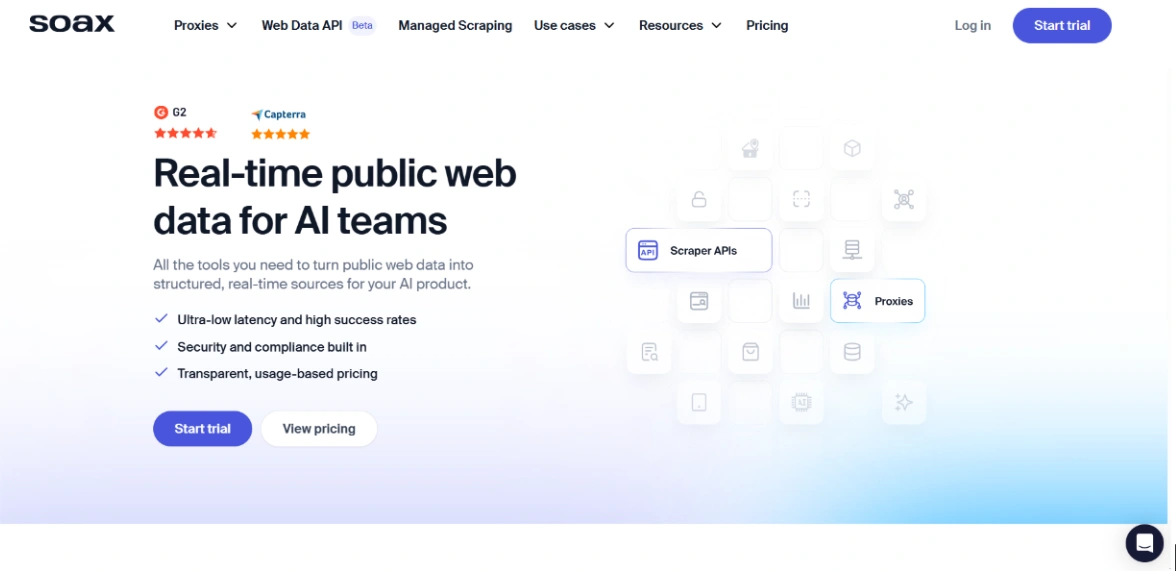 SOAX is strongest when access depends on precise geographic or carrier identity. Its residential, mobile, ISP, and datacenter proxy products support targeting by country, region, city, and ISP or mobile carrier.
Users can rotate IPs with each request or maintain the same address through a sticky session. Residential and mobile sessions can remain active for up to 60 minutes, while ISP and datacenter sessions support longer continuity. Customizable refresh settings help match rotation frequency to each workflow.
- Best Fit: Localized scraping, mobile research, ad verification, and regional monitoring that depend on accurate city, ISP, or carrier routing.
- Main Proxy Types: Rotating residential and mobile proxies, alongside ISP and datacenter infrastructure.
- Anti-Block Advantage: Granular geo-targeting keeps the proxy identity aligned with the requested market, while configurable rotation and sticky sessions reduce unnecessary location changes.
5. Webshare
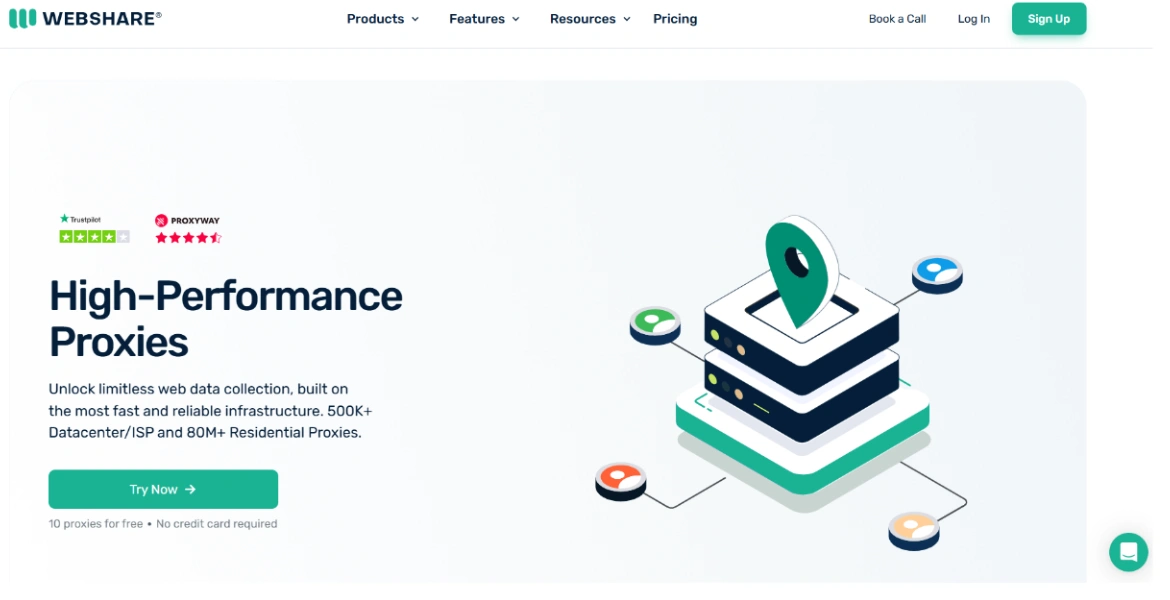
Webshare provides a self-service environment for rotating residential, static residential, and datacenter proxies. Its static residential and datacenter products are available with shared, private, or dedicated allocation, while users can manage quantity, bandwidth, authentication, countries, and replacement settings through the dashboard.
Rotating residential endpoints select new household IPs automatically. Static proxy lists support manual replacements, recurring replacements, Auto-Refresh, and Auto-Replace. Auto-Replace can remove proxies that stop working, become slow, or return low-confidence country information.
- Best Fit: Smaller teams that want to configure, replace, and expand proxy lists without lengthy enterprise onboarding.
- Main Proxy Types: Rotating residential, static residential, shared datacenter, private datacenter, and dedicated datacenter proxies.
- Anti-Block Advantage: Manual and automatic replacement controls help remove unavailable, underperforming, or geographically inaccurate IPs from active static proxy lists.
6. IPRoyal
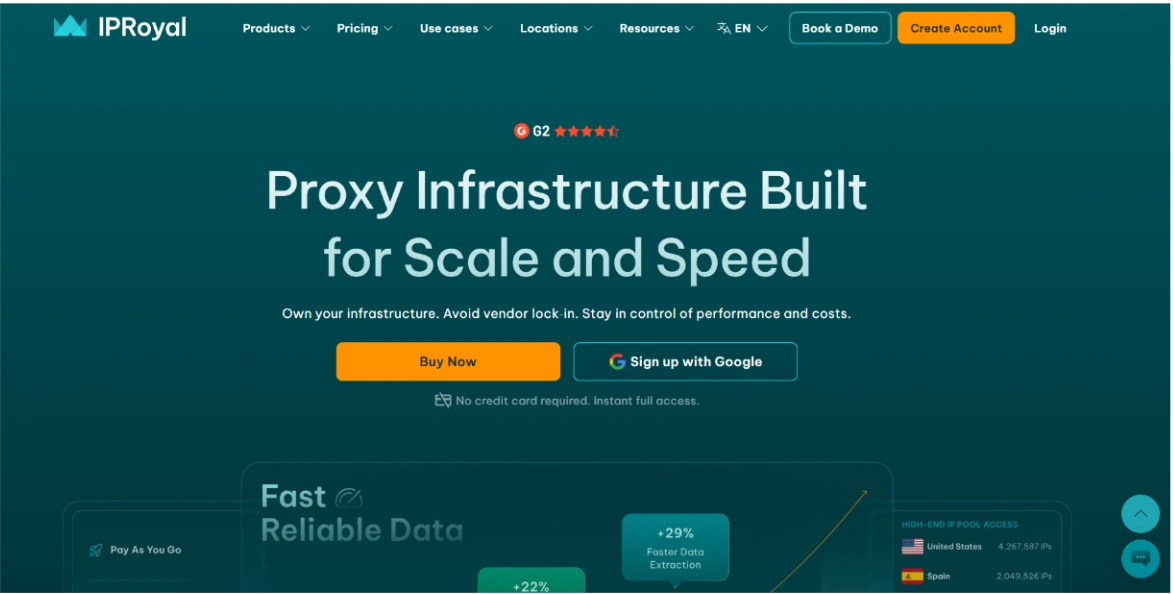
IPRoyal suits smaller or irregular scraping projects that need flexible purchasing. Its residential network provides per-request rotation, country-, state-, and city-level targeting, and non-expiring traffic through pay-as-you-go and subscription options.
Sticky sessions can preserve one residential IP for periods ranging from one second to seven days. The provider also offers dedicated ISP, datacenter, and mobile proxies for workflows that require private or persistent network identities.
- Best Fit: Occasional scraping, long browser sessions, localized research, and smaller projects without predictable monthly traffic.
- Main Proxy Types: Rotating residential, dedicated ISP, dedicated and rotating mobile, and datacenter proxies.
- Anti-Block Advantage: Sticky sessions of up to seven days can preserve a consistent residential identity throughout unusually long stateful workflows.
7. Rayobyte
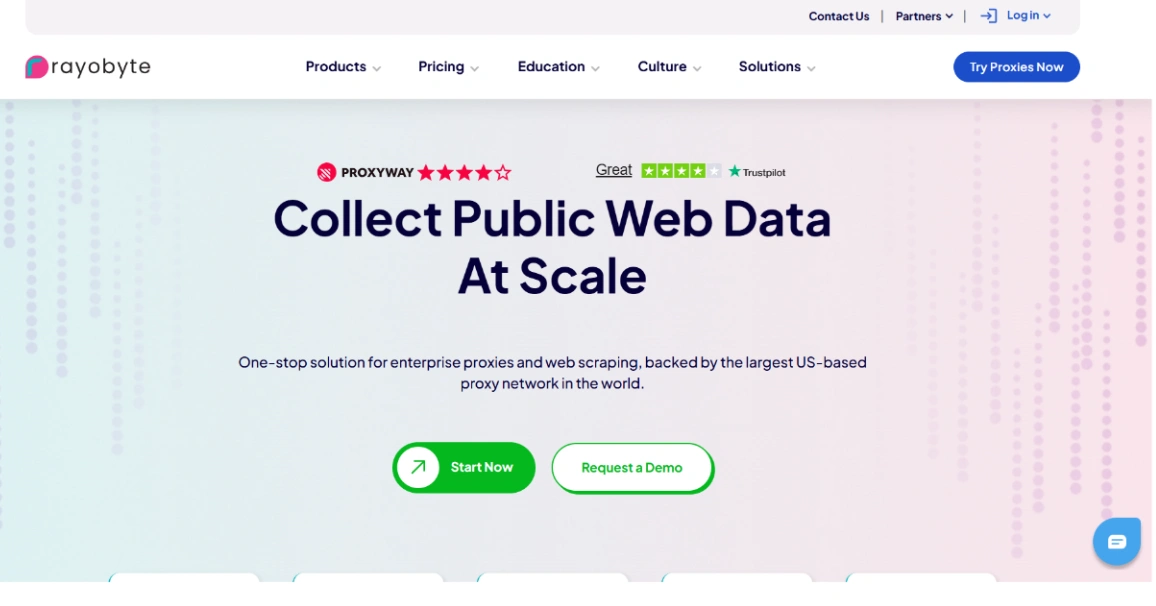
Rayobyte provides residential, ISP, mobile, and datacenter infrastructure for teams that need different levels of IP trust, stability, and performance. Its residential network supports HTTP, HTTPS, SOCKS5, and targeting by country, region, city, ZIP code, and ASN.
Users can choose soft or hard sticky sessions lasting from one to 60 minutes. Soft sessions retain the same IP while it remains available and automatically rotate after a disconnection. Hard sessions preserve the assigned identity and return an error rather than silently switching to another exit.
- Best Fit: Mixed target portfolios that require residential IPs for protected pages and faster ISP or datacenter infrastructure for less restricted sources.
- Main Proxy Types: Rotating residential, ISP, mobile, dedicated datacenter, and rotating datacenter proxies.
- Anti-Block Advantage: Soft and hard sticky modes let teams choose between automatic recovery after an IP failure and strict preservation of one network identity.
8. DataImpulse
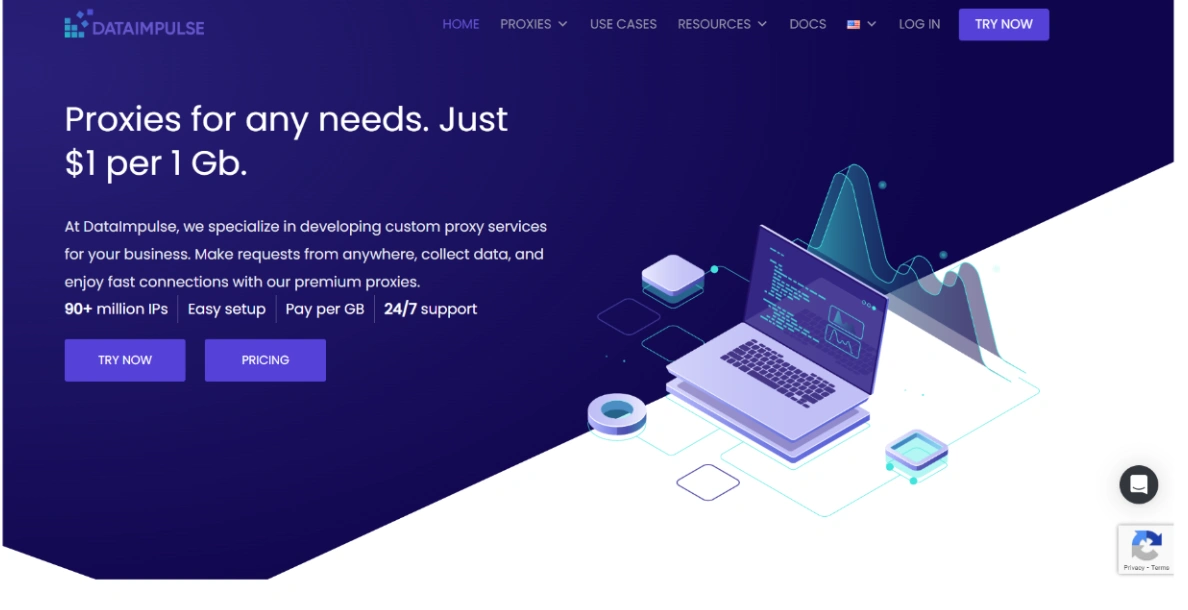
DataImpulse offers residential, mobile, premium residential, and datacenter proxy gateways with pay-as-you-go traffic that does not expire. The service supports HTTP, HTTPS, SOCKS5, rotating and sticky sessions, API access, and country targeting, with state, city, ZIP, and ASN filters also available.
Users can request fresh IPs or preserve the same exit through a sticky session. Integrations with Scrapy, Puppeteer, Selenium, Playwright, browser-profile tools, and custom scripts simplify deployment within existing automation systems.
- Best Fit: Custom scraping systems whose developers already manage browser behavior, retries, response validation, and target-specific request limits.
- Main Proxy Types: Rotating residential, mobile, premium residential, and datacenter proxies.
- Anti-Block Advantage: Rotation controls, precise targeting, and API access let developers coordinate proxy identities with their own retry, concurrency, and rate-control logic.
9. ProxyEmpire
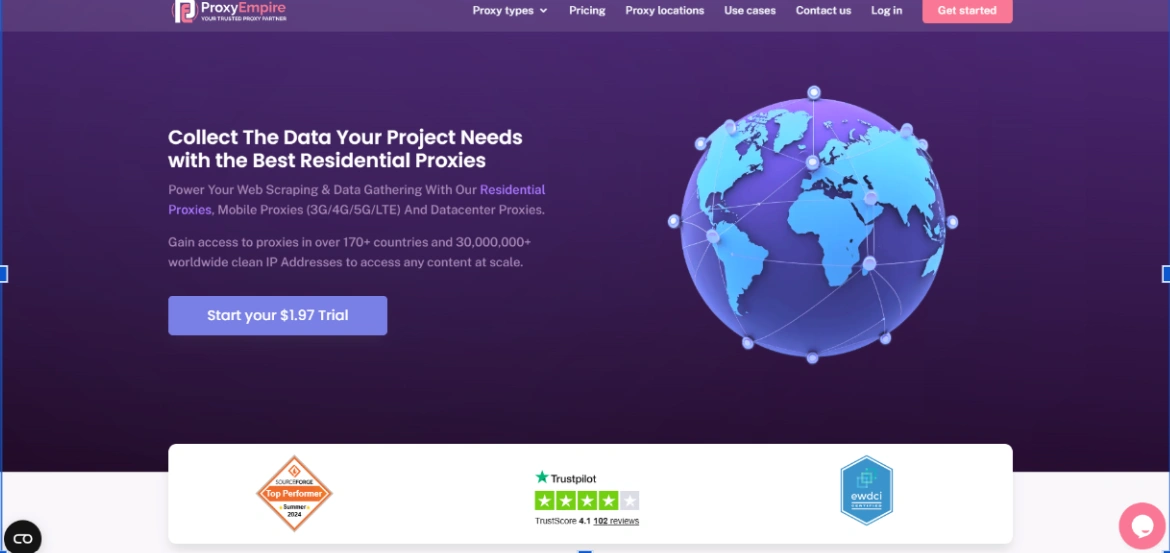
ProxyEmpire offers rotating and static residential proxies, rotating and dedicated mobile proxies, and rotating datacenter infrastructure. Its residential endpoints support a new IP on every request, sticky sessions, or timed rotation, allowing rotation behavior to match different target workflows.
Residential targeting includes country, region, city, ISP, and ASN filters, while eligible mobile products add carrier-level selection. Unused residential traffic can roll over on supported metered plans instead of expiring at the end of the billing period.
- Best Fit: Residential and mobile data collection projects with changing monthly traffic and different rotation requirements across target websites.
- Main Proxy Types: Rotating and static residential, rotating and dedicated mobile, unlimited residential, and rotating datacenter proxies.
- Anti-Block Advantage: Per-request, timed, and sticky modes allow each endpoint to follow the session pattern required by its target instead of applying one rotation rule everywhere.
10. Infatica
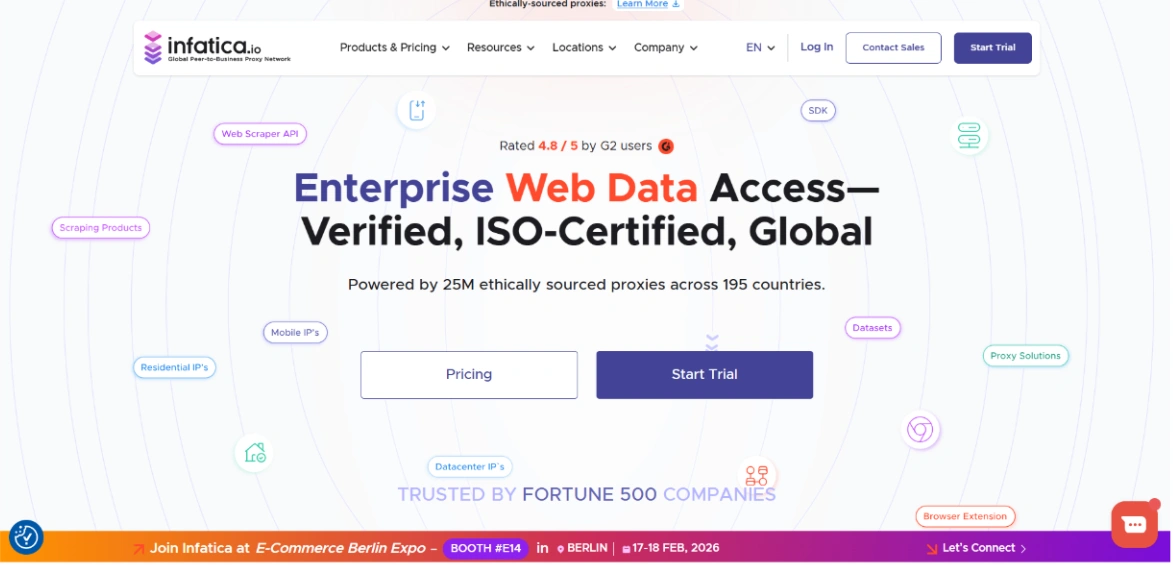
Infatica provides residential, mobile, dedicated ISP, shared datacenter, and dedicated datacenter proxies. Its residential gateway supports targeting by country, region, city, ISP, ZIP code, and operating system.
Users can rotate IPs with every request, set timed intervals from five to 60 minutes, or retain a sticky address. When an assigned exit becomes unavailable, Infatica may rotate it earlier than planned, while separate rotation modes let users prioritize immediate replacement or strict IP continuity.
- Best Fit: Distributed business scraping that requires multiple proxy categories, detailed location presets, and configurable rotation policies.
- Main Proxy Types: Residential, mobile, dedicated ISP, shared datacenter, and dedicated datacenter proxies.
- Anti-Block Advantage: Flexible session controls and optional early replacement of unavailable exits help reduce interruptions during longer data collection jobs.
How Can Proxy Blocks Be Reduced?
Proxy quality matters, but clean IPs still require proper configuration. Request frequency, browser identity, session length, rotation timing, and target behavior must align to avoid unnecessary blocks.
- Match IP Type to Target: Use residential or mobile IPs when consumer platforms reject hosting-network addresses.
- Preserve Connected Sessions: Keep the same IP, cookies, browser profile, language, and location through related actions.
- Rotate Independent Requests: Assign fresh exits to pages that do not share account or session state.
- Control Request Frequency: Use queues, realistic delays, and per-domain limits instead of sudden traffic bursts.
- Replace Failed Addresses: Track CAPTCHAs, 403s, 429s, timeouts, and incomplete responses by IP and target.
- Test Real Websites: Measure success rate, session survival, retries, latency, and cost on intended targets.
How Are Unblocked Proxies Tested?
A proxy should be tested on the actual target rather than judged only by its connection status. Basic tools confirm that an IP responds, but they do not reveal how a protected website evaluates its reputation, location, session behavior, or request pattern.
Start With Basic Validation
Use an online proxy checker to confirm the IP address, protocol support, response time, anonymity level, and selected location. Remove endpoints that time out, expose the original IP, or return inaccurate geographic data.
Test the Real Target
Run the proxy against the intended website using realistic headers, browser settings, and request frequency. Record CAPTCHAs, 403 responses, 429 rate limits, redirects, incomplete pages, and connection failures.
Compare Rotation Modes
Test per-request rotation on independent pages and sticky sessions on connected workflows. A proxy may perform well with frequent rotation but fail when one identity must remain active through pagination, login, or checkout steps.
Increase Load Gradually
Begin with low concurrency and increase request volume in stages. This shows whether performance declines because of rate limits, shared pool congestion, bandwidth restrictions, or insufficient IP diversity.
Which Metrics Reveal Proxy Quality?
Success rate matters more than the total number of IPs advertised by a provider. A large pool has little value if many addresses trigger CAPTCHAs, fail to load the target, or require repeated retries. Testing should measure both access reliability and the time, traffic, and cost needed to obtain each valid result.
- Successful Response Rate: Percentage of requests that return the expected page and status code.
- CAPTCHA Frequency: Share of requests interrupted by verification challenges.
- Block Rate: Frequency of 403, 429, access-denied, and target-specific rejection responses.
- Retry Rate: Number of additional attempts required to complete one successful request.
- Session Survival: How long one sticky IP remains usable during a connected workflow.
- Cost per Valid Result: Total proxy traffic, retries, and infrastructure cost divided by successful outputs.
Conclusion
Unblocked proxies cannot guarantee permanent access to every website, but the right setup can significantly reduce CAPTCHAs, failed requests, rate limits, and session interruptions. Reliable performance depends on IP reputation, proxy type, rotation timing, session stability, geo-targeting, and consistency between the connection and browser identity.
The best choice is the service that performs reliably on the intended targets rather than the one advertising the largest IP pool. Test proxies under realistic conditions and compare successful response rate, block frequency, retries, session survival, and cost per valid result before committing to a long-term plan.
You May Also Like