In 2025, digital identity protection has become essential for affiliate marketers, e-commerce sellers, ad agencies, and anyone managing multiple online accounts. Platforms are now using advanced fingerprinting, environment correlation, and AI-driven anti-spam systems that can easily detect duplicated or unnatural device profiles. As a result, relying on a robust antidetect browser is no longer optional — it’s the only reliable way to maintain account stability, prevent bans, and operate at scale.
This guide breaks down the top-performing antidetect browsers in 2025, how they compare, and which one best fits your workflow.

What Is an Antidetect Browser? (And How the Technology Actually Works)
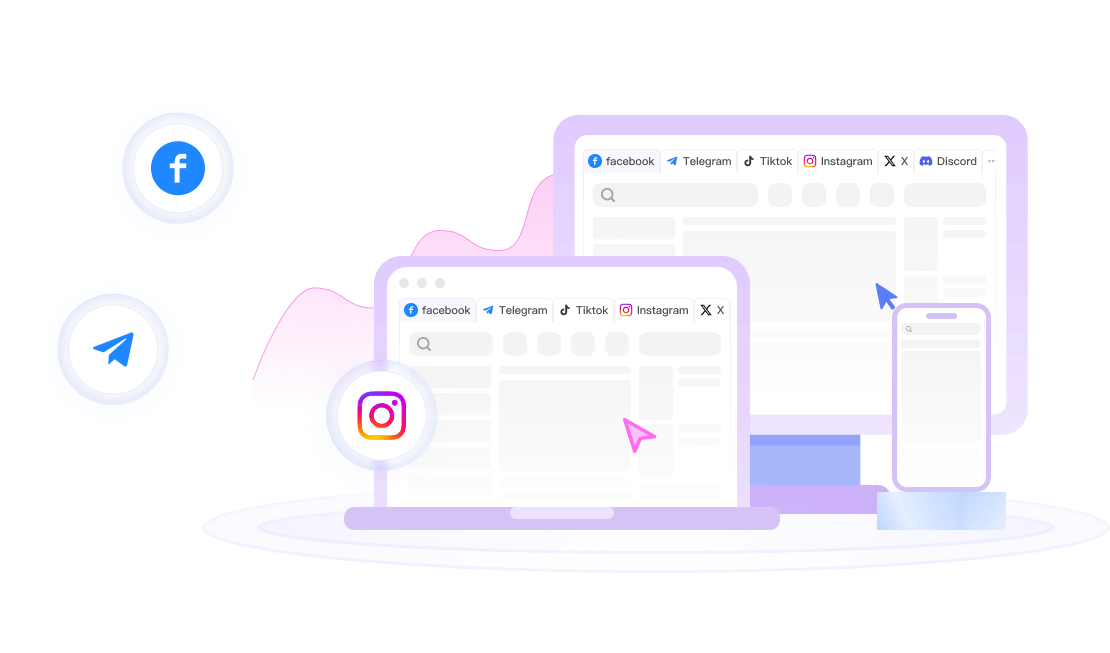
An antidetect browser is a specialized multi-profile browser designed to hide or reshape a user’s digital fingerprint so that each browser profile appears to belong to a completely different, real device.This allows marketers, e-commerce sellers, agencies, arbitrage teams, and multi-account operators to run several accounts safely without triggering platform restrictions.
Traditional browsers like Chrome or Safari expose hundreds of unique signals — device model, canvas output, WebGL, fonts, hardware configuration, IP type, timezone, screen resolution, and behavioral data.
Platforms use these signals to build a unique identity hash for every user. Once multiple accounts share the same fingerprint or environment, platforms flag them immediately. Antidetect browsers solve this problem by creating isolated, unique, fingerprint-randomized environments for each profile.
Best Antidetect Browsers of 2025
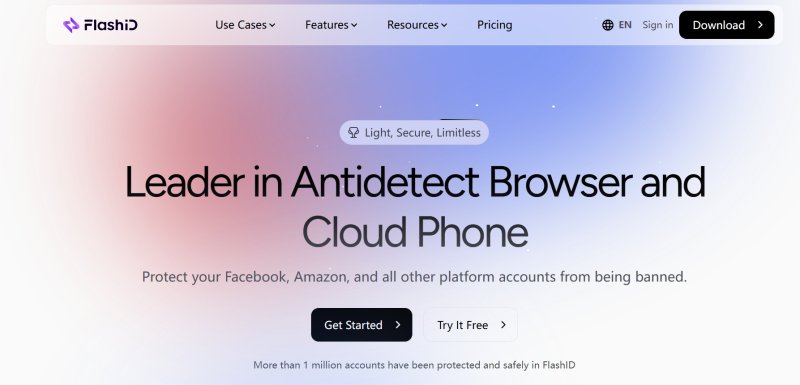
FlashID — The Next-Generation AI Identity Engine (Editor’s Pick 2025)
FlashID leads the 2025 landscape because it isn’t just a browser—it’s a full identity simulation system. Instead of relying on fingerprint “templates” or parameter randomization, FlashID generates AI-built, internally coherent, statistically natural device environments. Every profile behaves like an independent device with:
- consistent WebGL & Canvas entropy
- organic hardware signatures
- aligned OS metadata
- stable timezone, locale, and font sets
- unique network fingerprints
- integrated proxy assignment with IP quality scoring
- optional cloud-phone (virtual mobile device) environments for mobile-first platforms
This dramatically improves survival on platforms that use AI-based detection (Meta, Google, TikTok, Amazon, etc.). FlashID profiles show fewer flags, fewer blocks, and longer account lifespans—making it ideal for teams who cannot afford instability.
Best for:
High-risk advertisers, affiliate marketers, cross-border sellers, account farms, and any operation requiring maximum stealth + long-term stability.
AdsPower — The Automation & Bulk Management Leader
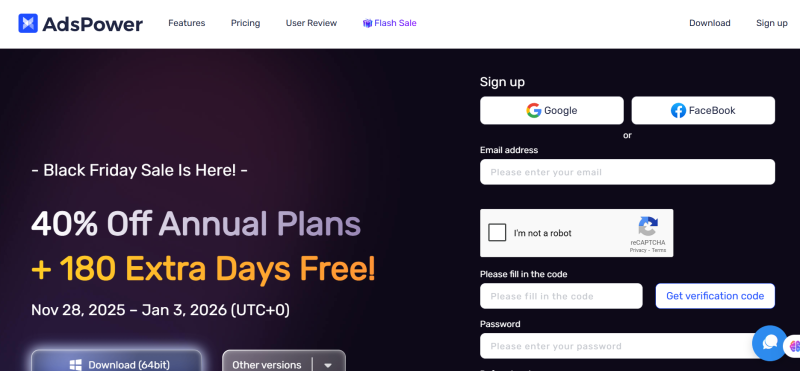
AdsPower dominates in e-commerce and mass-account workflows thanks to its powerful RPA automation and batch tools.
Why it stays relevant in 2025:
- bulk profile creation and import
- built-in automation scripts
- strong team permission controls
Its fingerprint system is decent—not exceptional—but still adequate for large-volume operations.
Best for: E-commerce clusters, social media farms, bulk account operations.
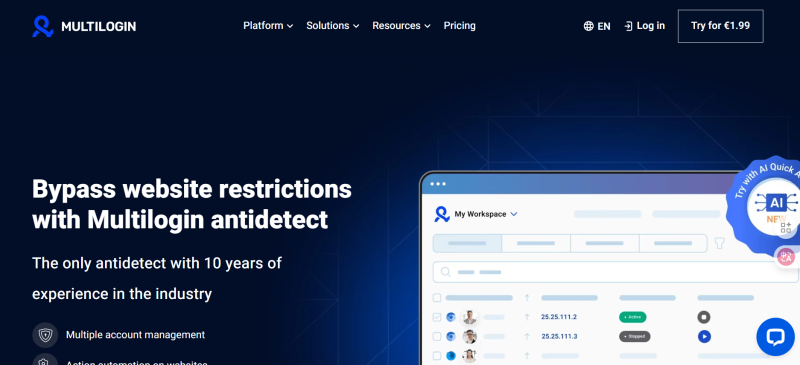
Multilogin — The Enterprise Powerhouse
Multilogin remains a dominant force thanks to its maturity and infrastructure stability. It provides deep fingerprint customization, strong profile isolation, and enterprise-grade team management.
Why it still dominates:
- large organizations trust its reliability
- consistent environment behavior
- powerful automations and integrations
Although less innovative than newer tools, it remains the safest “classic” antidetect solution.
Best for: Large agencies, structured teams, long-term enterprise workflows.
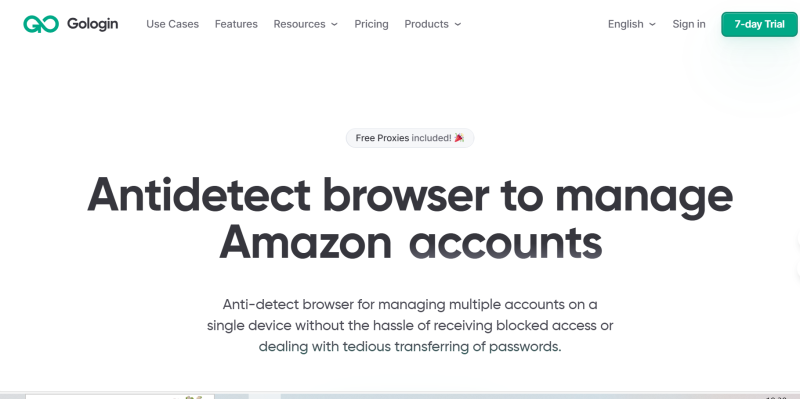
GoLogin — The Beginner-Friendly Workhorse
GoLogin stands out for usability and cost efficiency. Its interface is clean, its device profiles are stable enough for medium-risk operations, and its cloud sync makes multi-device work simple.
What makes it strong in 2025:
- approachable UI
- good fingerprint stability for the price
- fast setup
Best for: Beginners, small teams, low- to medium-risk online operations.
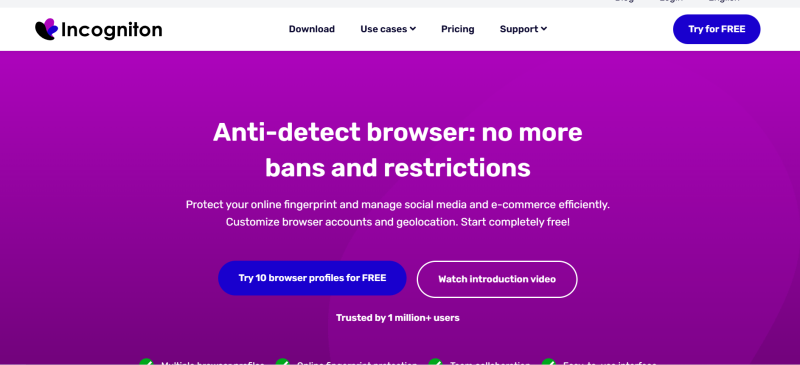
Incogniton — The Team Collaboration Specialist
Incogniton has carved out a niche with its collaboration-friendly interface. Its strength lies not in ultra-advanced fingerprints but in how efficiently it lets teams manage profiles and workflows.
Why it matters in 2025:
- clean profile management
- built-in team notes & logs
- simple learning curve
Best for: Content teams, VA operations, social media management agencies.
Kameleo — The Mobile Fingerprint Champion
Kameleo stands apart because it excels at mobile antidetect environments—something most competitors struggle with.
Why it dominates this niche:
- realistic Android / iOS fingerprint generation
- strong automation support (Selenium / Puppeteer / Playwright)
- essential for mobile-first platforms like TikTok or apps
Best for: Mobile ads, app growth campaigns, mobile account farming.
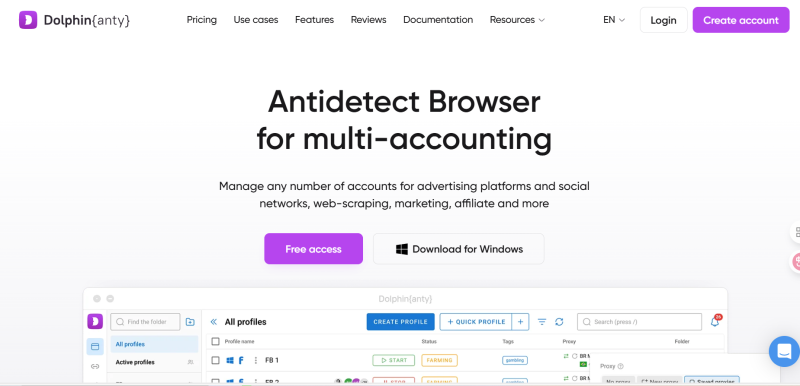
Dolphin Anty — The Meta Advertising Specialist
Dolphin Anty remains the go-to antidetect solution for Facebook and Instagram advertisers.
Why it’s still winning:
- everything built around the Meta Ads workflow
- BM, Assets, Pages, and Accounts managed in one place
- simplifies the most complex ad workflows
Best for: Meta advertisers, agencies managing multiple BMs, account restorers.
How to Choose the Right Antidetect Browser in 2025
Choosing the right antidetect browser in 2025 means understanding your operational needs, technical risk level, and long-term growth plan. Price alone should never be the deciding factor — the stability, fingerprint quality, and scalability of the tool matter far more.
Clarify Your Actual Use Case
Different workflows require different types of fingerprint environments. Before evaluating any tool, determine which category you belong to:
- Social media operations → need simple UI, safe login behavior, mobile compatibility
- E-commerce sellers → require bulk profile management, automation, proxy flexibility
- Affiliate marketers / ad buyers → need high-coherency fingerprints and geo-consistent identity generation
- Scraping / research workflows → require stable sessions and API-friendly automation
Clear use-case definition helps you avoid overpaying for features you won’t use — or worse, choosing a tool that cannot meet your platform’s risk thresholds.
Evaluate Technical Stealth & Fingerprint Realism
Not all antidetect browsers are built the same. Some rely on basic parameter randomization, while others generate fully coherent, human-like device identities.
When comparing technical strength, check for:
- Canvas & WebGL entropy control
- AudioContext manipulation
- timezone / locale coherence
- hardware fingerprint diversity
- stable session behavior
- consistency across OS + browser metadata
Platforms now evaluate the entire fingerprint stack, not isolated values. This is where next-generation solutions using identity-coherence logic or AI-driven fingerprint simulation (e.g., FlashID) tend to offer stronger long-term survival — but the best choice still depends on your risk level.
Check Workflow Efficiency & Automation Needs
Technical stealth is crucial, but operational flow affects daily productivity:
- Do you need RPA automation?
- Bulk profile creation?
- Team roles & permissions?
- Local vs. cloud-based profiles?
- Browser API or script integration?
If your work involves large account clusters or repetitive tasks, choosing a browser with strong orchestration tools can significantly reduce maintenance time and human error.
Plan for Scalability & Future Growth
Your antidetect browser should grow with your operation — not limit it.
Key factors to consider:
- profile limits and pricing tiers
- team collaboration options
- cloud sync and multi-device access
- API availability
- update frequency and roadmap transparency
If you’re likely to scale into dozens or hundreds of profiles, selecting an environment designed for long-term expansion prevents costly migrations later. FlashID and a few other modern platforms offer scalable identity infrastructure, but lighter tools may be sufficient for small independent operators.
Final Thought
The “best” antidetect browser isn’t the most expensive one — it’s the one whose fingerprint quality, workflow features, and scaling potential align with your specific risk level and operational goals.
Why FlashID Is Positioned to Dominate 2025
FlashID stands out in 2025 because it embraces the shift toward AI-driven detection systems. While many traditional antidetect browsers still rely on basic parameter randomization, FlashID focuses on generating coherent, human-like identity environments that align with modern platform risk models. This reduces fingerprint mismatches, minimizes correlation signals, and provides more stable long-term account behavior — a critical factor as Meta, Google, TikTok, and e-commerce ecosystems tighten their verification systems.
At the same time, FlashID’s architecture offers stronger environment isolation and consistent identity integrity across sessions, making it especially suitable for teams running ads, affiliate operations, or multi-store setups. As platforms increasingly evaluate behavioral probability and device consistency rather than surface-level fingerprints, FlashID’s next-generation identity simulation positions it as one of the few solutions built for the detection landscape of 2025 and beyond.
Frequently Asked Questions (FAQ)
1.Q: What is an antidetect browser?
A: An antidetect browser is a tool that creates isolated, fingerprint-randomized browser environments so users can operate multiple accounts without being linked by platform detection systems. It hides or reshapes device signals such as WebGL, canvas, fonts, timezone, and network metadata.
2.Q: Why do I need an antidetect browser in 2025?
A: Platforms like Meta, Google, TikTok, Amazon, and major e-commerce sites now use AI-driven detection systems that identify inconsistent fingerprints or repeated device behaviors. Without protection, multi-account operations face bans, verifications, and reach restrictions.
3.Q: Are antidetect browsers legal?
A: Yes — the tools themselves are legal. How they are used determines compliance. Most marketers, agencies, and e-commerce teams use antidetect browsers for operational separation, remote collaboration, or account security.
4.Q: What’s the difference between fingerprint randomization and identity simulation?
A: Randomization changes values individually, but may create mismatched fingerprints that platforms flag. Identity simulation (used by newer tools like FlashID) generates coherent, human-like environments that maintain internal consistency and survive modern AI detection.
5.Q: Which antidetect browser is best for beginners?
A: Tools with simple UI and low setup requirements — such as GoLogin or Incogniton — are easier for new users. Those needing higher stability can consider more advanced engines.
6.Q: Which antidetect browser is safest for ads or high-risk verticals?
A: High-risk operations (Meta ads, TikTok ads, affiliate arbitrage) typically need coherent identity environments, as these platforms have stricter detection. Tools like FlashID are designed to handle AI-based checks more reliably.
7.Q: Is FlashID suitable for high-risk workflows like Meta ads or TikTok ads?
A: Yes. FlashID’s identity-coherence engine is designed for strict, AI-powered platforms where basic randomization often fails. Its stable environment simulation helps reduce verification prompts, unusual activity flags, and BM/ads account restrictions — making it especially valuable for high-risk advertisers and affiliate teams.
You May Also Like