FlashID is a strong Multilogin alternative for users who need browser profiles, cloud phones, proxies, automation, account management, and team collaboration in one platform. Multilogin is still a mature choice for advanced users and larger browser-first operations, but FlashID is better suited for teams that want a free starting point, browser + mobile workflows, and a simpler way to scale multi-account management in 2026.
Key Takeaway
- Multilogin is still a powerful antidetect browser and multi-accounting platform. It is a good fit for advanced users, larger teams, and businesses with mature browser-profile workflows.
- Users look for Multilogin alternatives when their needs shift. They may want a free plan, easier onboarding, lower entry cost, cloud phone workflows, simpler team collaboration, or a more practical daily operation system.
- The best multi-accounting tool in 2026 is not always the most complex one. The real question is whether the tool fits your current business stage, account volume, team size, budget, and browser/mobile workflow.
- FlashID stands out as a practical Multilogin alternative. It combines antidetect browser profiles, cloud phones, Window Sync, Workspace, Account Center, profile templates, proxy integration, API access, and automation support.
From Browser Profiles to Integrated Account Workflows
Multilogin is one of the earlier names in the antidetect browser market. Its product history goes back to 2015, when it started building multi-accounting tools around browser profiles, fingerprint control, proxies, and profile isolation. In late 2025, Multilogin added Cloud Phones and expanded from browser-based account management to browser + mobile workflows. Today, its positioning is more focused on social media accounts and larger teams that need a mature multi-accounting setup.
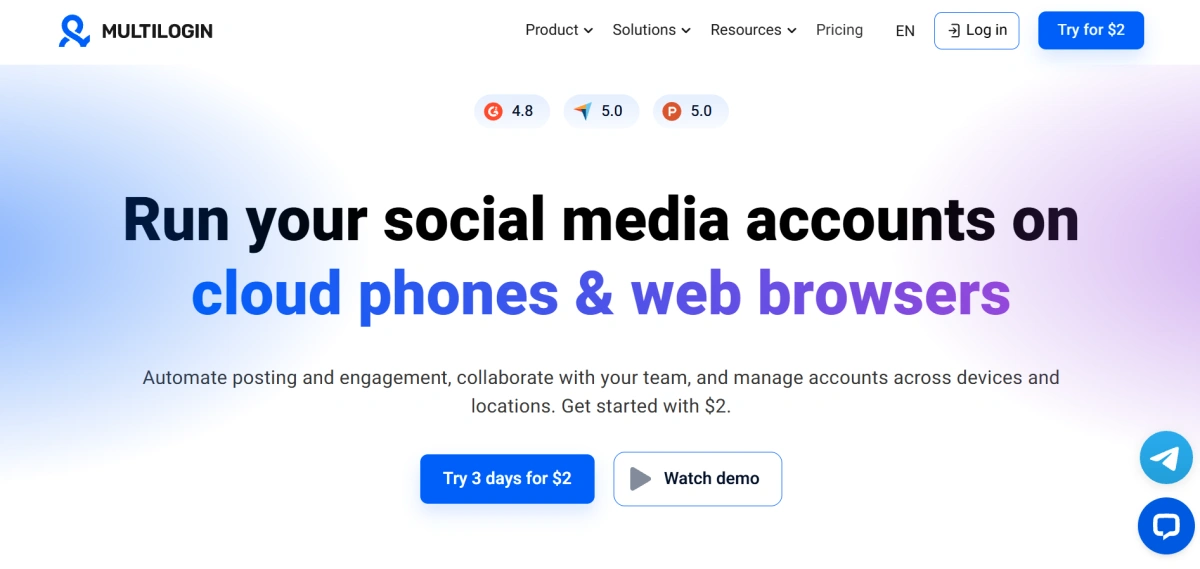
This shift also shows how the multi-accounting market has changed. In the past, many users mainly needed separate browser profiles and proxy settings. In 2026, however, account operations often involve both websites and mobile apps, plus team collaboration, account organization, automation, and repeatable workflows. This is where newer platforms can compete not only by matching core browser features, but also by building around more modern daily operations.
FlashID Antidetect Browser is a newer but fast-moving alternative. Public update records show its first beta version was released in September 2025, and the product quickly added proxy management, workspace collaboration, role permissions, built-in FlashID Proxy, Window Sync, and batch profile import. Instead of treating cloud phones, browser fingerprints, and proxies as separate tools, FlashID is built around a more unified account environment for browser and mobile operations. From the beginning, FlashID has been designed for multi-scenario account management, covering e-commerce, social media, ads, crypto, MMO, proxy workflows, and team-based operations. To see how these browser, mobile, and proxy workflows work together in one platform, explore FlashID and find the setup that fits your team.
Learn more Detailed Comparisons
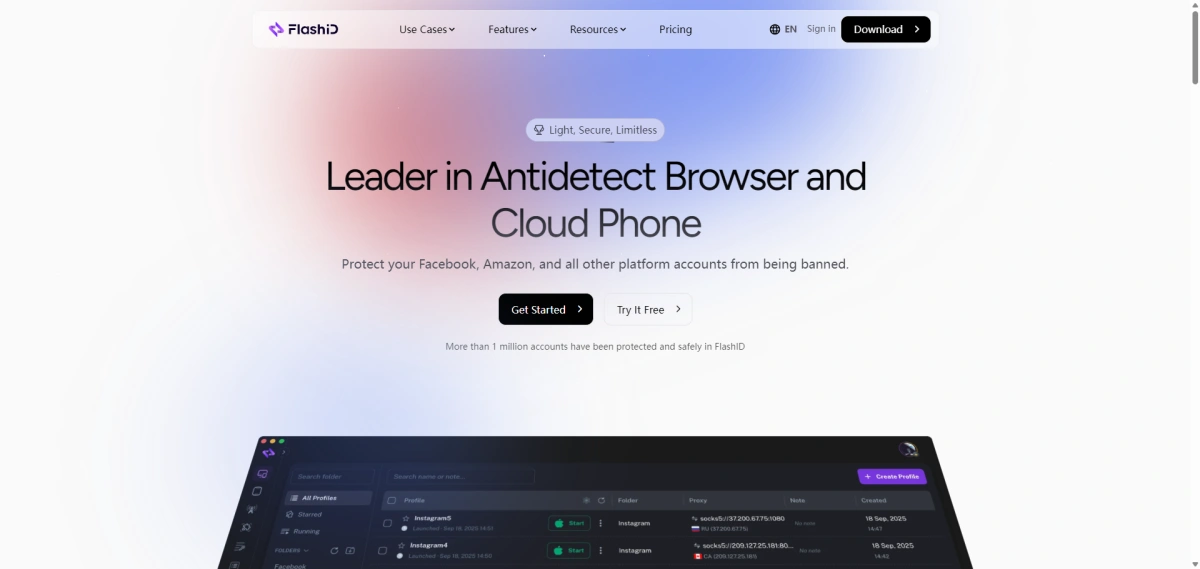
This makes the comparison less about which product has existed longer and more about which one fits today’s account-management workflow better. Multilogin has a longer history and remains relevant for mature browser-profile operations, while FlashID brings a more integrated and accessible approach for users who want browser profiles, cloud phones, proxies, collaboration, and automation in one practical environment. For small teams, growing operators, and users who need both web and mobile account workflows, FlashID may feel closer to how multi-accounting is actually done in 2026.
Why Users Look for a Multilogin Alternative in 2026
Users usually look for a Multilogin alternative not because Multilogin lacks core features. The real issue is that different users have different business stages, account volumes, team structures, and daily workflows. As a result, they may use different standards when choosing a multi-accounting tool.
1. They need a tool that fits their current business stage
Users at different stages do not have the same requirements for a multi-accounting platform. A small team that is just testing 10 accounts does not need the same setup as a mature operation managing hundreds or even thousands of profiles.
More mature teams may care more about advanced configuration, automation, API access, proxy strategy, and complex permission management. Early-stage users, however, often care more about whether they can start quickly, control costs, reduce learning time, and test the workflow before scaling.
For some users, a lighter, more intuitive, and easier-to-scale platform may make multi-account management easier to implement.
2. They want a lower entry barrier
When users first start exploring multi-account management, they may not be sure whether they really need a full advanced platform. Beginners, solo operators, and small teams often want to create only a few profiles at first and test whether account separation, proxy configuration, team collaboration, or automation fits their business.
In this situation, users care about whether they can start for free, test the tool quickly, avoid paying too early, and reduce the learning curve. Multilogin offers a paid trial rather than a full free plan, so users who are still exploring multi-accounting may prefer an alternative with a lower entry barrier.
The key point is not only price. More accurately, users want to validate their workflow with lower risk before deciding whether to increase profile volume, add more team members, or upgrade to a more advanced plan.
3. They want simpler daily operations and less repetitive setup
Multilogin is a mature platform, but its daily workflow can feel less convenient for users who need a simple and repeatable account management system. For example, importing proxies in Multilogin can require users to manually add and verify proxies for each profile, which becomes inefficient when a team manages dozens or hundreds of accounts. Its main profile table also does not show the proxy column by default, making it harder to quickly check proxy-profile matching, while cookie import can feel less convenient than expected for such a basic multi-accounting task.
This is why some users look for a Multilogin alternative. They are not always searching for more advanced features; they may simply want fewer manual steps, clearer profile organization, easier proxy management.
FlashID Antidetect Browser: A Strong Multilogin Alternative in 2026
FlashID is becoming a strong Multilogin alternative for users who want a simpler and more accessible way to manage multiple accounts.
While Multilogin remains a well-known option, some users may find its workflow complex, proxy setup time-consuming, account organization less intuitive, or entry cost too high for early testing.FlashID addresses these pain points with a free starting plan, built-in proxy management, and an integrated browser and mobile account environment in one platform.
Instead of repeating broad feature claims, this article compares FlashID and Multilogin from two practical angles: their core multi-accounting features, and two common use cases — crypto multi-accounting and social media management.This helps show where FlashID may fit better into everyday multi-account workflows.
1.Feature Comparison: FlashID vs Multilogin
| Feature | FlashID | Multilogin |
|---|---|---|
| Antidetect browser profiles | ✅ | ✅ |
| Fingerprint customization | ✅ | ✅ |
| Proxy configuration | ✅ | ✅ |
| Cloud phone / mobile environment | ✅ | ✅ |
| Browser + mobile workflow | ✅ | ✅ |
| Team workspace | ✅ | ✅ |
| Permission management | ✅ | ✅ |
| Profile templates | ✅ | ✅ |
| API access | ✅ | ✅ |
| Automation support | ✅ | ✅ |
| Account Center / credential management | ✅ | ❌ |
| Window Sync for repeated actions | ✅ | ❌ |
When choosing a Multilogin alternative, the first requirement is not to compare every small feature one by one. The alternative should first cover the core capabilities needed for repeatable multi-account work. FlashID meets that baseline while keeping the workflow practical.
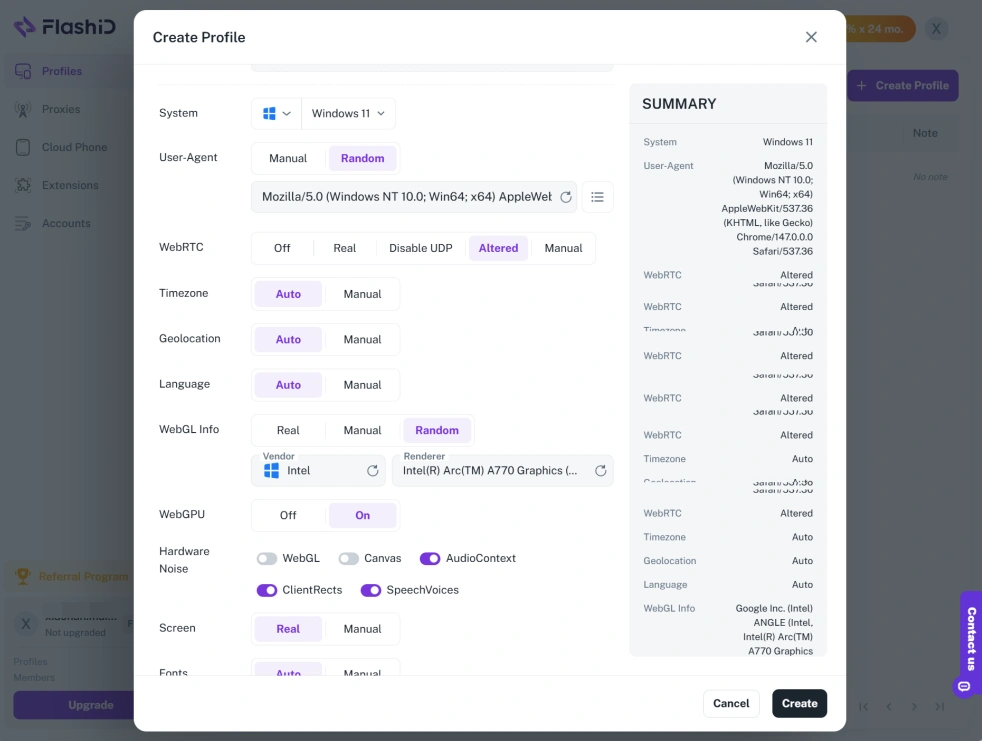
For fingerprint settings, FlashID lets users customize browser and mobile fingerprint parameters based on different account needs, including operating system, browser version, screen resolution, WebGL, Canvas, Audio Context, timezone, geolocation, User Agent, device model, CPU, RAM, and Android version. Common setups can also be saved as profile templates for reuse.
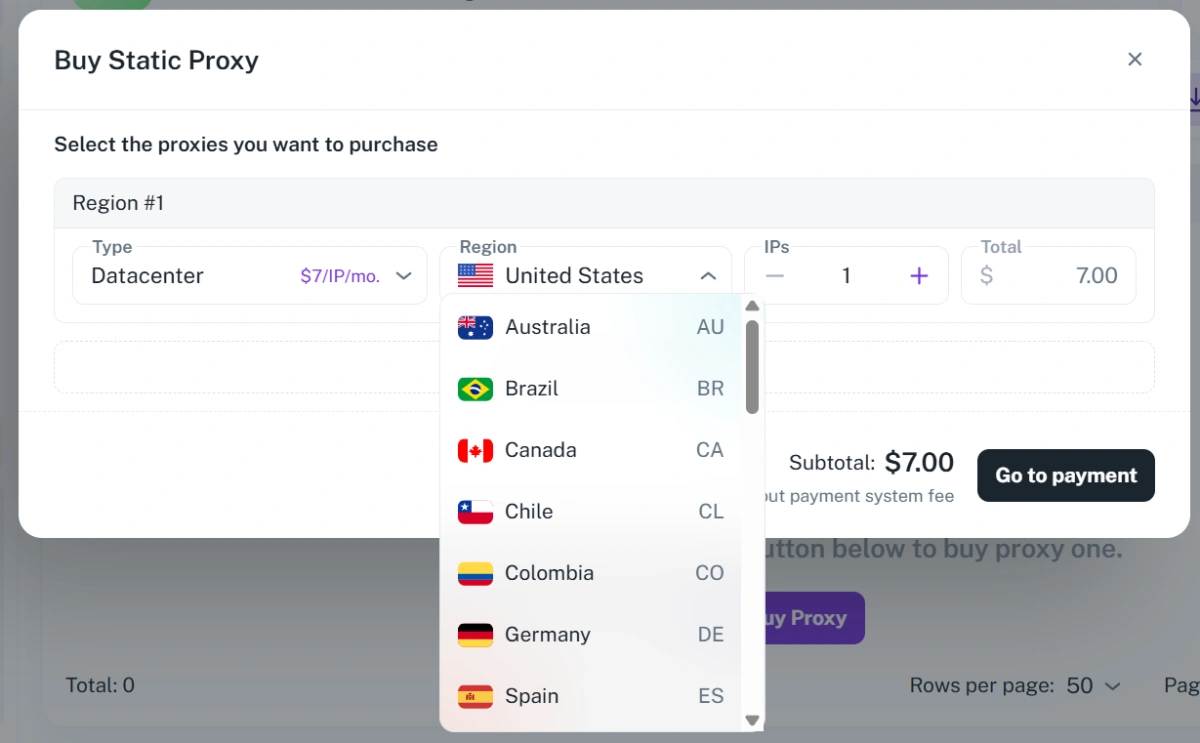
For proxies, FlashID supports built-in free shared proxies, purchasable private residential and IDC IPs, and custom HTTP/SOCKS5 proxies. Its proxy network includes residential proxies covering 190+ countries, datacenter proxies, static ISP proxies, and mobile 4G/5G proxy options. Each browser profile or cloud phone can use an independent proxy.
For automation and team workflows, FlashID provides API access for browser profile creation, fingerprint configuration, cloud phone launching, and web/mobile automation. Workspace, role-based permissions, Account Center, profile templates, and Window Sync help teams organize accounts, control access, reuse setups, and reduce repetitive actions.
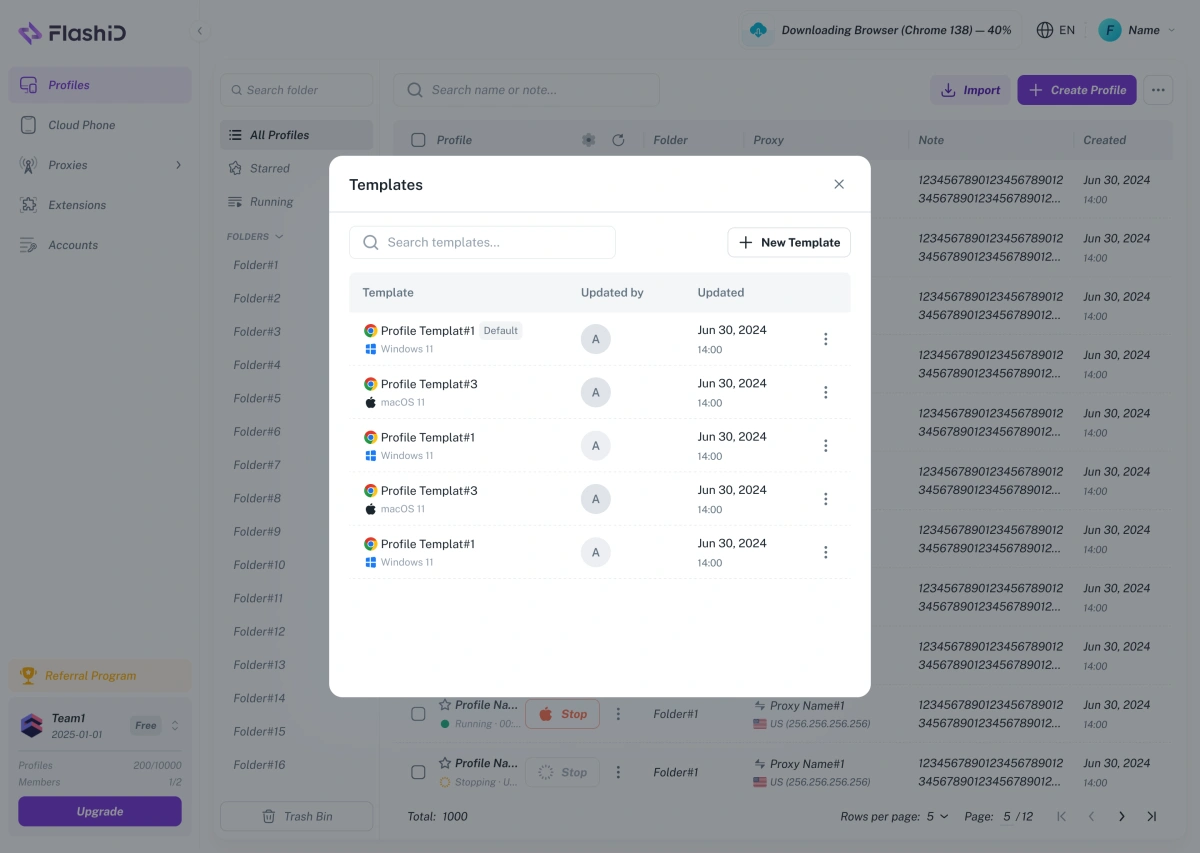
In other words, you do not need to worry about missing the core functions when considering FlashID as a Multilogin alternative.
2.Where FlashID Fits Better
Social Media Management
- Built-in proxy environment
For SMM teams, proxy quality and environment consistency directly affect account stability. FlashID provides its own built-in proxy purchase and management service, so users can manage IPs, browser fingerprints, and cloud phone environments inside one unified system. Multilogin also provides built-in proxy access, but its proxy service relies more on external IP resources, which may mean less direct control over IP quality, weaker after-sales protection, and more uncertainty when proxy-related issues appear.
- Unified browser + mobile system from the beginning
FlashID was built around an integrated environment that combines antidetect browser profiles, cloud phones, proxies, automation, and team workflows from the start. This matches how SMM teams work across TikTok, Instagram, Facebook, Telegram, WhatsApp, and other web/mobile platforms. Multilogin started as a browser-profile tool and only shifted toward cloud phones in 2025, so its mobile workflow feels more like a later expansion than the original product direction.
- Lower-cost entry for new SMM users
FlashID offers a free plan with two profile environments, allowing new SMM users to test account separation before paying. This is useful for solo marketers, small agencies, and beginners who are still validating their workflow. Multilogin uses a paid trial and paid subscription model, which creates a higher entry barrier for users who only want to test first.
Crypto Multi-Accounting
- Faster and more visible product updates
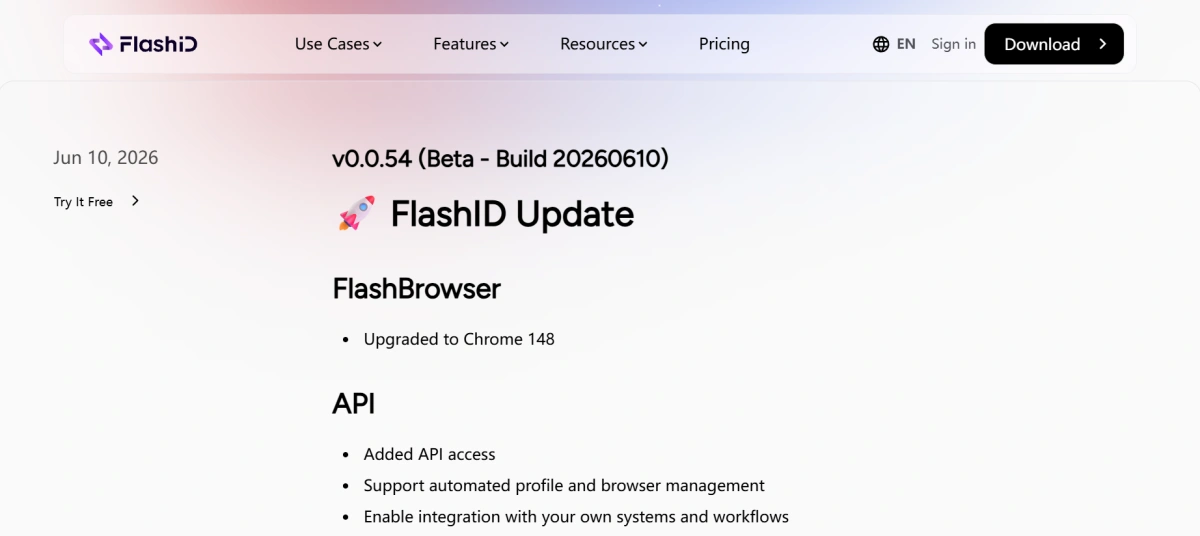
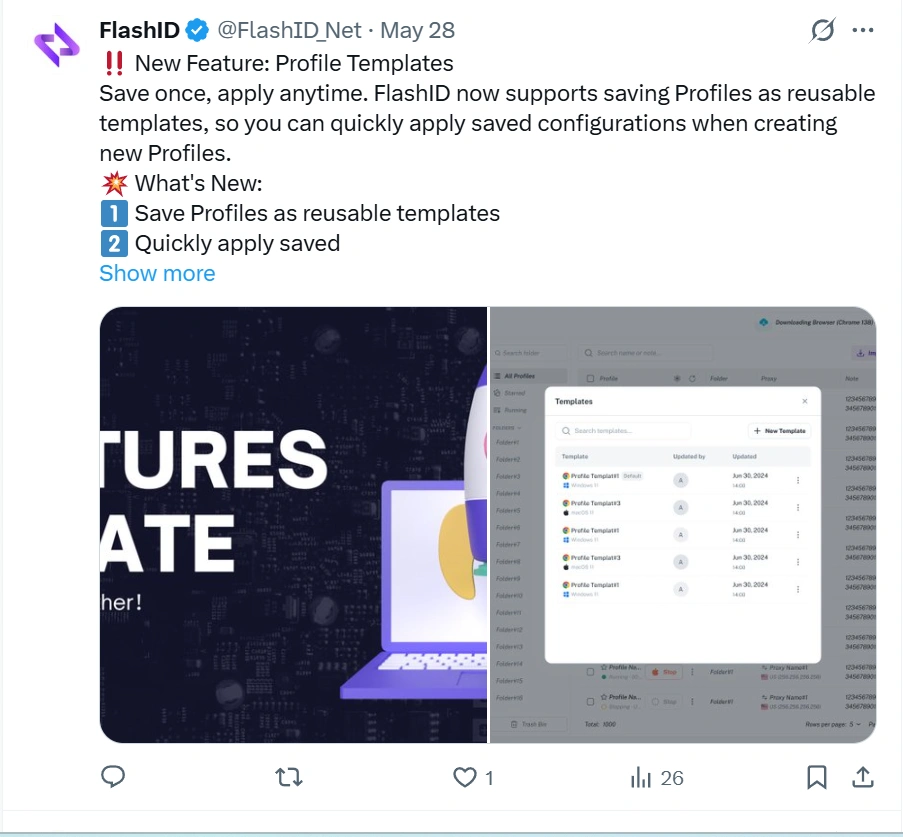
Crypto workflows require strong compatibility, fast maintenance, and clear product updates because users may manage wallets, exchanges, tasks, and sensitive account assets. FlashID updates frequently, and its changelog, Telegram group, and X account all synchronize product changes, including browser kernel upgrades such as Chrome 148. In comparison, Multilogin’s publicly visible update materials show larger gaps, which may make users less confident about how quickly the product responds to compatibility and security needs.
- Stability concerns under attack scenarios
Crypto users often need reliable access for time-sensitive actions. Multilogin has publicly reported DDoS attacks that caused short periods of instability. Although those attacks targeted availability rather than data, service interruptions can still affect crypto workflows and user confidence. FlashID has not publicly shown the same type of recurring DDoS-related instability, which makes it a more reassuring choice for users who care about stable access.
- Better structure for wallets, accounts, and teams
FlashID’s Account Center, Workspace, permissions, profile templates, proxies, and cloud phones help crypto teams separate wallets, exchanges, research accounts, mobile apps, and project tasks. Multilogin is stronger for mature browser-profile operations, but FlashID gives crypto teams a more practical browser + mobile environment for daily account organization, team collaboration, and gradual scaling.
How to Choose the Best Antidetect Browser: Decision Checklist
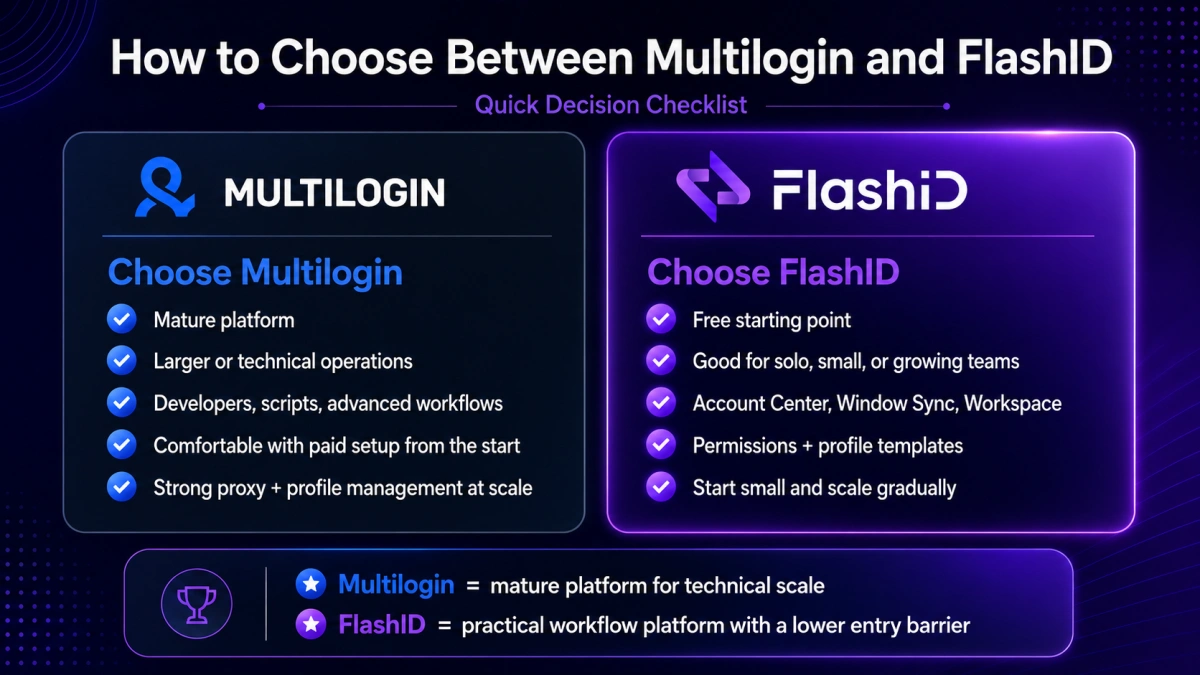
Both FlashID and Multilogin support core multi-accounting needs, including browser profiles, fingerprint settings, proxies, automation, team access, and mobile/cloud phone workflows. The real decision is not which tool has one basic feature, but which one better fits your budget, scale, and daily operation style.
Choose Multilogin if:
- You need a mature platform for larger or more technical multi-account operations.
- Your team already has developers, automation scripts, or advanced browser-profile workflows.
- You are comfortable paying for a mature paid platform from the beginning.
- You need strong built-in proxy tools and advanced profile management at scale.
Choose FlashID if:
- You want to test multi-accounting workflows for free before paying.
- You are a beginner, solo user, small team, or growing team with a limited starting budget.
- You want practical workflow tools.
- You want to start small, keep the setup manageable, and scale gradually.
Simple Rule:
Choose Multilogin if you need a mature, advanced platform for larger and more technical operations.
Choose FlashID if you want a free starting point, a lower entry barrier, and practical tools for daily browser + mobile multi-account management.
Conclusion
Multilogin remains a powerful and mature multi-accounting platform. It is still a serious option for advanced users, larger teams, and businesses that need browser profiles, cloud phones, proxies, automation, API access, and structured team operations.
But the best tool in 2026 is not always the most complex one. For many users, the better choice depends on the actual workflow they need to run every day. In social media management, teams often care about proxy consistency, browser + mobile account environments, fast switching, and lower-cost on boarding. In crypto multi-accounting, users need visible product updates, stable access, organized wallet/account environments, and reliable browser + mobile workflows.
If your operation is already advanced, large, and automation-heavy, Multilogin may still be the right choice. But if you manage SMM accounts, crypto accounts, mobile app workflows, or multi-platform team operations, FlashID offers a more practical starting point. For users who want a Multilogin alternative that fits real browser + mobile multi-accounting scenarios, FlashID is one of the strongest options to consider in 2026.
If you’d like to stay updated with practical insights and industry trends, feel free to join our community.
FAQ
1.What is the best Multilogin alternative in 2026?
FlashID is a strong Multilogin alternative for users who need browser profiles, cloud phone workflows, team collaboration, account management, automation, and a free plan. It is especially suitable for users who want to manage both web and mobile account environments in one platform.
2.Is FlashID better than Multilogin?
It depends on your needs. Multilogin is strong for advanced users, larger teams, and mature browser-profile operations. FlashID may be better for users who want a free starting point, easier onboarding, browser + mobile workflows, Account Center, Window Sync, and practical team collaboration.
3.Who should still choose Multilogin?
Multilogin is a good choice for advanced users, larger teams, and businesses with mature browser-based or automation-heavy workflows. It may be a better fit if you already have developers, scripts, and a larger operating budget.
4.Is FlashID good for social media, crypto, and ad account management?
Yes. FlashID can be useful for social media teams, crypto teams, and ad teams that need organized account environments, browser profiles, cloud phones, team permissions, templates, Window Sync, Account Center, and a lower entry cost.
You May Also Like