Ethereum hovers around the $3,000 mark, and the entire market seems to be chasing a series of “grand narratives.” Some are shouting that $4900 is the starting gun for the next bull run, while others are bracing for much lower prices. In this period of extreme volatility and chaotic sentiment, making a rational decision about Ethereum requires moving beyond a single asset’s perspective and placing it in a broader macro-coordinate system. This is not just a technical analysis exercise; it’s an upgrade in thinking, an evolution from an “asset bettor” to a “macro-market strategist.”

Escape the Single Narrative: ETH/BTC is the Short-Term Barometer
Many investors are accustomed to staring at the ETH/USD chart, trying to find signals for bottom-picking or top-ticking in every fluctuation. The harsh reality, however, is that in the current cycle, Ethereum’s short-term price action has largely been “outsourced” to Bitcoin’s dominance. The ETH/BTC ratio is a more telling indicator than any single chart. When ETH/BTC is in a downtrend, it’s very difficult for ETH/USD to stage a strong rally independently.
By reviewing historical cycles, we’ve found a clear pattern: whenever ETH/USD breaks down from its local uptrend, it’s usually when ETH/BTC finds a bottom. This time is no exception. Ethereum’s fall from its $4900 high to around the $2900 level shows a striking structural similarity to Bitcoin’s correction in the 2017 cycle (from $4900 to $2900). This forms a relatively optimistic “script.” However, the other line in the script is far more pessimistic: in the last cycle, Ethereum experienced a deep pullback from near $4900 all the way down to $2100.
This brings up the first key question: should we be following the 2017 script or the last cycle’s script? The answer may lie in the dimension of “time.”
The Time Window and Key Levels: A Game of Patience
An analyst from YouTube point out that the weakness in the ETH/BTC pair often persists until December. This means that for the next 2-3 weeks, Ethereum’s performance is likely to continue underperforming Bitcoin. Until Bitcoin’s decisive rebound begins, holding Bitcoin is a safer strategy than holding Ethereum.
Here emerges a crucial “pivot point”: the $2900 level. This price level has extremely strong symbolic significance. If Ethereum can hold its ground here, it can claim to be following the classic “rebound after a pullback” script similar to Bitcoin’s in 2017, ultimately challenging or even breaking its all-time high. Conversely, if this key level is breached, the price is highly likely to fall to the next major support level at $2100, at which point the market will be more inclined to believe we are re-enacting the deep correction of the last cycle.
Why December? This is not random speculation but an observation based on historical data on the ETH/BTC chart. In past cycles, December has often been a turning point where ETH/BTC bottoms and starts a new uptrend. Therefore, the core of the current strategy is not predicting where ETH will top out, but observing when Bitcoin will send a “reversal signal.” This signal is likely to be Bitcoin’s rally back to its 200-day moving average. If Bitcoin’s rally starts earlier, Ethereum might be able to avoid dropping to $2100 and find support around $2900, kicking off an independent rally.
Facing the Fog: Lessons from Tesla and Investor Composure
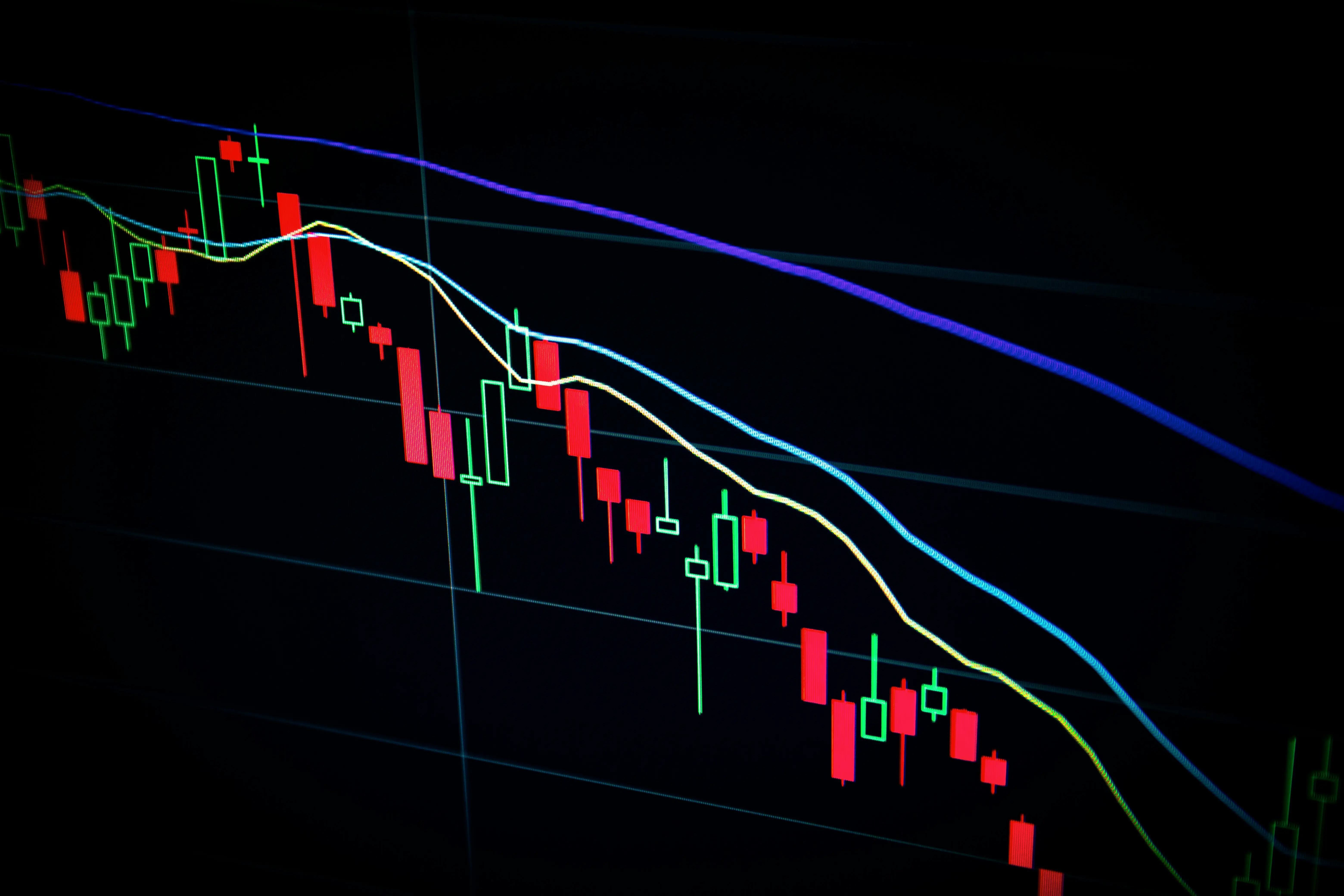
To better understand Ethereum’s current predicament, we can compare its price action to Tesla’s stock chart. A striking similarity emerges: both have gone through a pattern of “low -> higher low -> new high -> deep pullback.” After Tesla formed its “higher low,” it embarked on an epic bull run, but it was followed by a deep correction that touched $215. Ethereum’s “higher low” occurred around $1390, after which it also headed towards $4900, initiating its current pullback.
If Ethereum chooses to replicate Tesla’s path, it might similarly need a deep correction to a bottom around $2100 to clear the final hurdles for a future bull market. This is undoubtedly a heart-wrenching possibility, especially in a market full of panic and negative headlines.
However, from a temporal perspective, Ethereum’s decline period has already reached a similar length to Tesla’s (around 13 weeks), suggesting the market may have completed the “panic selling” phase, releasing much of the risk. This provides a temporal justification for it to find support around $2900.
Ultimately, in the face of so much uncertainty and contradictory scripts, what strategy should a retail investor take? The answer might be “cautious, tactical observation.”
- Primary Task: Watch Bitcoin. In the coming weeks, Bitcoin’s movement is key to determining Ethereum’s fate. Pay attention to whether it will close the weekly chart below its 50-week moving average and when it will initiate a rally to the 200-day moving average.
- Define the Core Defense Line: Treat $2900 as the “life line” for bulls. As long as it holds, a relatively optimistic view can be maintained; once it breaks, be prepared for a deeper correction psychologically and in position.
- Avoid “Bottom Picking” Too Early: Don’t try to guess the absolute bottom of the market, especially when market sentiment is still bearish and bear market effects are apparent. Be patient and wait for clear reversal signals.
In short, the current market is a “game of patience” that tests one’s resolve. Instead of chasing the next “grand narrative,” it’s better to become a cool-headed tactician, adjusting your Ethereum position based on Bitcoin’s dominant time window and key price points.
The “Digital Fortress” for Global Macro-Analysis: The Path for an Analyst
When you evolve from a passive “asset holder” to an active “macro-market strategist,” your focus shifts from a single “buy/sell decision” to a complex system encompassing data scraping, cross-platform analysis, and multi-dimensional monitoring. Your goal is no longer just looking at one exchange or news site, but building an intelligence matrix to support your strategic decisions.
In this multi-source, multi-task, high-intensity market analysis environment, the greatest risk is no longer price volatility, but “the insecurity of the analysis environment.”
When you need to use multiple platforms simultaneously to track Bitcoin’s 50-week moving average, analyze ETH/BTC’s relative strength, and monitor other crypto assets’ performance versus Bitcoin, you rely on various websites, charting tools, and APIs that may involve data scraping. If all these operations are performed under the same browser and IP address, they leave a clear digital footprint. Platform providers can use device fingerprints, cookies, and sequences of access behavior to identify that you are conducting a series of highly related, strategic “market analysis activities.”
Once flagged by the platform’s algorithm as “abnormal behavior” or “malicious scraping,” you could face temporary access restrictions, reduced API call limits, or even a permanent ban on your account. This is a fatal blow to the “market analysis system” you have worked so hard to build. Your analytical work relies on stable and reliable data acquisition. Any disruption can lead to a failure of your insights and incorrect judgments. This is the “intelligence source security” issue that cannot be ignored when evolving from a “retail observer” to a “strategic analyst.” Your core strength lies in your insight into market structure and time windows, but the effectiveness and stability of your entire analytical work depend on your ability to build a secure, independent digital environment for every “research project” and “market analysis role.” Our product, FlashID Anti-detect browser, is introduced at this pivotal moment to serve as the “digital identity safe harbor” that securely and efficiently operates your entire “crypto market analysis matrix.”
With FlashID, you can create a completely separate, infinitely scalable digital environment for each of your “analysis roles” (e.g., Macro_Analyst for tracking Bitcoin’s macro trends, Crypto_Trader for ETH/BTC technical analysis, Data_Scraper for on-chain data acquisition). This means:
- Absolute Analysis Isolation: Each environment has its own unique IP address, browser fingerprint, and login identity. When you log into macro-financial news sites as a
Macro_Analyst, you appear as a professional observer. When you switch to theData_Scraperidentity to access blockchain APIs or data scraping platforms, you are seen as a purely, dedicated data-harvesting individual user. This builds an impenetrable firewall for your different analytical tasks, completely eliminating the risk of platform restrictions due to “inter-task identity contamination,” allowing you to boldly engage in multi-dimensional, cross-platform strategic analysis. - Automated Analytical Workflow: The built-in RPA (Robotic Process Automation) feature is key to freeing you from repetitive data monitoring. As a “macro-market analyst,” your value lies in insight and decision-making, not in tedious daily data checks. You can write an RPA script to have FlashID automatically perform monitoring tasks: in an environment created for a
Crypto_Trader, automatically refresh a third-party website’s ETH/BTC chart every 15 minutes and log its key points to a local note; in theMacro_Analystenvironment, automatically scrape and organize a report on Bitcoin’s position relative to its 200-day moving average. This “one role, one environment” automated analysis matrix model allows you, single-handedly, to easily manage a vast and efficient market intelligence system, truly evolving from a “retail observer” to a “strategic analyst.”
When you evolve from a “asset holder” who relies on a single platform and intuition for decisions, into a “macro-market analyst” armed with strategy, tools, and FlashID, the foundation for safeguarding all market insights and analytical strategies is this “digital identity safe harbor system.” It allows you to focus on the core value of market structure analysis and time window judgment while your “market analysis enterprise” operates on a solid, secure, and scalable technological foundation, achieving a qualitative leap from “investing by feel” to “rationalizing your strategy.”

Ten Frequently Asked Questions
Q: The article says Bitcoin is better than Ethereum, should I liquidate all my Ethereum for Bitcoin right now?
A: The article’s advice is a short-term (next few weeks) tactical move, not a permanent recommendation. It’s more like a tactical risk-avoidance during a window of uncertainty. If you consider yourself a long-term holder, there’s no need to make extreme position changes due to short-term volatility, but you should still pay attention to the $2900 key level.
Q: Will the “deep correction” definitely happen? Is it possible for Ethereum to rally directly from $2900?
A: It’s possible. $2900 is the most important line of defense right now. If it holds, it means its market structure is more akin to Bitcoin’s in 2017, avoiding the more pessimistic script. However, this needs to be judged in conjunction with Bitcoin’s movement; if Bitcoin stabilizes and rebounds simultaneously, this possibility increases.
Q: I heard the Ethereum ETF will bring a lot of capital, can this change its weakness?
A: An ETF is a long-term positive, but its short-term impact has likely been priced in (if it exists). The current weakness of ETH is mainly determined by the market cycle and capital flow, which is similar to the short-term reaction pattern in traditional markets when ETF approval is granted. It often cannot change the direction of the major trend, at most it can only accelerate or delay it.
Q: What are the “four-year cycle” and “mid-term year”? How should I understand them?
A: This is a macro temporal framework based on observing historical price action. It roughly suggests that the peaks of crypto bull markets often occur in “1” years (like 2021, 2017), while the subsequent “2” years (like 2022, 2018) are often bear years or years of major corrections. The video mentions 2026 as a mid-term year (year 6, close to half the cycle in a numerical sense), which might be bearish.
Q: Why is the 200-day moving average the target for Bitcoin’s rebound? Why is this level so important?
A: In Bitcoin’s past cycles, after every peak, there’s always a rebound, and the limit of this rebound almost precisely touches the 200-day moving average. This position has been historically proven to be a powerful “gravity zone” and an “emotional watershed.” Once Bitcoin can rise above this level, it can often temporarily relieve market panic.
Q: I’m a retail investor, how can I track “ETH/BTC” and Bitcoin’s “market dominance”?
A: You can view the chart for any trading pair (like ETH/BTC) on any major crypto data website (e.g., CoinGecko, CoinMarketCap). Bitcoin’s market dominance is usually also available as a dedicated chart on the homepage or “Markets” section of these sites.
Q: I feel the market is falling every day, and it’s hard to “wait patiently” as the video suggests. Any advice?
A: This is precisely what a bear market tests about human nature. It’s recommended not to stare at the charts every day, as this will amplify your anxiety. Instead, set a fixed interval (e.g., once a week) to review your core strategy and observe key price changes, rather than being disturbed by daily noise. Understanding that this is part of a cycle can help you maintain emotional stability.
Q: Why do I need FlashID to help me with market analysis? Can’t I just open multiple tabs in Chrome?
A: Opening multiple tabs in Chrome is only physical isolation. For users who need in-depth analysis and may involve data scraping or using multiple specialized tools, this easily leaves traces at the data and behavioral level. FlashID creates a separate, fingerprint-free digital environment for each analysis role, completely isolating your behavior and data, preventing you from being identified as a “matrix account” or “abnormal behavior” by the target platform. This is crucial for professional cross-platform analysis.
Q: What exactly can FlashID’s RPA automation do for me?
A: RPA can greatly free up your energy. For example, you can set up a script that makes FlashID automatically log into your
Macro_AnalystandCrypto_Traderenvironments at market open, scrape key data like Bitcoin’s price and the ETH/BTC rate, and automatically generate a simple daily report. This way you can be liberated from repetitive data transcription tasks and focus on strategic thinking.Q: If Ethereum really falls to $2100, is all hope lost?
A: Not at all. On the contrary, this could be the final “bear trap” before the start of another bull run. According to historical experience (e.g., the 2017-2018 cycle), major corrections often accumulate enough “panic selling” and “floating loss positions” for a more ferocious counter-attack, thus clearing the way for a new bull market cycle. This is just a difficult stage in the path, not the end.
You May Also Like