What Is VeePN and How Does It Work?
VeePN is a virtual private network service that routes your internet traffic through an encrypted tunnel to a remote server. It masks your real IP address and encrypts data to protect privacy and bypass geo-restrictions.
VeePN’s core VPN features
VeePN offers apps for Windows, macOS, iOS, Android, and browser extensions for Chrome.
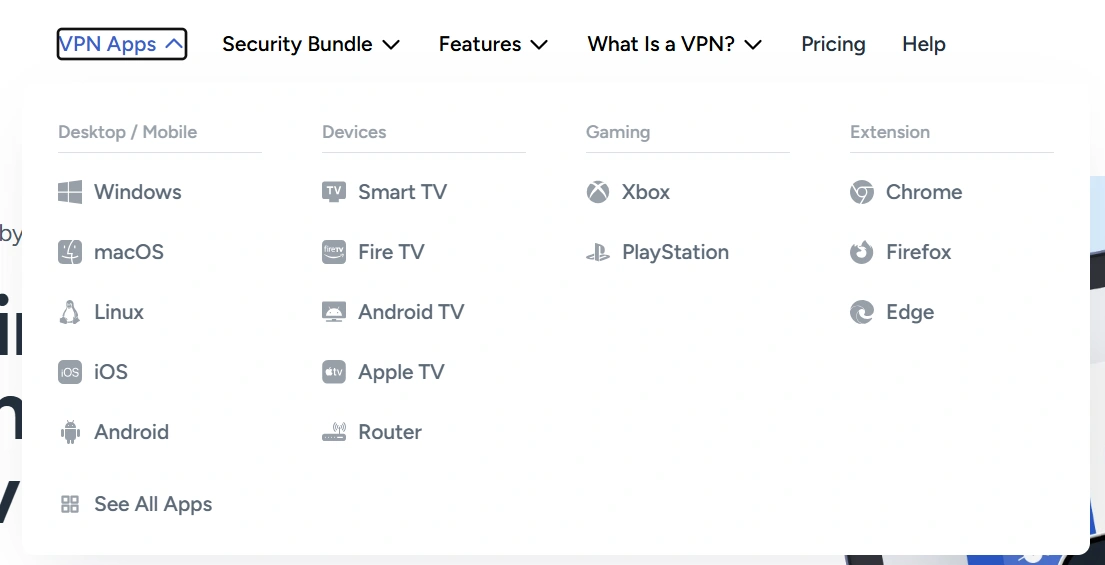
It uses AES-256 encryption, a no-logs policy (self-reported), and supports protocols like OpenVPN and WireGuard. The service also includes a kill switch to block internet if the VPN connection drops, and DNS leak protection.
Server network and encryption
According to VeePN’s website, they have servers in 148 locations across 85 countries. However, an independent review noted a discrepancy in the number of countries listed. Encryption is standard AES-256, which is widely considered secure.
Pricing and plans
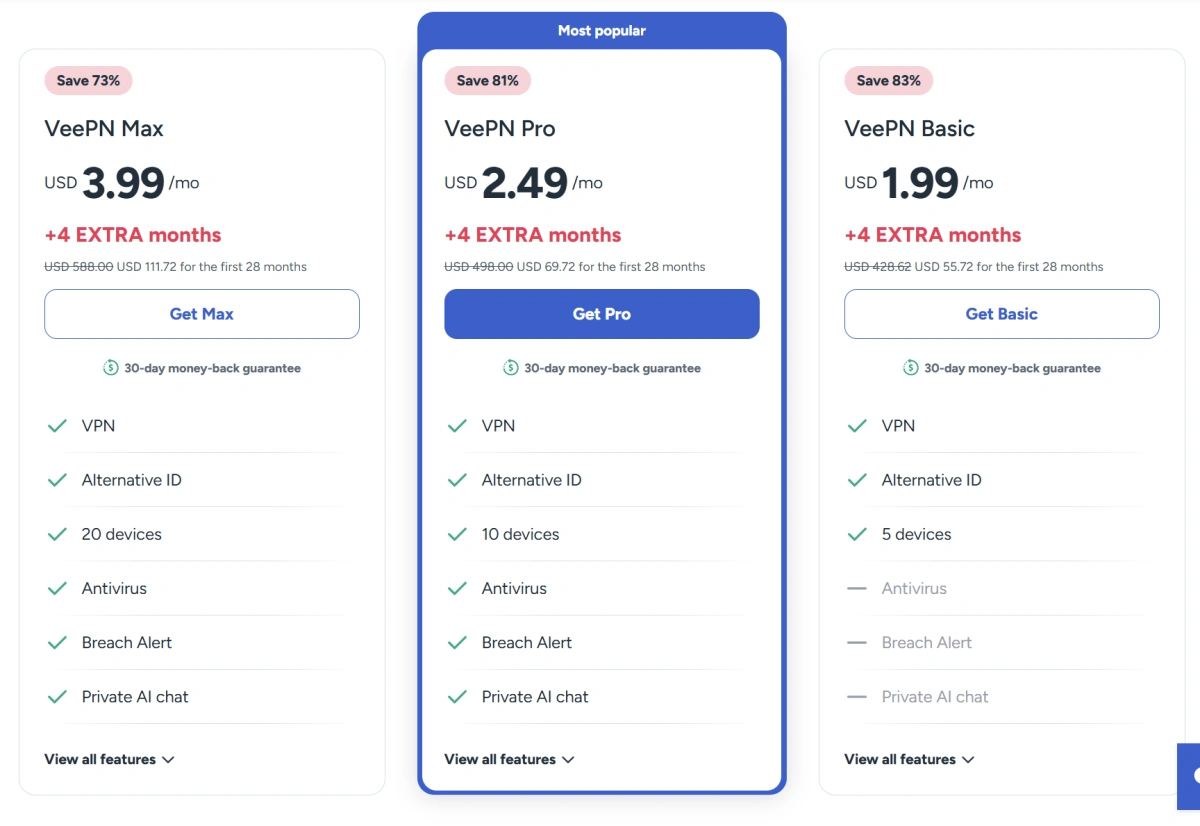
VeePN offers monthly, yearly, and multi-year plans. A free version with limited data is available, but speeds and server access are restricted. Paid plans start around $1.99 per month for long-term subscriptions. Pricing is competitive with other VPNs.
VeePN’s Limitations for Multi-Account Management
While VeePN works well for general privacy and unblocking content, it has significant drawbacks for multi-account management.
1.No browser fingerprint isolation
VeePN only changes your IP address—it does not alter your browser fingerprint. Websites can still track you via canvas fingerprinting, WebGL, font detection, time zone, and other parameters. For managing multiple accounts on the same platform, this means platforms can associate accounts by matching fingerprints, increasing the risk of bans.
2.Shared IP risks
VPNs often share IP addresses among many users. If one user engages in spam or policy violations, the IP may be blacklisted, affecting all accounts using that IP. This is especially problematic for e-commerce and social media platforms that flag unusual activity from shared IPs.
3.Kill switch and connection reliability issues
An independent review of VeePN reported that the kill switch failed to block traffic when the VPN disconnected, potentially exposing real IP addresses during brief drops. Users on Trustpilot have also complained about connection instability and slow speeds. These issues compromise the reliability needed for consistent multi-account workflows.
To learn more about how a dedicated anti-detect browser addresses these limitations, explore FlashID Anti-Detect Browser Features.
What Is FlashID Anti-Detect Browser?
FlashID Antidetect Browser is a specialized anti-detect browser designed for managing multiple online accounts safely and efficiently. Instead of masking traffic at the network level, it creates isolated browser profiles with unique digital fingerprints.
Built-in proxy infrastructure
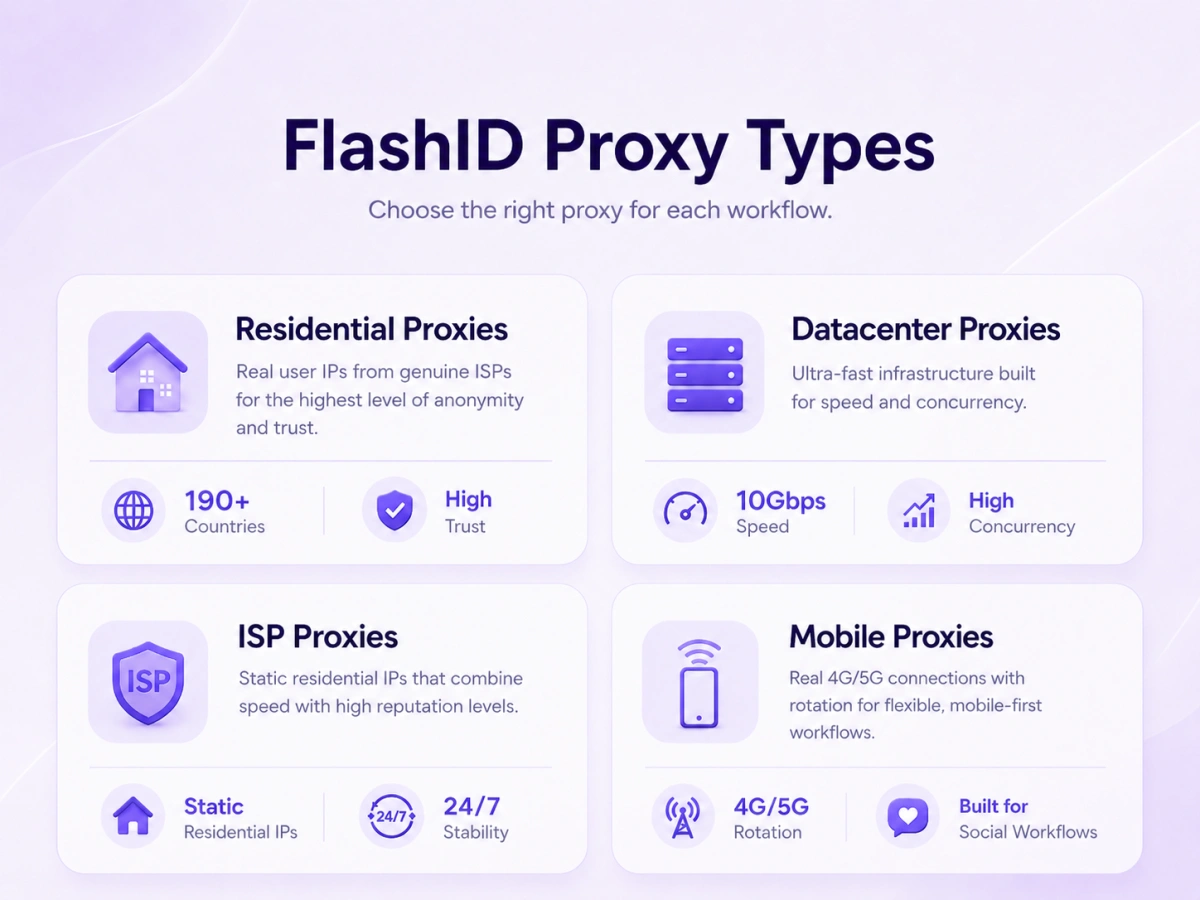
FlashID includes an integrated proxy purchasing and management system. You can assign a different proxy (residential, data center, or mobile) to each profile directly from the browser interface. This eliminates the need for manual proxy configuration or third-party tools.
Unique browser fingerprint per profile
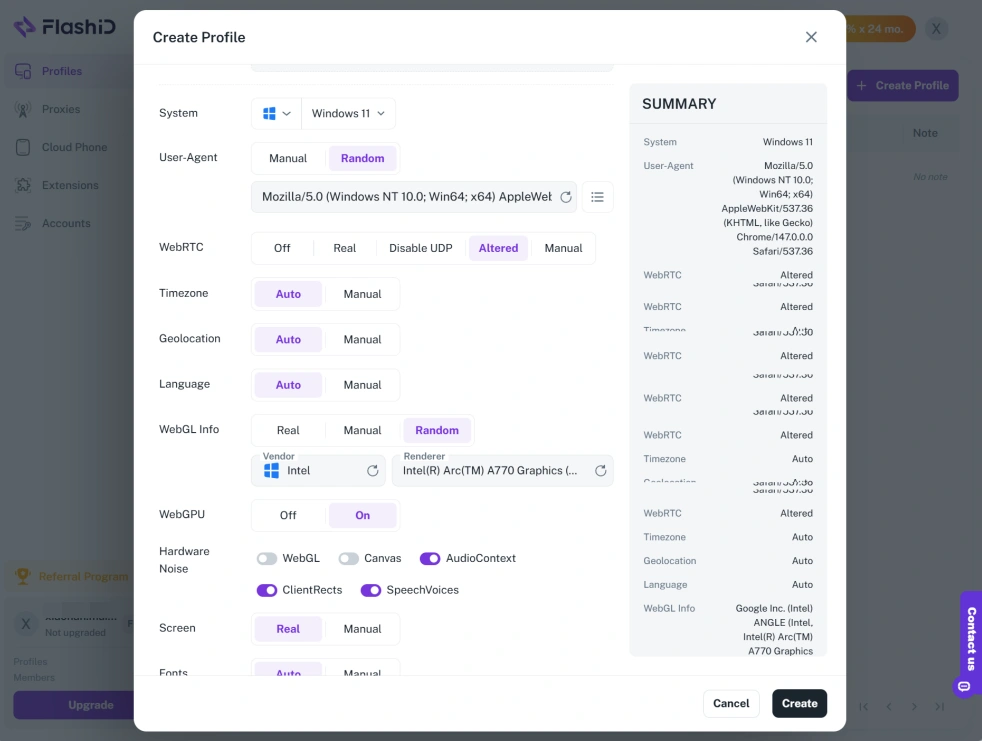
Each profile in FlashID has a distinct fingerprint covering screen resolution, user agent, time zone, language, fonts, WebGL, and more. This makes it appear as if each account is accessed from a different device, reducing the chance of platform detection and account association.
Pricing and plans
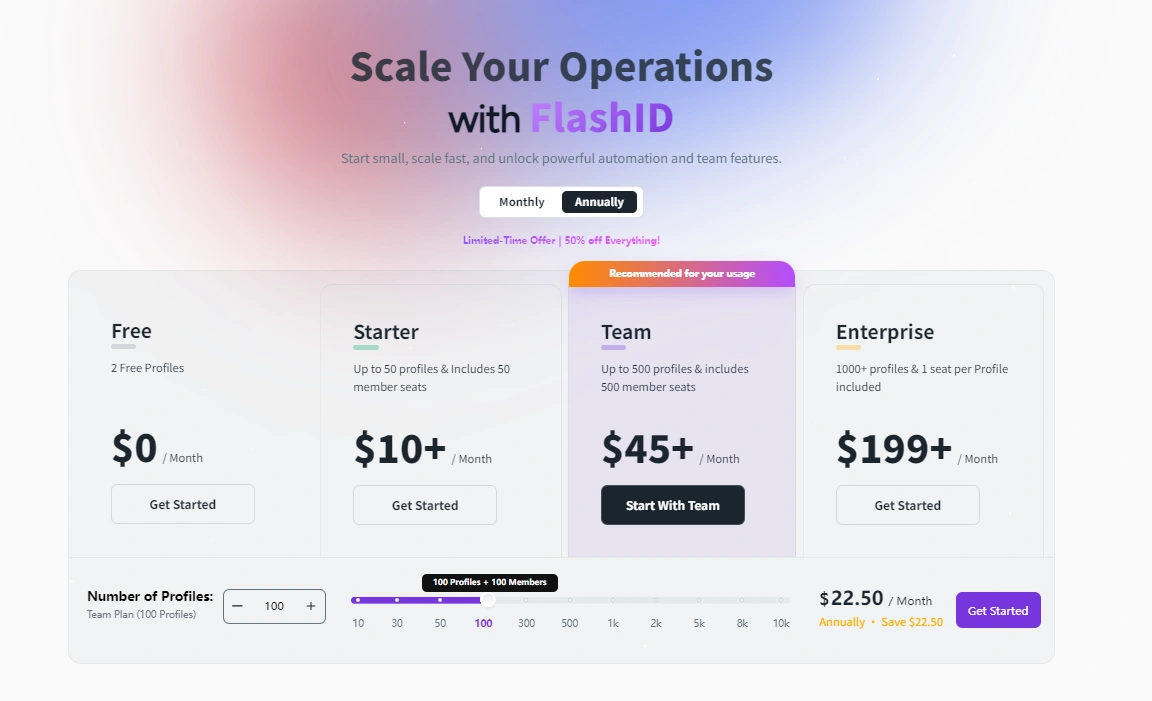
FlashID offers a free plan with two browser profiles. Its Starter plan normally starts at $10 per month and is currently available from $5 per month under a limited-time 50% discount. The plan supports up to 50 profiles and includes up to 50 member seats, making FlashID an affordable option for users who need fingerprint isolation, proxy management, automation, and team collaboration without paying for a high-priced enterprise tool.
FlashID vs VeePN: Key Differences
Understanding the core differences helps decide which tool fits your use case.
Approach to anonymity: VPN vs fingerprint spoofing
VeePN anonymizes your network connection by changing your IP and encrypting traffic. FlashID anonymizes your browser environment by spoofing the fingerprint while also letting you assign per-profile IPs. For multi-account management, fingerprint spoofing is more critical because platforms use fingerprinting to detect duplicate accounts.
Proxy management: manual vs integrated
With VeePN, you must manually connect to a server and rely on the VPN IP. FlashID integrates proxy selection into each profile, so you can switch proxies without leaving the browser. This saves time and reduces errors.
Use case suitability
VeePN is best for casual privacy, streaming, and bypassing censorship. FlashID is purpose-built for professionals running multiple accounts on e-commerce, social media, and ad platforms. The two tools serve different primary needs.
| Feature | VeePN | FlashID |
|---|---|---|
| Main purpose | Online privacy and IP masking | Multi-account management |
| IP setup | VPN server IP | Separate proxy for each profile |
| Fingerprint isolation | No | Yes |
| Profile isolation | No | Yes |
| Automation | Limited | API and RPA support |
| Best for | Browsing, streaming, geo-unblocking | E-commerce, social media, and ad accounts |
When to Choose FlashID Over VeePN
Cross-border e-commerce
Cross-border sellers may need to manage multiple stores across platforms such as Amazon, eBay, Shopify, Shopee, or Lazada. VeePN can change the connection IP, but it does not create a separate browser fingerprint for each store. FlashID provides isolated browser profiles and lets users assign a dedicated proxy to each account, helping keep store environments separate. It can also support routine operations such as product listing updates and inventory management through automation.
Static ISP proxies are generally better suited to long-term store operations because they provide a stable IP for each account.
Social media marketing
Marketing teams and agencies often manage multiple advertising, content, or client accounts across Facebook, Instagram, and TikTok. VeePN may hide the original IP, but multiple accounts can still share the same browser fingerprint or VPN IP. FlashID separates cookies, fingerprints, and proxy settings between profiles, reducing the risk of unintended account association.
Residential or rotating proxies can also be assigned based on account region, making them useful for geo-targeted campaigns and controlled account scaling.
Ad account management
Advertising agencies frequently operate multiple accounts on platforms such as Google Ads, Facebook Ads, or Microsoft Advertising for campaign testing and optimization. VeePN connects activity through VPN servers, while FlashID allows each account to run in its own isolated browser environment with a separate proxy.
Datacenter proxies can be combined with automation for fast, cost-efficient campaign testing, while residential or ISP proxies may be more suitable for accounts that require greater stability and consistent regional signals.
Conclusion: Which Tool Fits Your Workflow?
Choose VeePN if your primary need is general online privacy, secure browsing, or unblocking content. Choose FlashID if you manage multiple business accounts and need a dedicated solution for fingerprint isolation and proxy integration. FlashID is not a replacement for a VPN; rather, it is a specialized tool for professionals who rely on multi-account operations. For a broader context, see FlashID vs Other Anti-Detect Browsers.
Try FlashID free and experience secure multi-account management.
FAQ
1.Can antidetect browsers replace a VPN like VeePN?
No. An Antidetect Browser is not designed to encrypt all internet traffic or replace a VPN for general privacy. It focuses on browser-based multi-account management. For full-device encryption, a VPN remains necessary.
2.Is VeePN safe for managing multiple accounts?
VeePN can help hide your IP, but it does not isolate browser fingerprints. Platforms may still detect multiple accounts via fingerprinting, and shared IPs can trigger flags. For serious multi-account management, an anti-detect browser like FlashID is more appropriate.
3.Which is better: anti-detect browser or VPN for e-commerce?
For e-commerce, an anti-detect browser is better because it addresses fingerprinting and provides per-account isolation, reducing the risk of account bans that can result from using a VPN with shared IPs.
4.How much does FlashID cost compared to VeePN?
FlashID offers a free plan with two profiles, while paid plans currently start from $5 per month during a limited-time promotion. VeePN may cost less, but FlashID includes browser fingerprint isolation, proxy management, automation, and team features.
You May Also Like