In 2026, Snapchat has long moved beyond its original “disappearing messages” label. It has become a core social hub for Gen Z users in Europe and the United States, as well as an indispensable marketing channel for brands expanding overseas. For cross-border sellers, social media managers, and content creators, managing multiple Snapchat accounts has become a rigid necessity—whether to capture traffic opportunities, separate work from personal life, or build a matrix-based operating strategy.
However, as Snapchat’s risk control system grows increasingly strict, how to manage multiple accounts securely and efficiently—while avoiding bans and restrictions—has become a major pain point for many operators. This article takes an in-depth look at Snapchat’s multi-account requirements and rules, and explains how modern tools represented by FlashID can be used to build a sustainable, scalable operating solution.
Multi-Account Demand and Rules: Who Needs It, and Why Is It So Difficult?
Who Needs Multiple Accounts?
In today’s digital ecosystem, the group of users who need to manage multiple Snapchat accounts is far broader than many people expect:
- Cross-border e-commerce and global brands: Operating separate brand accounts for different countries or regions (such as the US, UK, or Middle East) to deliver localized content marketing.
- Social media managers and agencies: Managing official Snapchat accounts for multiple clients simultaneously, with a strong need for strict privacy isolation.
- Creators and influencers: Separating personal life from public image by maintaining one private account and one public, fan-facing account.
- Privacy-focused users: Simply wanting to completely separate work-related communication from their personal social circle.
What Is Allowed vs. What Is Not
Snapchat officially allows users to add and switch between up to four accounts on a single device through its built-in feature. While this sounds convenient, it comes with strict limitations: Snapchat clearly knows that these four accounts belong to the same person. This means friend recommendations can overlap, and if one account is banned for a violation, the remaining accounts are likely to face heightened scrutiny.
What Snapchat strictly targets are behaviors that violate its Terms of Service, including but not limited to: using multiple accounts for spam marketing, impersonation, ban evasion, or operating accounts through automation scripts that mimic non-human behavior. The platform relies on sophisticated algorithms to track device fingerprints, IP associations, and behavioral patterns to determine whether multiple accounts are controlled by a single entity.
Pain Points of Common Management Methods
When attempting multi-account management, many users fall into the following traps:
- Official account switching: Safe and compliant, but the hard limit of four accounts makes it unsuitable for professional operations.
- App cloners or dual-app tools: Convenient and often free, but extremely risky. All cloned instances share the same underlying device fingerprint, and some tools may inject non-compliant code, making it very easy to trigger Snapchat’s ban mechanisms and cause mass account suspensions.
- Multiple physical devices: The safest approach, but costly, inconvenient to carry, and nearly impossible to manage efficiently once the number of accounts exceeds ten.
As a result, finding a professional solution that delivers true environment isolation while balancing cost and efficiency has become an unavoidable path for scalable operations.
Tool-Based Solutions: Why FlashID Anti-detect Browser Is a Smart Choice in 2026
Faced with the limitations of traditional methods, cloud-based fingerprint browsers and environment isolation technologies have emerged. With its positioning as an “integrated efficiency platform,” FlashID stands out with distinct advantages. It is not merely an anti-detect browser, but a full-stack digital identity management platform that integrates cloud phone environments, automation engines, and team collaboration features.
Key Features of FlashID Anti-detect Browser
1. Environment-Level Isolation, Not Just Browser-Level
FlashID provides each Snapchat account with an independent, device-level “digital identity,” including unique fingerprints such as Canvas, fonts, and time zones. From the platform’s perspective, each account appears to originate from a completely different device, eliminating account linkage at the source.
2. FlashID Cloud Phone Function (Advanced Needs for Mobile Operations)
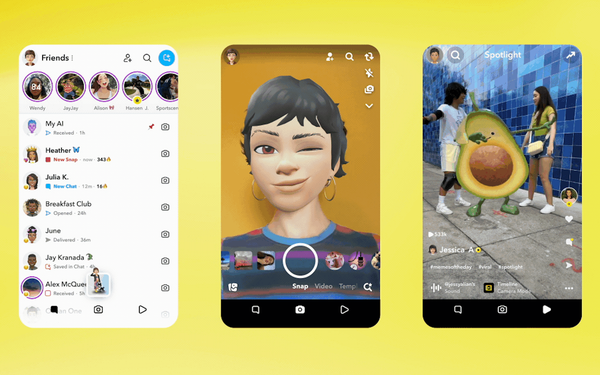
Snapchat is fundamentally a mobile-first platform, and many core features are restricted or removed on the web version. One of FlashID’s strongest advantages is its integration of real cloud-based Android systems (cloud phones).
- Native app operation: You can run the Snapchat mobile app natively on a cloud phone, with full support for AR filters, Spotlight short videos, camera permissions, and all other features—without the risk of emulator detection.
- Multi-app management on mobile: Through cloud phones, you can achieve true mobile-side multi-account operation, with support for batch app installation, uninstallation, and launching. This significantly improves efficiency for teams that rely on refined mobile operations.
3. Powerful Network and Proxy Integration
Independent devices alone are not enough; they must be paired with independent network environments. FlashID anti-detect browser supports granular proxy management, allowing static residential IPs or mobile proxies to be bound to specific environments. This “independent device + independent IP” dual-isolation mechanism closely simulates real user network behavior and significantly reduces the risk of being flagged by risk control systems.
4. No-Code Automation and Team Collaboration
With a built-in RPA engine, FlashID can automate repetitive tasks such as logins and posting. Combined with role-based permission management and operation logs, it enables secure and efficient team collaboration while eliminating the risks associated with password sharing.
Best Practices: Secure Operations in Three Steps
Step 1: Build an Isolated Environment
- Create an independent profile in FlashID for each account and select a cloud phone environment that matches the target country.
- Bind clean proxy IPs (avoid free VPNs; use static residential IPs for core accounts).
Step 2: Scientifically Warm Up Accounts
- Register using brand-new email addresses and phone numbers.
- For the first 7–14 days, simulate real user behavior: watch videos, browse Discover, and avoid adding friends too quickly.
- Stagger posting times and avoid highly similar content across accounts.
- During the warm-up period, tools such as Scamlytics can be used to check account health, assess trust scores in real time, and identify potential risks early.
Step 3: Team Collaboration and Risk Control
- Use permission assignment features to share account access without exposing passwords.
- Regularly review login devices, and when a ban occurs, rely on isolated environments to prevent chain suspensions across accounts.
Conclusion
As Snapchat’s risk control mechanisms continue to tighten, relying on multiple phones or free dual-app tools is no longer sustainable. True security and efficiency come from isolation at the environment level. Through an integrated solution combining fingerprint browsers, cloud phones, independent IPs, and team collaboration, FlashID anti-detect browser allows each account to exist in its own independent “digital world,” eliminating linkage at its root.
By mastering this approach, you can build a stable Snapchat traffic matrix in a compliant manner—and shift your focus back to what truly matters: content creation and growth.
FAQ (Frequently Asked Questions)
1.Q: Is it allowed to manage multiple Snapchat accounts?
A: Yes. Snapchat allows users to switch between up to four accounts on one device. However, these accounts are still linked at the device level, which makes them unsuitable for professional or large-scale operations.
2.Q: Why do app cloners and dual-app tools often lead to bans?
A: Because they do not provide true device isolation. All cloned apps usually share the same device fingerprint, making it easy for Snapchat to detect account linkage and trigger suspensions.
3.Q: How does Snapchat detect multi-account behavior?
A: Snapchat analyzes device fingerprints, IP addresses, and behavior patterns. Even if accounts appear separate, shared environments or repetitive actions can still be flagged.
4.Q: What makes FlashID anti-detect browser safer than traditional methods?
A: FlashID offers environment-level isolation, assigning each account a unique digital identity and independent network setup, which prevents account linkage at the source.
5.Q: Why are cloud phones important for Snapchat operations?
A: Snapchat is mobile-first. FlashID’s cloud phone feature allows native app operation in real Android environments, supporting full Snapchat functionality without emulator risks.
6.Q: Do I still need proxies when using FlashID anti-detect browser?
A: Yes. Pairing each isolated environment with its own IP creates a “one device, one IP” model that closely matches real-user behavior and reduces risk.
7.Q: How long should a new Snapchat account be warmed up?
A: Typically 7–14 days. During this period, gradually increase activity and avoid aggressive actions to build trust and reduce restrictions.
You May Also Like