For years, LetsVPN was known among many users for one simple promise: it could always connect.
That message made the product easy to understand. For ordinary users, cross-border workers, AI tool users, and overseas platform operators, LetsVPN was not a complicated technical solution. It was a one-click VPN app that seemed simple, fast, and reliable.
But on April 28, 2026, LetsVPN officially announced that it would terminate its service for users in mainland China. According to the official statement, the company had spent nearly 20 days trying to adjust its technology under continued network blocking, but still could not effectively solve the connection problem.
The contrast is striking. A VPN once associated with “always connected” suddenly became unavailable in one of its most important markets. This raises a larger question: what options do users still have for accessing overseas networks, and how can they build a more stable long-term strategy?
What Happened to LetsVPN?
LetsVPN’s exit did not come out of nowhere. According to industry coverage, users had already started reporting large-scale connection problems around April 8, 2026. On April 27, LetsVPN was still trying to reassure users that its technical team was working on the issue. The next day, the company officially announced that it would stop serving the mainland China market.
The official explanation was direct: continuous network blocking had made the service difficult to maintain. LetsVPN said its team had tried to adjust the system repeatedly over nearly 20 days, but the problem could not be solved effectively.
This event reflects a broader risk with centralized commercial VPN services. When a large number of users depend on the same app, the same infrastructure, and similar connection patterns, the service can become easier to identify, restrict, or disrupt. Once the provider faces technical pressure, rising infrastructure costs, or regional policy challenges, users may lose access with little warning.
That does not mean every VPN will fail in the same way. But it does show that relying on a single tool is risky, especially for users whose work depends on stable overseas access.
What Other Options Do Users Have?
After LetsVPN’s exit, many users will naturally look for alternatives. There is no single perfect answer. Different methods suit different users, budgets, and technical abilities.
1.Commercial VPN Service
A commercial VPN service is still the easiest option for ordinary users. It usually comes with a simple app, a list of server locations, and one-click connection.
The advantage is convenience. Users do not need to understand routing rules, proxy protocols, or server maintenance. For light browsing and short-term access, this may be enough.
The limitation is that commercial VPN services are often centralized. If the service becomes unstable in a certain region, users have limited control over how the problem is fixed. LetsVPN’s exit shows that even a well-known VPN app can face sudden service disruption.
2.Proxy Service / Proxy Provider
A proxy service gives users access to proxy nodes provided by a third party. Compared with a traditional VPN app, proxies are usually more flexible. They can be configured for a specific browser, app, account, or workflow.
This option is more suitable for users who understand basic configuration. For example, overseas platform operators may use different proxies for different accounts or regions.
However, proxy quality varies greatly. Some proxy IP pools are overused, abused, or unclear in origin. These IPs are more likely to trigger platform risk checks, verification requests, rate limits, or temporary restrictions.
3.Self-hosted Proxy on a VPS
Technical users may choose to rent a VPS and build their own proxy environment. This gives them more control over the server, location, IP source, and configuration.
The advantage is flexibility and independence. Users are not fully dependent on a commercial VPN app. If one server becomes unstable, they can adjust or replace it.
The downside is technical complexity. Users need to understand server setup, security, maintenance, and protocol configuration. A poorly maintained VPS can still be blocked, flagged, or exposed to security risks.
4.Travel eSIM / International eSIM
For travelers, a travel eSIM or international eSIM can be a practical option. It allows users to access mobile data in another region without buying a physical SIM card.
This is useful for short trips, receiving verification messages, or keeping mobile access while abroad. But it is not always suitable for long-term account operations, desktop workflows, or large-scale platform management.
5.Enterprise VPN / SD-WAN / Leased Line
For companies and professional teams, enterprise-grade solutions such as enterprise VPN, SD-WAN, or leased lines may offer better stability and management.
These solutions are designed for business networks rather than casual browsing. They can support team access, internal systems, and cross-border workflows. But they are also more expensive and usually require IT support, making them less suitable for individuals or small teams.
| Option | Best For⭐️ | Example Products / Services⚙️ |
|---|---|---|
| 🌐 Commercial VPN Service | General users | NordVPN, ExpressVPN, Surfshark, Octohide |
| 🧩 Proxy Service / Proxy Provider | Account operators | IPFoxy, Kookeey,QuarkIP 🚀️Visit our website to learn more |
| 🛠️ Self-hosted Proxy on a VPS | Technical users | DigitalOcean Droplets, Amazon Lightsail, Vultr |
| 📱 Travel eSIM / International eSIM | Travelers | Airalo, Holafly, Nomad |
| 🏢 Enterprise VPN / SD-WAN / Leased Line | Companies and teams | Cloudflare WAN, Zscaler Internet Access, enterprise leased-line providers |
Finding another VPN or proxy may solve short-term access issues, but it does not always create a stable account environment. Platforms like Google, Facebook, TikTok, and Amazon may also check IP reputation, login location, device information, browser environment, and account behavior. High-risk IPs or frequent environment changes can still trigger CAPTCHAs, login verification, rate limits, or account restrictions.
For long-term use, users should focus on IP stability and environment isolation. Each important account should have a stable IP and a separate browser profile, with its own cookies, cache, login session, and fingerprint. This is where an anti-detect browser helps reduce account association and environment inconsistency risks.
Example Workflow: Building a Safer Multi-account Environment
For users who manage multiple overseas accounts, FlashID can be used as an example of a structured environment system. Next, let’s use FlashID as a practical example to see how users can create separate, isolated, and more stable environments for different accounts.
Step 1: Create a Profile
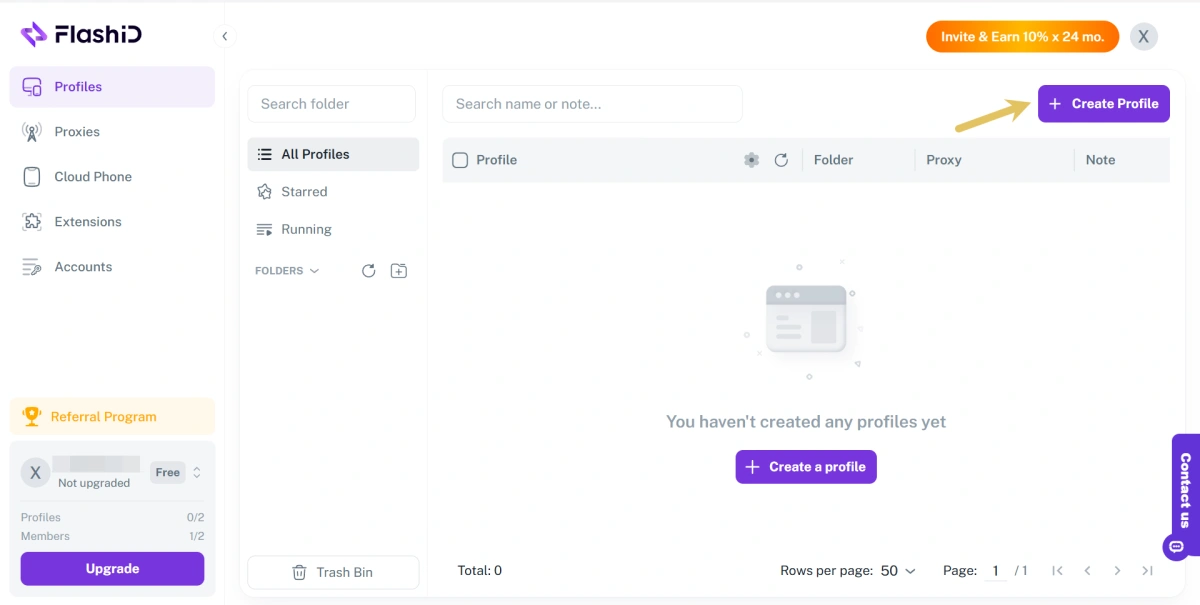
Enter a name and configure fingerprint parameters. Each profile generates a unique browser fingerprint and serves as the foundation of an independent environment.
Step 2: Add a Proxy
Go to the Proxy Settings panel, click“Add Proxy” and input your proxy’s host, port, username, and password. Click “Test” to verify the connection and then save it.
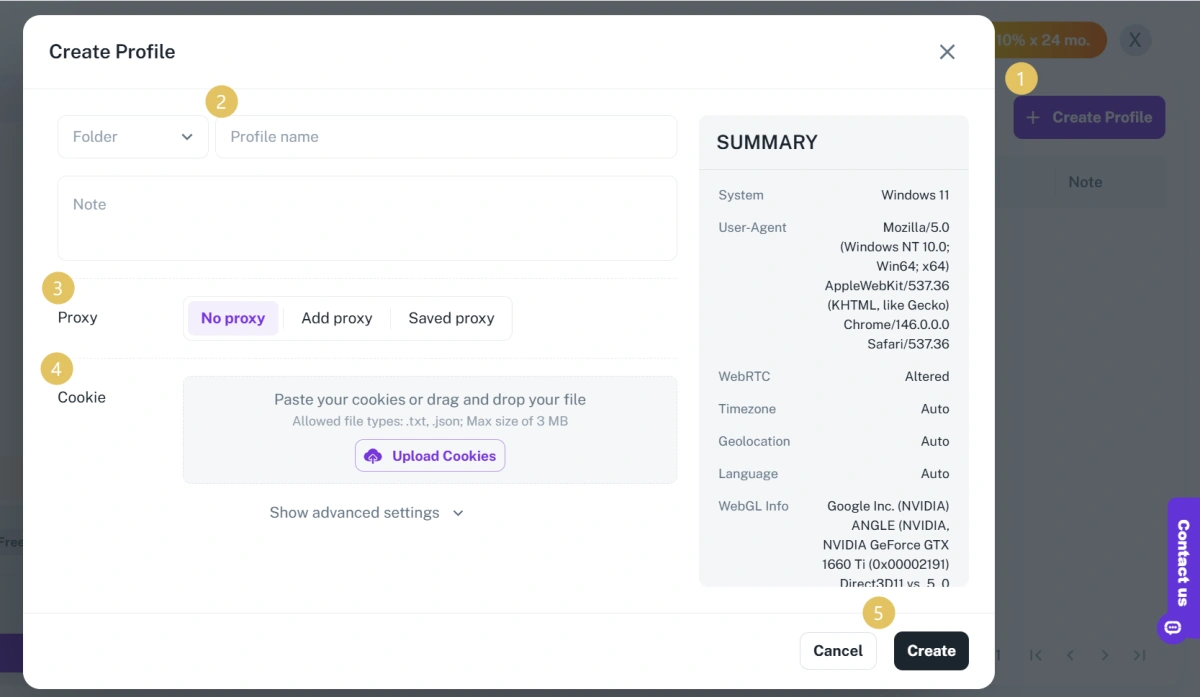
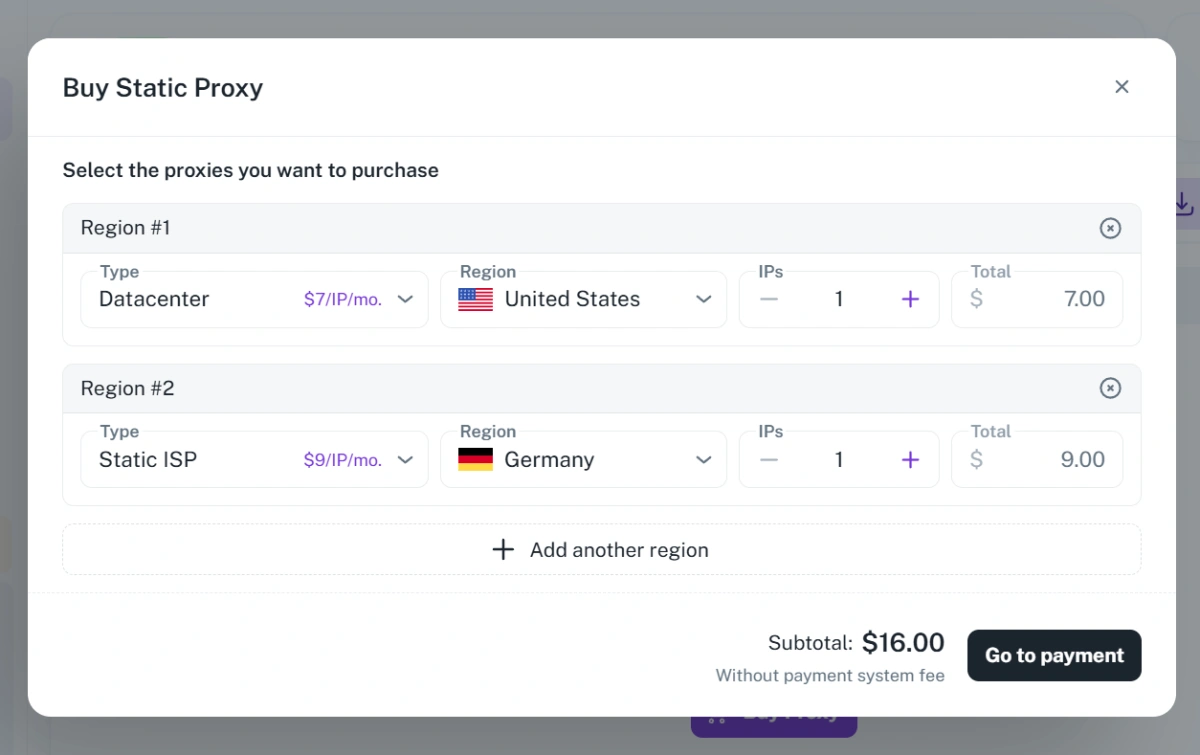
You can also use FlashID’s built-in proxy service to set up your profile more quickly. Instead of configuring proxies separately, FlashID helps align the IP address with the browser environment, reducing manual setup errors and making account operations more stable.
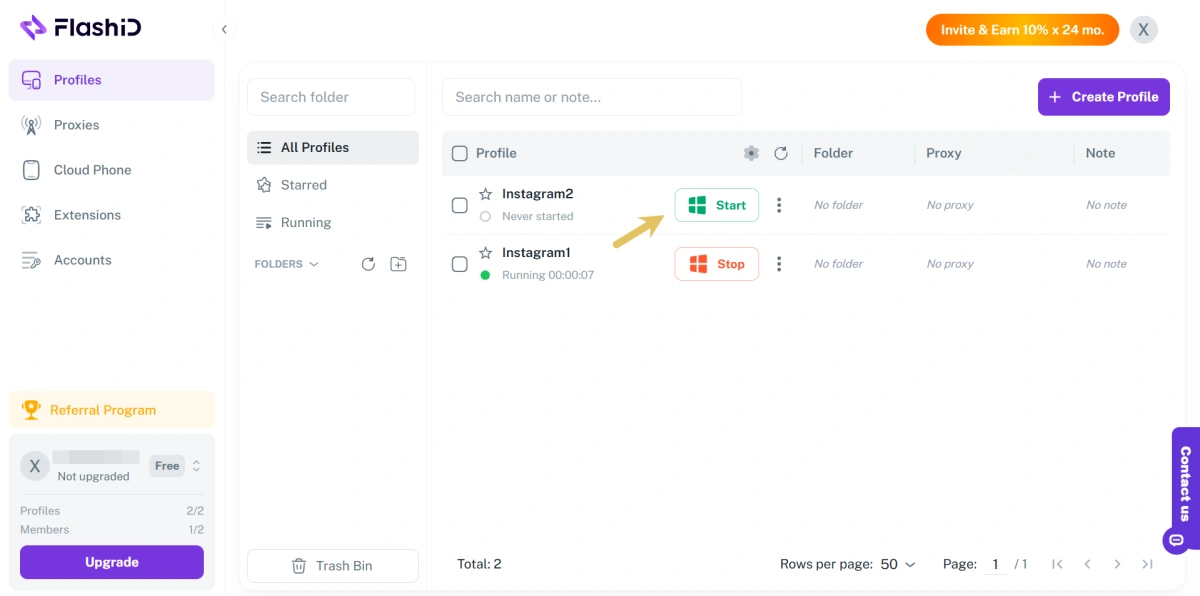
Step 3: Launch and Start Working
Click “Start” to launch your profiles. Each profile will open in a separate browser or Cloud Phone window, with its own fingerprint, IP address, and isolated cache space.
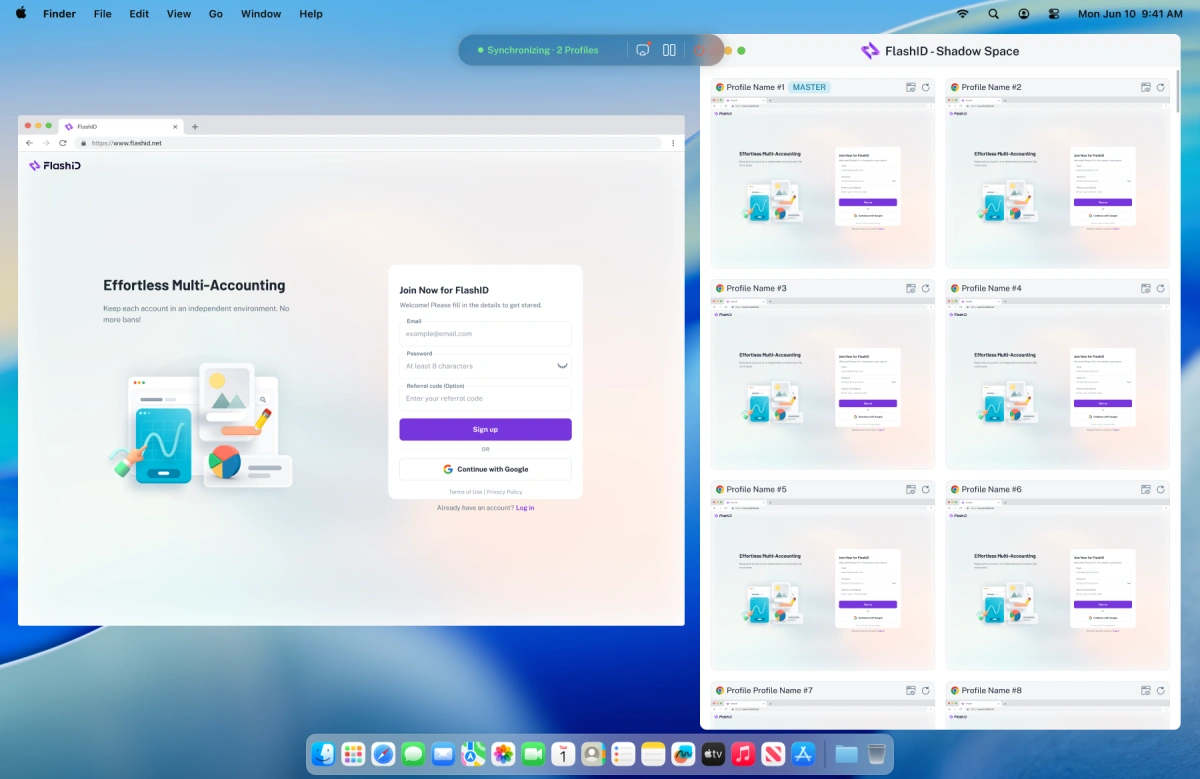
FlashID is not just an anti-detect browser. It is a unified environment system designed for large-scale multi-account operations. It combines cloud phone infrastructure, advanced browser fingerprint technology, proxy configuration and automation tools into one ecosystem. With the Synchronizer feature, users can control multiple profiles with real-time synchronized actions, making it easier to manage accounts in batches and handle repetitive operations more efficiently.
Final Thoughts
LetsVPN’s exit from mainland China is not only a VPN story. It is a reminder that overseas access should not depend on one single tool.
Commercial VPNs, proxy services, self-hosted VPS solutions, travel eSIMs, and enterprise networks all have their own roles. But none of them can solve every problem alone.
For users who rely on overseas platforms for business, content operations, AI tools, or account management, the more important lesson is to build a stable and consistent environment. The future of overseas access is not just about finding another VPN. It is about managing IP reputation, browser fingerprints, device environments, and account workflows as part of a long-term strategy.
If you’d like to stay updated with practical insights and industry trends, feel free to join our community.
You May Also Like