Thaimart is a Thai-owned e-commerce marketplace launched in July 2026, offering sellers 0% GP commission during its first year. This lowers the cost of testing a new sales channel, but it does not remove expenses such as payment processing, logistics, taxes, or future commission. Sellers should evaluate demand, eligibility, fulfilment, and operational workload before investing.
Key Takeaways
- Thaimart offers 0% GP commission in its first year, giving sellers a lower-cost way to test a new Thai marketplace.
- The platform creates both opportunities and risks. Sellers may gain more pricing flexibility and early-market experience, but they must meet verification and product-compliance requirements while assessing buyer demand, seller tools, and overseas eligibility.
- Adding Thaimart can make multi-platform operations more complex. Marketplace subaccounts, e-commerce management tools, password managers, dedicated devices, and antidetect browsers can each help solve different parts of account, data, and team management.
- FlashID combines several multi-account tools in one workspace. It offers affordable isolated browser Profiles, flexible fingerprint configuration, built-in proxies, automation, and team permissions for managing authorized stores across multiple marketplaces.
What Is Thaimart?
Thaimart is an online marketplace operated by Thaimart Marketplace Company Limited. It provides the platform through which buyers and independent sellers complete transactions. Its launch messaging presents it as a “first home” for Thai entrepreneurs, emphasizing transparent marketplace rules, fair treatment, legitimate products, and long-term business growth.
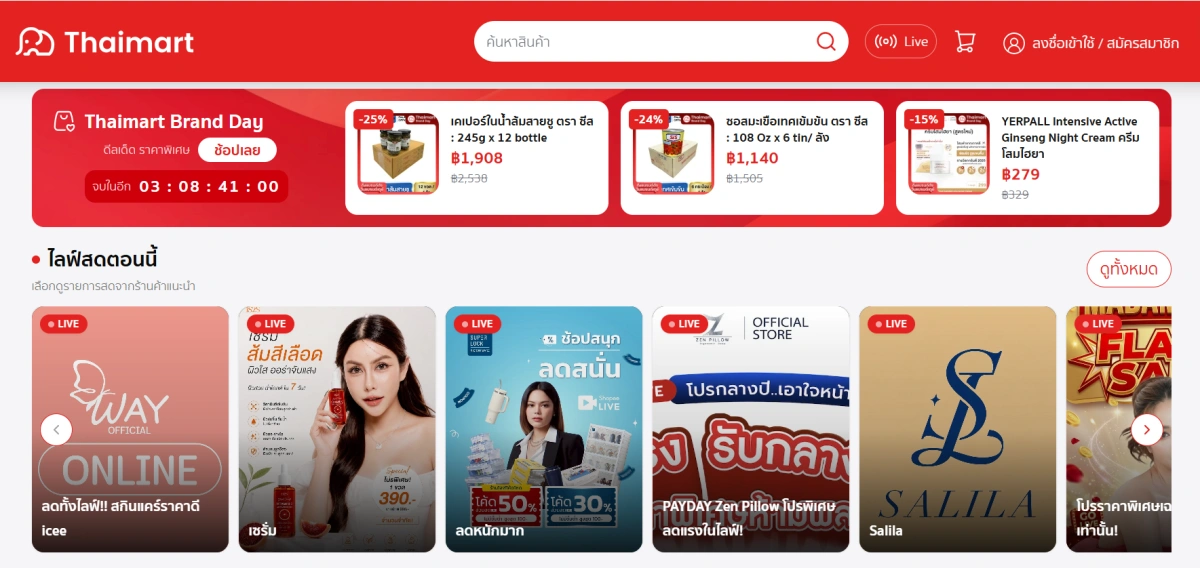
Thailand’s established marketplace sector is dominated by large regional platforms. Thaimart is unlikely to replace them immediately. Its more realistic early role is to give Thai businesses another channel for reaching consumers and reducing their reliance on a small number of existing platforms.
Why Is Thaimart Attracting Attention?
Thaimart arrived while Thai merchants were paying closer attention to commissions, payment charges, advertising expenses, and changing marketplace policies. Thailand’s e-commerce competition guidelines, effective March 25, 2026, also address excessive fees, visibility restrictions, self-preferencing, and the forced use of platform services.
Against that background, Thaimart’s seller-first message is timely. It has promoted a published commission structure, flexible logistics, and standard product visibility that is not conditional on purchasing marketing services.
The platform primarily targets Thai entrepreneurs, SMEs, community businesses, farmers, handmade-product sellers, and local brands.International businesses interested in Thaimart should confirm the platform’s seller eligibility, tax, banking, fulfilment, and product compliance requirements before planning their market entry.
How Does Thaimart’s First-Year No-Commission Policy Work?
Thaimart’s “no commission” offer refers specifically to its platform sales commission, commonly called the GP fee. The announced schedule is:
- July 7, 2026–July 6, 2027: 0% GP
- Second year: capped at 5%
- Third year: capped at 8%
- Fourth year onward: capped at 10%
The later percentages are maximum caps, may vary by product category, and exclude applicable taxes.
Sellers should distinguish this waiver from payment processing. Published seller guidance identifies a 3% Payment Fee, which Thaimart is covering for sellers until December 31, 2026. Unless the arrangement is extended, sellers may therefore face payment-processing costs before the full first-year GP waiver ends.
How Can Sellers Benefit from 0% Platform Commission?
Lower-Cost Channel Testing
The commission waiver removes one visible cost of entering a marketplace. Smaller brands can upload a limited product range, observe demand, and learn how the seller system works without immediately giving up a percentage of each sale as GP.
More Pricing Flexibility
Without a platform commission deduction, sellers have more room to protect margins, offer introductory prices, fund promotions, or absorb part of the delivery cost. This may be particularly useful for products with narrow margins.
However, pricing should also be tested against the announced future fee caps. A model that works only while GP is zero may become unsustainable once commission is introduced.
Other Seller-Friendly Features
Thaimart announced free delivery for the first 100,000 platform orders and lets sellers choose supported providers including Flash Express, KEX, and Thailand Post. It has also said merchants will not need to purchase marketing services simply to receive standard product visibility, although optional sponsored products may be introduced later.
Requirements and Risks for Sellers
Seller Requirements
- Identity and business verification: Sellers must provide accurate personal, business, and store information during registration and verification.
- Product compliance: Regulated goods may require Thai FDA approval, industrial-standard certification, or other relevant documentation.
- Proof of authenticity: Sellers may need invoices, import records, brand authorization, or similar documents showing that their products are genuine and legally sourced.
- Marketplace and fulfilment rules: Sellers must prepare and ship orders within the required timeframes and follow the platform’s rules on product listings, promotions, customer communication, and transactions.
Risks Sellers Should Consider
- Buyer demand is still developing: As a new marketplace, Thaimart has not yet demonstrated the traffic, conversion rates, or repeat purchases available on more established platforms.
- Seller tools are still relatively new: Its analytics, advertising, dispute handling, customer service, and store-management systems may require further development.
- Commission will not remain at zero: The first-year waiver reduces initial costs, but sellers should calculate whether their pricing and margins will remain sustainable once GP fees are introduced.
- Requirements for overseas businesses need confirmation: International sellers should verify eligibility, tax documentation, local banking, fulfilment, and product compliance requirements before entering the market.
Managing Thaimart Alongside Other E-Commerce Channels
Most sellers will treat Thaimart as an additional sales channel rather than replace their existing Shopee, Lazada, TikTok Shop, or independent stores. As more stores are added, several operational problems may appear:
- Store logins and sessions may become mixed.
- Product, inventory, order, and customer data may be scattered across platforms.
- Employees may share passwords or access stores beyond their responsibilities.
- Similar listing, checking, and reporting tasks must be repeated.
- Stores may be accessed from inconsistent devices, networks, and browser environments.
So sellers will choose from several tools and management approaches depending on the size and complexity of their operations:
- Marketplace subaccounts: Let employees access only the stores and functions they manage.
- E-commerce management tools: Platforms such as BigSeller and Ginee can centralize orders, inventory, and product data from existing marketplaces.
- Password managers: Tools such as 1Password can store and share login credentials more securely.
- Dedicated devices or virtual machines: Separate store environments, though costs increase as operations scale.
- Antidetect browsers: Keep store sessions, cookies, and browser Profiles isolated on one device.
Some of these options have limitations: they may address only inventory or password management, while dedicated devices can increase costs and shared access may create security risks. An antidetect browser offers broader control over store sessions and browser environments within one workspace. FlashID Antidetect Browser is one example, combining Profile isolation with proxy, automation, and team tools.
Explore Antidetect Browsers for E-Commerce
How FlashID Antidetect Browser Can Support a Multi-Marketplace Workflow
Affordable Antidetect Browser Profiles with Flexible Control
FlashID offers two free browser Profiles and paid plans starting at $5 per month with a limited-time 50% discount, giving smaller e-commerce sellers a low-cost way to separate authorized store sessions.
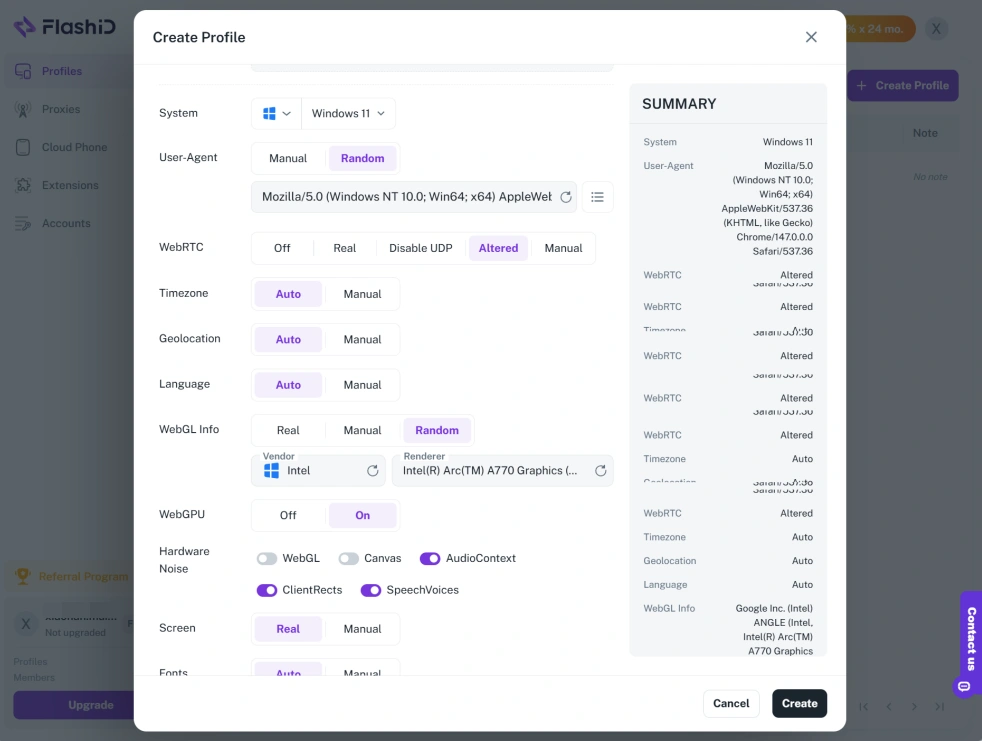
The accessible price does not mean giving up configuration quality. FlashID provides more than 20 browser and device fingerprint settings covering network, graphics, hardware, location, and device information. Users can also adjust settings such as WebRTC and WebGL instead of relying only on automatic randomization, making Profiles easier to keep consistent over time.
Built-In Proxy Management for E-Commerce
FlashID integrates datacenter, static ISP, residential, and mobile proxies, with residential coverage across more than 190 countries and city-level targeting. Each browser Profile can be assigned its own HTTP or SOCKS5 proxy.
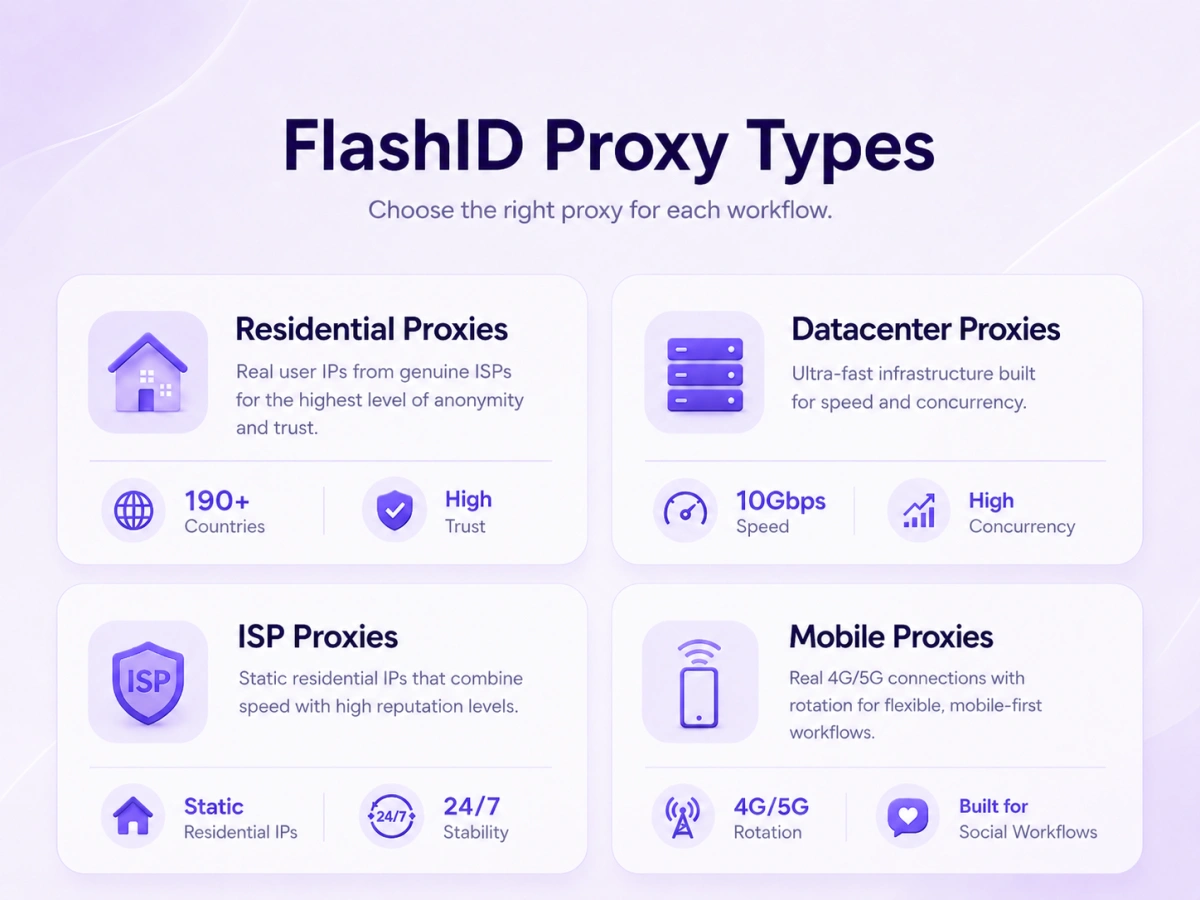
For cross-border e-commerce stores that need a stable, long-term environment, static ISP proxies starting at $6.99 per month are generally suitable. Combining proxies and browser Profiles in one system also makes it easier to align IP location, fingerprint settings, and device information, reducing configuration inconsistencies.
Automation and Team Coordination
Profile Templates allow sellers to reuse browser configurations for particular platforms or markets, while Bulk Import helps teams create multiple Profiles with names, proxies, cookies, User-Agents, and notes.
Workspaces can organize stores by brand, platform, or region. Role-based permissions also ensure that product operators, customer-service staff, and managers access only the Profiles relevant to their responsibilities, reducing shared passwords, duplicated work, and accidental changes.
Conclusion
Thaimart’s first-year 0% GP policy gives sellers a lower-cost opportunity to test a new Thai marketplace, but zero platform commission alone does not guarantee traffic or profit. Merchants still need to evaluate demand, payment fees, fulfilment, eligibility, and future commission rates.
Starting with a controlled product range is more sensible than moving an entire operation at once. As sales channels grow, FlashID can help organize authorized store Profiles, suitable proxy access, repetitive workflows, and team permissions in one workspace.
If you’d like to stay updated with practical insights and industry trends, feel free to join our community.
FAQ
1.Is Thaimart free for sellers?
Thaimart charges 0% GP commission from July 7, 2026, to July 6, 2027. However, this does not mean every selling cost is waived. Sellers may still need to cover logistics, packaging, taxes, returns, advertising, and payment-processing fees once the current subsidy ends.
2.Is Thaimart accepting new seller registrations?
Thaimart has temporarily paused new shop registrations and is expected to reopen them on August 21, 2026. Sellers should check the official seller portal for the latest update.
3.Who can sell on Thaimart?
Thaimart primarily targets Thai entrepreneurs, SMEs, community businesses, farmers, and local brands. International businesses should confirm seller eligibility, Thai tax documentation, local banking, fulfilment, and product compliance requirements before planning their entry.
4.Will Thaimart remain commission-free?
No. The current 0% GP policy applies only during the first year. Thaimart plans to introduce capped commission rates gradually, reaching up to 10% from the fourth year onward. Sellers should therefore test whether their pricing and margins remain sustainable after the waiver ends.
You May Also Like