In 2026, airdrop operations are more intense than ever. Witch detection is strict, task platforms are complex, and on-chain actions must be authentic. Choosing the right tools and platforms can significantly increase airdrop success rates while reducing the risk of being flagged. Below are the 8 most commonly used core tools and platforms for airdrop participants.
TOP 8 Core Tools
1. MetaMask
MetaMask is a mainstream wallet for Ethereum and EVM chains and is the officially recommended wallet for most airdrop projects. Users can use it to receive tokens, complete on-chain tasks, sign transactions, and manage multiple accounts. The wallet is simple to operate, with a clear interface, and allows fast network and account switching, making it convenient to participate in multiple projects simultaneously.
Key Advantages
- Supports Ethereum, BNB, Polygon, and other major chains
- Easy multi-account management
- High usability with a mature community
- Compatible with most airdrop task platforms
Operation Tips
- Log in separately for each account when using multiple accounts
- Verify transaction details before signing to avoid errors
Use Cases
- On-chain task participation, standard airdrops
2. Rabby Wallet
Rabby Wallet is a cross-chain wallet that provides secure transaction signing and multi-account management. Users can securely manage multiple wallet addresses and operate across different chains. Its interface is intuitive, clearly showing transaction information and security prompts, which helps reduce operational errors.
Key Advantages
- Intuitive multi-account management
- Secure transaction signing
- Supports multi-chain operations
- Extendable plugins for more flexible operations
Operation Tips
- Use security prompts to ensure correct operation
- Can be combined with FlashID for secure multi-account operations
Use Cases
- High-security airdrops, cross-chain tasks
3. Galxe
Galxe is a leading airdrop task platform, used by many projects to publish on-chain tasks and credential activities. Users can complete project-required on-chain actions or submit task information to qualify for airdrops or whitelist access. Tasks are clear, participation barriers are low, and the platform covers many projects.
Key Advantages
- Wide project coverage with fast task updates
- Clear task structure, easy to complete
- Linked to subsequent airdrops or NFT projects
Operation Tips
- Complete on-chain tasks according to instructions
- Check task updates regularly and claim rewards promptly
Use Cases
- On-chain task-based airdrops
4.Zealy
Zealy focuses on community-based airdrop tasks, recording users’ social media activity, community engagement, and on-chain interactions. Project teams use it to evaluate user activity and participation, and participants can accumulate records to increase their chances of receiving airdrops and whitelist spots.
Key Advantages
- Active community with many early projects
- Diverse task types combining on-chain and social platforms
- Participation records can enhance airdrop eligibility
Operation Tips
- Complete social media tasks regularly
- Maintain activity records to increase airdrop eligibility
Use Cases
- Community-based airdrops, social media tasks
5. Phantom Wallet
Phantom Wallet is a commonly used wallet for Solana and Aptos chains, supporting multi-account management and on-chain operations. The wallet allows quick account switching and has a clear interface, suitable for participating in airdrop projects on Solana or Aptos networks.
Key Advantages
- Supports Solana / Aptos chains
- Easy multi-account management
- Compatible with mainstream airdrop projects
- Active community
Operation Tips
- Pay attention to on-chain activity when switching accounts
- Can be used with FlashID anti-detect browser to enhance operational security
Use Cases
- Solana / Aptos chain airdrops, multi-wallet operations
6. Ankr
Ankr provides cloud node services for on-chain interaction and testnet operations. Users can efficiently complete on-chain tasks using it, reduce local environment load, and ensure continuity and accuracy. Suitable for managing multiple projects simultaneously.
Key Advantages
- Stable nodes with multi-chain access
- Improves on-chain operation efficiency
- Convenient for batch operations and multi-project management
Operation Tips
- Connect to stable nodes to complete tasks
- Can be combined with wallet tools to improve efficiency
Use Cases
- On-chain interactive airdrops, testnet tasks
7. Etherscan
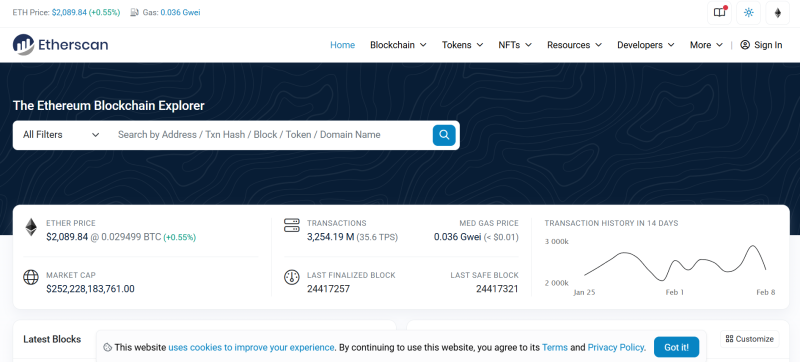
Etherscan is a blockchain data browsing and analysis tool that allows users to view transaction history, token holdings, and project participation. By analyzing on-chain data, users can optimize operations, reduce the risk of witch detection, and better plan airdrop strategies.
Key Advantages
- View transactions and on-chain behavior
- Analyze risks and task completion
- Optimize airdrop operation strategies
Operation Tips
- Regularly check transactions and activity records
- Analyze behavior patterns to optimize tasks
Use Cases
- Data-driven airdrops, operation optimization
8. QuickNode
QuickNode is a cloud node service platform that provides fast and stable node access, supporting multi-chain operations and testnet environments. Users can complete high-frequency on-chain tasks efficiently, ensuring smooth operations while reducing local load.
Key Advantages
- Stable nodes with high-speed access
- Supports Ethereum, Solana, Polygon, and other chains
- Convenient for high-frequency task operations
Operation Tips
- Suitable for frequent or batch on-chain tasks
- Use with wallet tools to improve efficiency
Use Cases
- High-frequency on-chain tasks, batch airdrops
Quick Comparison Table
| Tool / Platform | Chain / Network | Core Use |
|---|---|---|
| MetaMask | ⛓️ Ethereum / EVM | Wallet & Signing |
| Rabby Wallet | 🌐 Multi-chain | Multi-account & Secure Signing |
| Galxe | 🌐 Cross-chain | Airdrop Tasks |
| Zealy | 🌐 Cross-chain | Community & Activity |
| Phantom Wallet | 🪙 Solana / Aptos | Wallet & Multi-account |
| Ankr | 🌐 Multi-chain | Node & On-chain Interaction |
| Etherscan | 🌐 Multi-chain | Data & Risk Analysis |
| QuickNode | 🌐 Multi-chain | Fast Node & Batch Tasks |
How Airdrop Participants Can Use FlashID Anti-detect Browser
FlashID anti-detect browser is very important for airdrop operations. It provides isolated environments for multiple accounts, prevents account linkage, and reduces the risk of witch detection or account bans.
Airdrop participants can use FlashID to:
- Provide independent environments for each account, ensuring secure multi-account operations
- Increase authenticity of on-chain actions and community tasks, reducing abnormal activity
- Combine with node services (e.g., Ankr / QuickNode) and wallet tools to optimize efficiency
- Protect on-chain interaction data, keeping task records clear and traceable
By using FlashID anti-detect browser properly, participants can maintain high security and efficiency across multiple accounts, chains, and platforms, significantly improving airdrop success rates.
Conclusion
Successful airdrop operations depend not only on the number of accounts but also on environmental isolation and operational authenticity. Proper selection and use of tools can greatly improve airdrop success while reducing the risk of being flagged. FlashID anti-detect browser provides a secure and isolated environment for multi-account operations, making it a core guarantee for airdrop participants.
Frequently Asked Questions (FAQ)
1.Q: Why use multiple wallet tools at the same time?
A: Airdrop tasks often require operations on different chains or projects. Using multiple wallets allows separate account management, avoids confusion, and improves efficiency and security.
2.Q: What exactly does FlashID anti-detect browser do in airdrop operations?
A: FlashID anti-detect browser provides isolated browser environments and fingerprint configurations, ensuring multi-account separation, reducing the risk of witch detection or account bans, and increasing the authenticity of on-chain actions and community tasks.
3.Q: Do I need to use node services like Ankr or QuickNode?
A: If you frequently participate in on-chain tasks or batch claim airdrops, using node services can improve operation efficiency and stability while reducing local environment load.
4.Q: What is the difference between Galxe and Zealy?
A: Galxe focuses on on-chain tasks and credential activities, with tasks directly linked to airdrops. Zealy focuses on community and social activity tasks, where participation records can increase the chance of receiving airdrops or whitelist spots.
5.Q: Is FlashID necessary to improve airdrop success?
A: FlashID is not the only tool, but it significantly enhances security and isolation for multi-account, multi-chain, multi-platform operations, making it an important aid for airdrop participants.
6.Q: How can I ensure safe operations in MetaMask or Phantom Wallet?
A: Log in separately for each account, carefully verify transaction details before signing, and use FlashID’s isolated environment to reduce operational risks.
7.Q: Is there a recommended sequence for using these tools and platforms?
A: It’s generally recommended to set up wallet tools first, then connect node services, and finally complete tasks on platforms like Galxe or Zealy, while using FlashID to manage multiple accounts securely.
You May Also Like