Key Takewawy
- A DTC brand, or direct-to-consumer brand, sells products directly to customers through its own channels instead of relying mainly on wholesalers, distributors, or traditional retailers.
- The DTC model gives brands more control over pricing, customer experience, first-party data, and long-term customer relationships. However, it also brings challenges such as rising customer acquisition costs, supply chain pressure, cybersecurity risks, and multi-platform account management.
- For DTC teams that manage multiple brand accounts across e-commerce, social media, and mobile-first platforms, secure account separation and organized digital environments are becoming increasingly important.
What Are DTC Brands?
DTC stands for Direct-to-Consumer. A direct-to-consumer brand sells its products directly to customers, bypassing traditional intermediaries such as wholesalers, retailers, or distributors.
Instead of depending on retail shelves or third-party sales channels as the main path to customers, DTC brands often sell through owned e-commerce websites, Shopify stores, mobile apps, social media shops, email campaigns, and sometimes physical pop-up stores.
This model allows brands to control more of the customer experience, from product presentation and pricing to checkout, shipping, support, and post-purchase communication. The rise of digital platforms, online payment systems, creator marketing, and social media has made it easier for new brands to reach audiences without relying on large retail chains from the beginning.
DTC has become especially common in categories such as skincare, apparel, footwear, supplements, pet products, home goods, fitness products, food and beverage, and personal care.
How DTC Differs from Traditional Retail
In a traditional retail model, a brand usually sells products to a distributor or retailer, and that retailer then sells to the end customer. This process involves multiple layers, each with its own markup, sales strategy, and customer relationship.
In contrast, DTC brands remove many of these middle layers. The brand communicates with customers directly, sells directly, collects customer data directly, and manages the brand experience more closely.
For example, a traditional mattress brand may sell products through furniture stores. A DTC mattress company may sell directly through its own website, ship the product to the customer, and offer a risk-free trial period. This gives the DTC brand more control over pricing, messaging, customer service, and customer feedback.
The key difference is not only the sales channel. It is also the relationship between the brand and the customer. Traditional retail often gives the retailer more control over the final customer experience. DTC gives that control back to the brand.
DTC vs Traditional Retail
| Area | Traditional Retail | DTC Model |
|---|---|---|
| Main sales channel | Distributors, retailers, marketplaces, and physical stores | Owned website, brand app, social media, email, pop-ups, and selected marketplaces |
| Customer relationship | Often controlled by retailers or platforms | Owned directly by the brand |
| Customer data | Limited or aggregated | Direct first-party data |
| Pricing control | Shared with retailers and channel partners | More control over pricing and offers |
| Brand experience | Influenced by retail environment | Controlled by the brand across more touchpoints |
| Main challenge | Channel dependence and limited customer visibility | Customer acquisition, fulfillment, retention, and operational complexity |
Key Advantages of Going DTC
1.First-Party Data Collection
One of the biggest advantages of the DTC model is access to first-party data. When a brand sells directly, every transaction, email sign-up, browsing session, product review, and support conversation can provide useful customer insight.
This data helps DTC brands understand what customers want, which products perform best, where customers drop off, and what motivates repeat purchases. It can also support personalized marketing, product development, customer segmentation, and retention campaigns.
2.Higher Margins and Brand Control
By cutting out intermediaries, DTC brands can maintain higher profit margins, typically 40–60% compared to 20–30% in traditional retail. They may also use that margin to offer better pricing, invest in product quality, improve packaging, or build a stronger customer experience.
DTC brands also have greater control over how products are presented. They can design their own product pages, control photography, write their own messaging, create their own packaging, and shape the entire unboxing experience.
This level of control allows brands to respond quickly to customer feedback. If a product page is not converting well, the brand can test new messaging. If customers ask for a new bundle, the brand can launch it quickly. If a product receives repeated feedback, the brand can adjust features or positioning without waiting for retail channel approval.
3.Direct Customer Relationships
DTC brands communicate directly with customers through email, SMS, social media, live chat, loyalty programs, and community channels. This creates more opportunities for two-way communication.
Instead of only pushing products, DTC brands can ask questions, collect feedback, invite customers into product development, and turn loyal buyers into brand advocates. For example, a DTC skincare brand might use Instagram polls to choose new scents or packaging designs, making customers feel more involved in the brand.
Direct relationships also support repeat purchases. Subscription models, loyalty points, referral rewards, early product access, and exclusive launches can help brands increase customer lifetime value and reduce dependence on one-time purchases.
Who Should Use the DTC Model?
The DTC model is especially useful for brands that want to build a direct relationship with customers instead of depending completely on traditional retail or third-party platforms.
It can be a strong fit for:
- New brands testing product-market fit
- Niche brands with a clear target audience
- Brands with strong storytelling potential
- Products that benefit from education, content, or community
- Teams that want to collect first-party customer data
- Brands that want more control over pricing, packaging, and customer experience
- Companies that can manage e-commerce, fulfillment, customer support, and digital marketing
However, DTC is not the easiest model for every business. Brands need the ability to acquire traffic, convert customers, deliver products reliably, handle support, and keep customers coming back. Without these capabilities, the direct model can become expensive and difficult to scale.
Challenges Faced by DTC Brands in 2026
Rising Customer Acquisition Costs
As more brands adopt the DTC model, advertising costs on platforms such as Facebook, Instagram, Google, TikTok, and other paid channels have increased. Customer acquisition cost, or CAC, can be 2–3 times higher than a few years ago.
This makes profitability more difficult. A brand may generate strong sales but still struggle if too much revenue is spent on acquiring new customers.
Successful DTC brands now focus more on retention and organic growth. Common strategies include SEO content, email marketing, referral programs, creator partnerships, user-generated content, brand communities, and loyalty programs.
Supply Chain and Fulfillment Pressure
DTC brands are responsible for more of the post-purchase experience. Inventory, packaging, delivery speed, return handling, and customer service all directly affect customer satisfaction.
If inventory runs out after a successful campaign, the brand loses sales. If shipping is delayed, customers may complain publicly. If returns are confusing, customers may not buy again.
This is especially challenging for growing brands. As order volume increases, fulfillment becomes more complex. Many DTC brands work with third-party logistics providers, but depending too much on one provider can also create risk.
Multi-Account Management and Platform Stability
Many DTC brands operate across multiple platforms. A team may manage Amazon seller accounts, TikTok Shop stores, Instagram profiles, Facebook ad accounts, Google Ads accounts, regional marketplaces, Shopify stores, or separate brand websites.
Some accounts may be used for different markets, product lines, regions, or campaign tests. This can be necessary for business organization, but it also creates operational risk.
Platforms often use IP addresses, browser fingerprints, cookies, device IDs, and login behavior to detect account relationships. If account environments are mixed carelessly, teams may face verification issues, restrictions, or account instability.
For DTC teams, the goal should be clear and compliant account separation. Different business accounts should be organized, documented, and managed in separate environments to reduce operational mistakes and accidental account association.
For a deeper understanding of how isolated browser environments support safer account management, you can read our guide on What Is an Anti-Detect Browser?
Top DTC Brand Examples and Their Success Secrets
* Casper
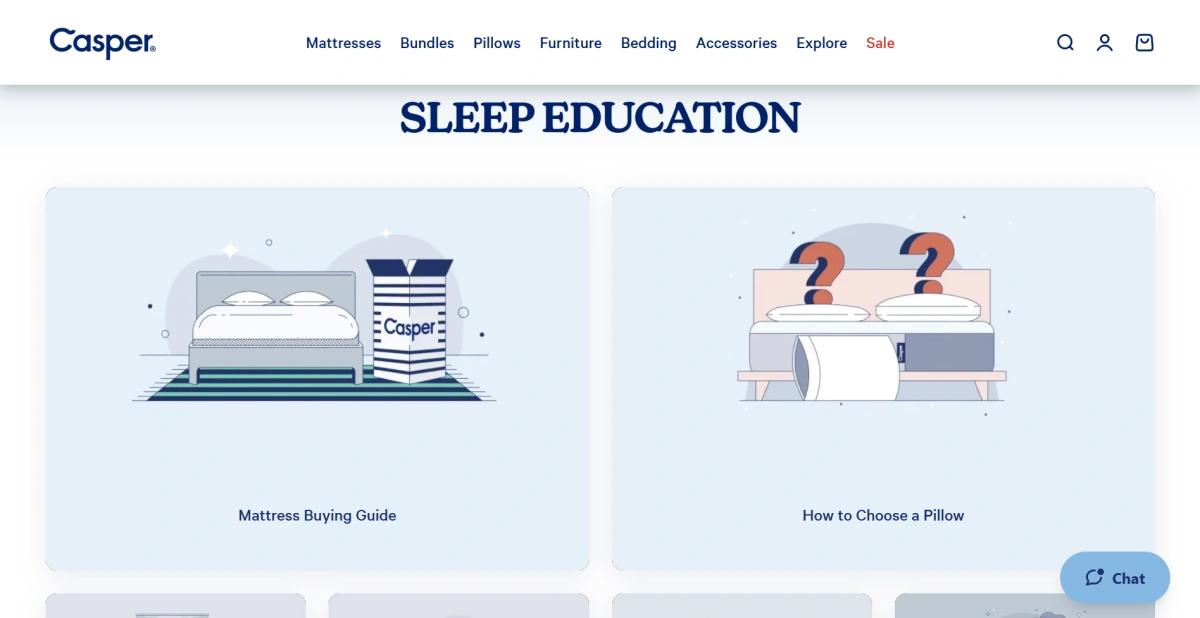
Casper helped popularize the DTC mattress model. Before brands like Casper became popular, buying a mattress often meant visiting a physical store, comparing many similar products, and dealing with unclear pricing.
Casper simplified the process. It offered a clear product selection, online ordering, home delivery, and a risk-free trial period. This reduced purchase hesitation and made an expensive product easier to buy online.
The brand also invested in content marketing, including sleep guides and educational content. This helped Casper become part of a broader sleep and wellness conversation, not just another mattress seller.
* Warby Parker
Warby Parker disrupted the eyewear industry with affordable frames, a direct sales model, and a home try-on program. The home try-on experience made online eyewear shopping less risky and encouraged customers to share the experience with friends.
The brand also built emotional value through its social mission. By combining affordability, convenience, design, and purpose, Warby Parker created a stronger connection with customers.
Its growth shows that DTC success often depends on more than price. A strong value proposition, a memorable experience, and a clear brand story can all drive long-term growth.

Community Building and Omnichannel Strategies
Top DTC brands rarely depend on online sales alone. Many combine e-commerce, social media, influencer partnerships, user-generated content, pop-up stores, retail partnerships, and offline events.
For example, a supplement brand might host workout events or wellness challenges. A fashion brand might encourage customers to share outfit photos on Instagram or TikTok. A pet brand might build a community around pet care tips, customer stories, and user-submitted photos.
Community building helps reduce churn and increase customer lifetime value. When customers feel like they are part of a brand community, they are more likely to repurchase, recommend the brand, and engage with future campaigns.
Omnichannel growth is also becoming more important. Many DTC brands start with their own website, then expand into TikTok Shop, Amazon, retail stores, pop-ups, or selected wholesale partnerships. The key is to keep the brand experience consistent while still maintaining as much direct customer relationship and first-party data as possible.
How to Manage Multiple DTC Brand Accounts Securely
Why Multi-Account Operations Require Isolated Environments
Running multiple accounts is common for DTC teams that manage different markets, product lines, brands, regions, or A/B testing workflows.
A team may need separate Instagram accounts for different regions, separate TikTok accounts for different products, separate Amazon seller accounts for different business units, or different ad accounts for campaign testing.
However, using the same device, browser, or network for many accounts can create operational risks. Platforms may use browser fingerprinting, IP tracking, cookies, device IDs, and behavior patterns to identify account relationships.
Isolated environments help teams manage accounts more clearly. The purpose is not to ignore platform rules, but to keep legitimate business accounts organized and separated. This can reduce accidental account association, support cleaner workflows, and improve account stability.
Using Cloud Phones and Anti-Detect Browsers
Cloud phones provide virtual mobile environments that can be accessed remotely. Each cloud phone can operate as a separate Android device environment for mobile apps such as Instagram, TikTok, WhatsApp, TikTok Shop, or Amazon Seller Central.
Anti-detect browsers support desktop-based workflows. They allow teams to create separate browser profiles with different fingerprints, cookies, time zones, user agents, resolutions, and other environment settings.
For DTC teams, cloud phones are useful for mobile-first platforms, while anti-detect browsers are useful for e-commerce dashboards, ad accounts, seller portals, and web-based tools.
Combining both gives teams a more complete setup for web and mobile operations. Instead of mixing many accounts on one physical device or one browser, each account can be managed in a cleaner and more separate environment.
FlashID Antidetect Browser: An All-in-One Solution for DTC Teams
As DTC operations become more complex, many teams need more than shared spreadsheets, manual device switching, separate browsers, or disconnected proxy tools.
FlashID helps DTC teams manage browser and mobile account environments from one dashboard. It combines cloud phone environments, anti-detect browser profiles, proxy management, automation tools, and team collaboration features in one platform.
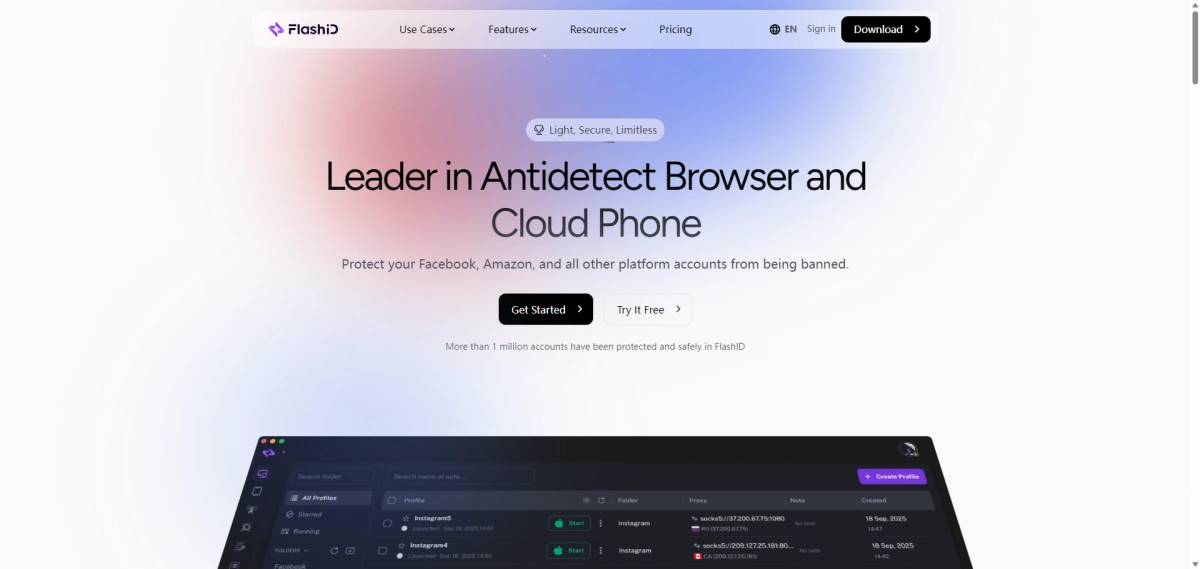
For example, a DTC team may need to manage Amazon seller accounts, Instagram brand profiles, TikTok accounts, TikTok Shop stores, regional ad accounts, or multiple product testing accounts. With FlashID, each account can be assigned to a separate environment, helping teams reduce accidental association and keep workflows more organized.
FlashID also supports automation through built-in RPA and an open API. This can help teams streamline repetitive actions, organize daily workflows, and support larger-scale operations without relying on too many disconnected tools.
For DTC brand managers, e-commerce operators, social media teams, and agencies, FlashID provides a practical way to manage both web-based and mobile-based account workflows in one place.
Final Thoughts
DTC brands have changed how companies build, sell, and grow products. By selling directly to customers, brands can control more of the customer experience, collect first-party data, improve margins, and build stronger long-term relationships.
But the DTC model is no longer simple. In 2026, brands face higher advertising costs, stronger competition, supply chain pressure, cybersecurity responsibilities, and stricter platform environments. A strong DTC strategy now requires more than a good product and a beautiful website. It also requires reliable operations, content-driven growth, customer retention, data protection, and secure account management.
For DTC teams that manage multiple brand accounts across web and mobile platforms, FlashID can help simplify daily operations by combining cloud phones, anti-detect browser profiles, proxy support, automation, and team collaboration in one platform.
FAQ
What is a DTC brand?
A DTC brand, or direct-to-consumer brand, sells products directly to customers through its own channels, such as an e-commerce website, mobile app, social media shop, email list, or brand-owned store. It bypasses traditional wholesalers and retailers as the main sales path.
How is DTC different from traditional retail?
Traditional retail usually involves distributors, wholesalers, retailers, or marketplaces between the brand and the customer. DTC removes many of these middle layers, giving the brand more control over pricing, customer data, messaging, and customer experience.
Why do DTC brands need first-party data?
First-party data helps DTC brands understand customer behavior directly. It can support personalized marketing, product development, customer segmentation, retention campaigns, and better decision-making.
What challenges do DTC brands face in 2026?
Major challenges include rising customer acquisition costs, supply chain complexity, fulfillment pressure, cybersecurity risks, customer retention, and multi-platform account management.
How can DTC teams manage multiple platform accounts securely?
DTC teams can use separate digital environments, anti-detect browsers, cloud phones, proxies, permission systems, and organized account workflows. The goal is to keep different business accounts clearly separated and reduce operational mistakes.
Is FlashID suitable for DTC operations?
Yes. FlashID is suitable for DTC teams that need to manage multiple accounts across web and mobile platforms. It provides cloud phone environments, anti-detect browser profiles, proxy support, automation, and team collaboration tools in one platform.
You May Also Like