Have you ever wondered how the creator economy would evolve if platforms like Instagram allowed every “like” and “comment” to be traded as an asset? In the world of traditional social media, even a top-tier influencer with millions of followers can’t directly convert that “attention” into divisible, liquid financial assets. The path to monetization remains long and is largely controlled by the platform.
In the Web3 world of 2025, however, this paradigm is being completely overturned, and Zora is one of the brightest stages in this revolution. It’s not just another DApp(Decentralized Application); it’s more like a parallel creator economy that runs alongside traditional social networks. Here, every single piece of support and every interaction can be tokenized into tangible economic value. This is a shift from “content consumption” to “value co-creation,” elevating creators from being “vassals” of the platform to being “sovereigns” of their own personal ecosystems.
The Core of Zora: Turning Creativity into Ownable, Tradable Business
At its essence, Zora can be understood as “Web3’s Instagram.” This similarity is seen in its feed-like interface and simple operational logic, but that’s where the resemblance ends. Its revolutionary core lies in its “tokenization” mechanism, which offers unprecedented opportunities for both creators and investors.
For creators, Zora opens up an entirely new dimension of revenue:
- Personal Tokens (Creator Coins): You can tokenize your personal brand by creating a token just for yourself (like the “CryptoGorilla” or “Doodles” tokens demonstrated in the video). This token represents ownership and influence over your community. Your fans, supporters, and even speculators can buy and hold it.
- Post Ownership (NFTization): This isn’t limited to your personal token. Every image, video, or post you publish can be minted into a unique NFT, which fans can “collect” or trade. This means that any future blockbuster content you create can be owned by its “early supporters” in advance.
- Perpetual Transaction Fee Shares: This is the most brilliant part of the Zora model. Whenever someone trades your personal token or buys/sells your posts, as the creator, you earn a fee paid out in the Zora protocol token. This is a form of “passive income” you can earn while you sleep, and it’s perpetual. You no longer need to create for a one-time sponsorship; every high-quality output you create is building a long-term revenue pipeline.
For investors (or early supporters), Zora is a world of infinite “value discovery” filled with risk and opportunity:
The risk and opportunity are intertwined here. Imagine buying a creator’s token when they only have a few thousand followers. If they were to grow into a platform top star later, the value of your token could grow exponentially. It’s like discovering and investing in the early days of “Taylor Swift” or “Justin Bieber.” This is a form of speculation based on the early value of content and community consensus. Zora’s leaderboards and intense trading competitions are a reflection of this capital game, with massive prize pools incentivizing investors to find the next big thing.
Zora Operation Guide: A Dual-Track Path from Trading to Creating
On Zora, you are not a passive bystander. You are both a trader and a creator. The path is very clear:
Step 1: Connect Your Wallet and Start Exploring
Install the Zora App or visit its website, log in with a wallet like MetaMask or your email, and set up your profile. The moment you enter, you see a feed where you can browse content from different creators, just like on Instagram, and directly click to buy their tokens or individual posts. This “what you see is what you get” trading experience significantly lowers the barrier to entry for Web3.
Step 2: From Trader to Creator - Launch Your Own Token
When you decide to move from being a “spectator” to an “insider” and officially begin your journey into the creator economy, all you need to do is pay a small fee to “activate” or “issue” your own creator token.
Incentive Design: Upon launch, the system grants you (the creator) a portion of the token supply (typically 50%), locked over a period (e.g., 5 years). This serves as an incentive for you while also preventing you from massive early dumps, protecting the community’s interest.
Revenue Model: Once your token and posts are live, every community-driven trade and purchase will earn you a fee share from the Zora protocol. The more you post, the more active the community, and the higher your token’s trading volume, the greater your “passive income” will be.
From “Single-Point Operation” to “Matrixed Digital Identity Management”: The New Paradigm of Security in the Web3 Era
When you successfully launch your token on Zora and begin to enjoy the rewards of being a creator, a more advanced strategy emerges: the Diversified Digital Identity Matrix.
You’ll realize that to maximize your value capture within the Zora ecosystem, you need more than just a “creator” identity. You likely need several roles simultaneously:
- A
MyPrimaryBrandmain account for publishing your most core and in-depth original content, building a moat around your personal brand. - An
AlphaFinderinvestment and research account for purely “diving deep” and “observing,” discovering and investing in creators who have potential but haven’t yet exploded. This is like a venture capitalist searching for unicorns on NASDAQ. - A
CommunityManagercommunity interaction account for extensive, high-frequency engagement with other creators and their communities. This helps you learn their operational models and build networks for potential future collaborations or project incubation.
In this new model where “creation, investment, and interaction” operate in parallel, the greatest risk is no longer poor content but “address association and deactivation.” You need to operate your main personal account, your financial investment account, your community interaction account, and even a test account, all at the same time. This scenario is extremely complex and dangerous.
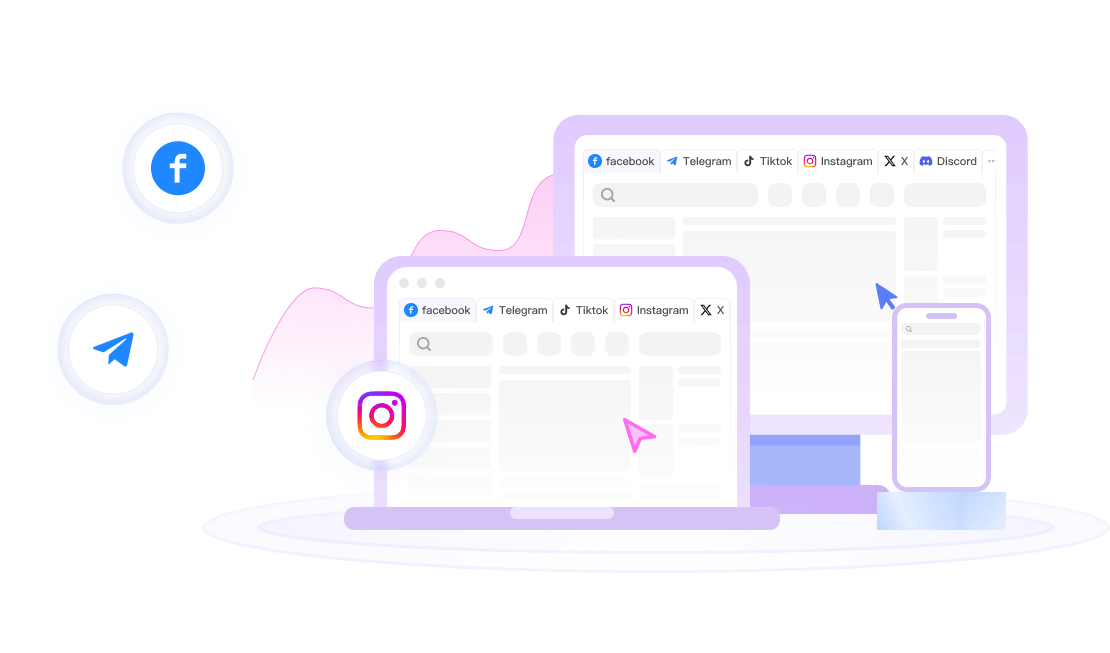
In this multi-role, high-sensitivity operational model, the most fatal risk is “digital fingerprint correlation.” When you frequently switch between Zora, other DApps on the Base chain, and your personal social media from the same device, these platforms will recognize you as a user active across “multiple platforms and roles” through your device fingerprint, IP address, and browser cookies. If your behavior pattern is flagged as “automated” or “abnormal,” it could lead to your assets being restricted or your account being suspended. This is the “on-chain privacy and security” problem that cannot be overlooked when evolving from a “personal Web3 explorer” to a “digital asset portfolio manager.” Your core strength lies in understanding Zora’s creation logic and investment value, but the security, stability, and scalability of your entire diversified asset matrix depend on whether you can build a secure, isolated on-chain identity for each “digital role.” Our product, FlashID, an Anti-Detect Browser, is introduced at this pivotal moment to serve as the “digital identity safe harbor” that secures and efficiently operates your entire “Web3 digital asset portfolio.”
With FlashID, you can create a completely separate, infinitely scalable digital environment for each of your “Zora identities” (e.g., MyPrimaryBrand for the main creator, AlphaFinder for early opportunity discovery, CommunityManager for community management and research). This means:
- Absolute On-Chain Identity Isolation: Each environment has its own unique IP address, browser fingerprint, and login identity. When you post content and earn fees on your Zora profile as
MyPrimaryBrand, the system sees a professional creator focused on building the ecosystem. When you switch to theAlphaFinderidentity to research a potentially explosive new token, it sees a calm, rational early investor. This builds an impenetrable “firewall” for your different digital roles, completely eliminating the on-chain risks caused by “inter-address behavioral crosstalk,” allowing you to boldly engage in multi-address, multi-strategy, multi-target value capture. - Automated and Secure On-Chain Asset Management: The built-in RPA (Robotic Process Automation) feature is key to freeing you from “repetitive on-chain operations.” As a “Web3 digital asset portfolio manager,” your value lies in strategy and insight, not in mechanical daily tasks. You can write an RPA script to have FlashID, in the
AlphaFinderenvironment, automatically monitor hot trends and token trading volumes on Zora. When a new token’s trading volume surges beyond a set threshold within a short period, it can automatically send a warning signal to your Telegram or Discord. This “one role, one environment” automated asset management model allows you, single-handedly, to easily manage a vast and efficient “Web3 profit machine,” truly achieving the qualitative leap from “manual trading” to “strategic, automated investing.”
When you evolve from an “explorer” relying on a single wallet and account into a “Web3 digital asset portfolio manager” armed with tools and FlashID, the foundation for safeguarding all your on-chain assets and strategies is this “digital identity safe harbor system.” It allows you to focus on the core value of Zora’s creation and investment logic while your “Web3 wealth enterprise” operates on a solid, secure, and scalable technical foundation, truly achieving a qualitative leap from “single-point harvesting” to “systematic building.”
Ten Frequently Asked Questions
Q: Can I really turn every post on Zora into an NFT for fans to buy?
A: Yes, that’s one of Zora’s core features. When you post, you can add a “Buy” button, allowing other users to directly purchase the post with cryptocurrency, making them the “owner,” and you, as the creator, earn a protocol fee.
Q: If I issue my own token but its price keeps falling and no one buys it, will I lose money?
A: You’ll need to pay a one-time on-chain Gas fee to issue a token. If the token performs poorly, your reputation and community confidence as the issuer might be damaged, but as long as you don’t sell your held tokens or get sniped, you won’t directly “lose money.” However, a “freefall” price usually leads to heavy losses for early supporters, so creators have an incentive to maintain the token’s value.
Q: What’s the risk of “alpha hunting” for early tokens? How do I tell if a new token is worth investing in?
A: The risk is extremely high, similar to early-stage venture capital. The decision isn’t just about judging the quality of the content, but also considering the creator’s community-building ability, the fairness of the token distribution (to avoid being sniped by large holders), and their past project history. Only ever invest money you can fully afford to lose.
Q: What’s the relationship between Zora and Base? Why is everyone talking about the “Base airdrop”?
A: Base is a Layer 2 sidechain built on top of Ethereum, led by Coinbase. Zora is one of the most core and native applications on the Base ecosystem. To encourage ecosystem growth, Base Foundation and Zora will likely distribute their native tokens for free to users who have conducted genuine, meaningful activities on-chain, such as creating, trading, and interacting. This is called an “airdrop,” a key motivation for early participation in Web3.
Q: What is the Zora wallet for? Is it mandatory to create one?
A: The Zora wallet is its non-custodial wallet, featuring “one-click trading” and a popup-free experience. When using a wallet app like MetaMask, every transaction requires a popup confirmation, which is less efficient. The Zora wallet is integrated into the app for much smoother and faster trading, which is very convenient for high-frequency traders, but not mandatory.
Q: What is the biggest potential revenue source for being a creator on Zora?
A: There are three main sources: 1) The perpetual Zora protocol fee shares from personal token trades. 2) The shares from fans buying your individual posts. 3) Earnings from inviting other creators to join; you also get a cut whenever their token is traded. In the long run, a thriving community and massive token trading volume are key to maximizing revenue.
Q:Why do I need FlashID to manage my Zora and Web3 assets?
A: When you start managing your Zora presence with multiple roles (Creator + Investor + Community Manager), security becomes paramount. FlashID can create separate digital environments for each of your identities (e.g., main brand, research account, community account), isolating your digital fingerprints and IP. This effectively prevents the platform from flagging you as a “bot” or “abnormal” due to your multi-account, multi-task operations, protecting all your on-chain assets and activity privacy. It’s the security cornerstone for Web3 “identity matrix” operations.
Q: What are the specific benefits of FlashID’s RPA feature for a Zora user?
A: RPA can automate your strategic analysis on Zora. For example, you can set up a script to have FlashID, in the
AlphaFinderenvironment, automatically fetch data like token trading volume, number of holders, etc., for the Top 100 creators on the Zora leaderboard and generate a daily report. This helps you quickly identify true “potential stars” from a sea of information without manual refreshing and calculation.Q: How should I structure my Zora token investment portfolio? Should I diversify or go all-in on one?
A: This is the classic question of whether to put all your eggs in one basket or spread them out. For early-stage community tokens like on Zora, high volatility and uncertainty are their characteristics. A “core-satellite” strategy is recommended: allocate most of your capital (e.g., 80%) to 1-2 “core” creators you are long-term bullish on and whose content quality you trust. Allocate a smaller portion (20%) to diversify into several high-risk, high-reward “satellite” new creators to aim for high returns.
Q: When should I consider issuing my own token on Zora?
A: The right time is when you already have an established and highly loyal fan base, and you have confidence in your long-term creative abilities and community management skills. Issuing a token means you are willing to share your “equity” and growth rewards with your community. This is both a sublimation of trust and the beginning of a new responsibility. Never treat token issuance as a tool for “quick cash.”
You May Also Like